Projects
Kitchen cabinet refinishing & painting
Painting or refinishing kitchen cabinets can change the whole room without a full remodel. Done well, it takes careful cleaning, prep, and durable coatings — and it usually costs far less than replacing the cabinets.
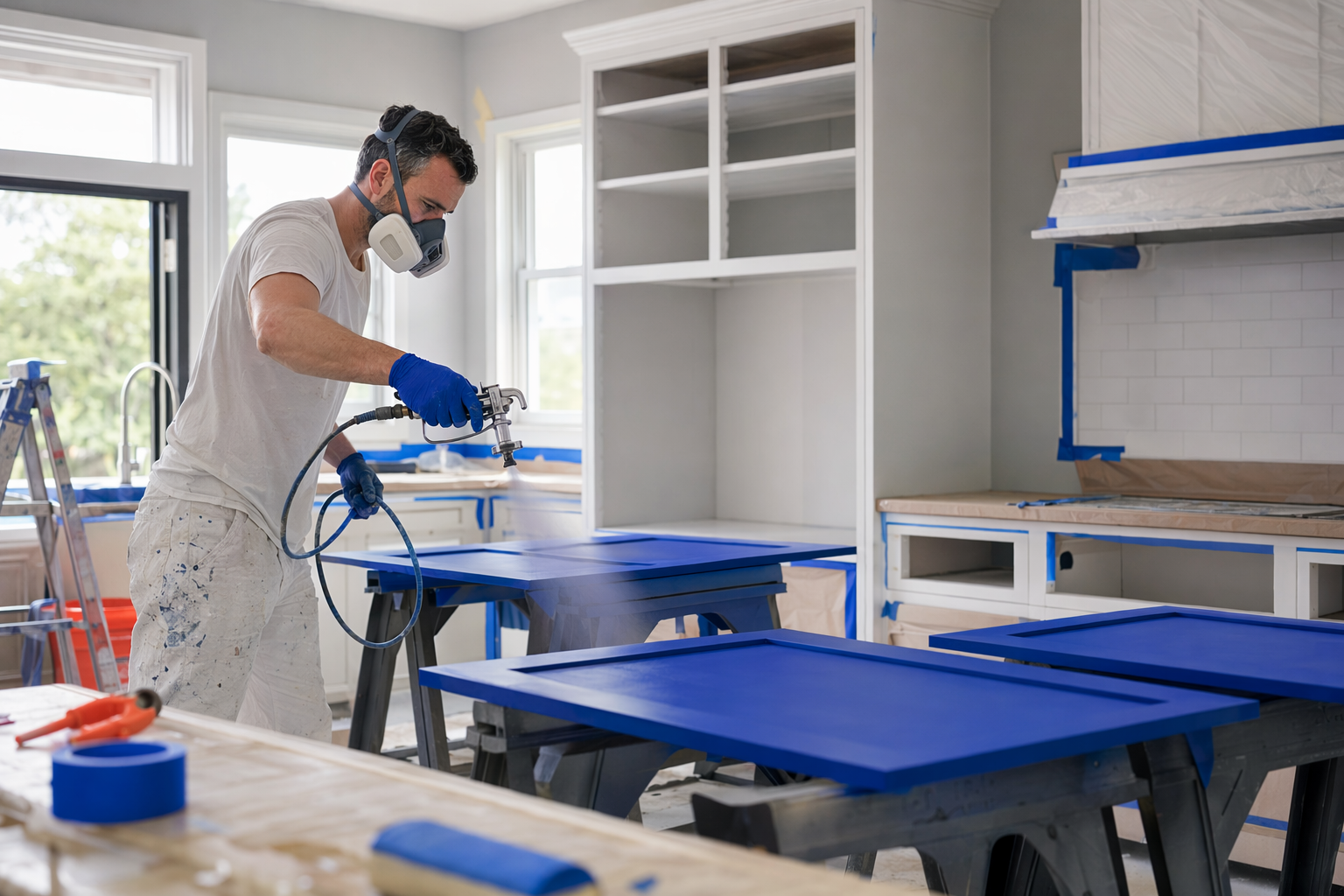
What cabinet refinishing and cabinet painting really involve
Cabinet refinishing is more than rolling wall paint onto doors. A good cabinet job usually means removing doors and drawers, labeling hardware, cleaning off grease, sanding or deglossing, repairing small defects, priming correctly, and applying a coating made to hold up to touching, wiping, cooking moisture, and daily use.
People often use “refinishing” and “painting” to mean the same thing, but they can be a little different. Painting usually means changing the cabinet color with primer and paint. Refinishing can also include updating the existing surface, changing stain color on wood, or applying a new clear or colored finish. Not every cabinet material can be refinished the same way, so the surface matters.
A licensed, insured painter who specializes in cabinets will usually inspect whether your cabinets are solid wood, MDF, laminate, veneer, or thermofoil. That affects prep, primer choice, adhesion, durability, and price. If your cabinets are damaged, swollen from water, or poorly installed, painting may not fix the real problem.
If you are still comparing projects, our projects hub can help you see how cabinet work differs from regular room painting or trim work.

How a pro gets a smooth, durable finish
The best-looking cabinet jobs are won during prep. Kitchens collect cooking oils, hand oils, food splatter, and silicone-like residues that can make paint fail. A pro usually starts with a thorough degreasing wash, then sands or deglosses the surface so primer can bond. Small dents, old hardware holes, and chips may be filled before priming.
After prep, many cabinet painters remove doors and drawer fronts and spray them in a controlled setup for a smoother finish. Cabinet frames may be brushed, rolled, or sprayed depending on the space, protection, and product. Good masking matters. So does dust control.
A typical process looks like this:
1. Remove doors, drawers, knobs, pulls, and hinges.
2. Label every piece so it goes back in the right place.
3. Clean thoroughly to remove grease and residue.
4. Sand or degloss, then repair minor damage.
5. Apply the right bonding or stain-blocking primer.
6. Apply one or two finish coats, often with dry time between coats.
7. Reinstall hardware or install new hardware after curing.
The word “cure” matters. Cabinets may feel dry before the coating reaches full hardness. A painter should explain how long to wait before heavy use, hard scrubbing, or hanging damp towels over doors. That timeline depends on the product and conditions.
For homes built before 1978, old paint may contain lead. If your cabinets or nearby painted surfaces are older, ask how the painter follows lead-safe work practices. That is an important safety question for any older home.
What it costs, and how it compares with replacing cabinets
In many US markets, professional kitchen cabinet painting or refinishing often runs about $3,000 to $9,000+ for an average-size kitchen. Smaller kitchens may come in lower, and large kitchens with lots of doors, drawers, detail work, repairs, or premium coatings can go well above that. These are general ranges, not quotes.
Why such a wide range? The real number depends on the number of doors and drawers, the cabinet material, how greasy or damaged the surfaces are, whether old finishes are failing, the primer and paint system used, whether spraying is done on-site or off-site, hardware removal and reinstallation, color change, and labor rates in your area. Access, timeline, and how much masking and protection the kitchen needs also affect cost.
Compared with replacement, cabinet painting is often much more budget-friendly. Full cabinet replacement can run many thousands more once demolition, new boxes, countertop adjustments, plumbing reconnection, and installation are included. But painting is not always the better choice. If the cabinet boxes are weak, warped, badly water-damaged, or the layout no longer works for you, replacing or partly replacing may make more sense.
A few rough comparisons homeowners often consider:
- Cabinet painting/refinishing: usually the lower-cost option if the cabinets are still solid.
- Refacing: can cost more than painting but less than full replacement, depending on materials.
- Full replacement: usually the most expensive, but it changes layout and cabinet construction.
If budget is your first question, our costs hub can help you compare painting projects. Always get the scope, products, number of coats, and total price in writing first. Ranges online are not quotes.
What can go wrong on a cheap or rushed cabinet job
Cabinets are one of the easiest places to see bad prep. If the painter skips degreasing, uses the wrong primer, sands too little, or rushes dry times, you may see peeling near handles, tacky surfaces, drips, brush marks, chips, or doors that stick together.
Watch for vague promises like “we’ll make them look new” without a clear prep plan. Ask exactly how the painter handles grease, sanding, primer, repairs, dust control, hardware, and curing time. If they cannot explain the system in plain language, that is a warning sign.
Common red flags include:
- Very vague pricing with no written scope
- Large cash deposits up front
- Door-to-door or “today only” deals
- Pressure to sign right away
- No proof of license or insurance when your area requires it
- No discussion of cabinet-specific products or prep
Cabinet work is detail-heavy, so comparing a few quotes is smart. You stay in control: confirm the color, sheen, scope, and price before work starts; choose who to hire; and check that the work is done right before paying the final amount.
Choosing color and finish for cabinets
Cabinet color changes the feel of the whole kitchen. White and warm off-white still feel bright and flexible. Soft greige, taupe, sage, blue-gray, and deeper charcoal shades are also popular, especially when paired with the right countertop and backsplash. Dark colors can look rich, but they may show fingerprints, dust, and nicks more easily.
Sheen matters too. Many cabinet coatings land in the satin to semi-gloss range because they are easier to wipe than flat finishes and often feel more durable. The best choice depends on the product line, the cabinet condition, and the look you want. A painter or paint specialist can help you balance appearance with cleanability.
Before you commit, test the color in your actual kitchen lighting. Daylight, under-cabinet lights, and warm ceiling bulbs can make the same color look very different. If you want help narrowing choices, our color ideas page is a good place to start.
How to find a painter who actually specializes in cabinet work
Not every house painter is great at cabinets. Cabinet coatings, prep, spraying, masking, and reassembly are a little different from walls and ceilings. Ask whether cabinet painting is a regular part of their work, what products they use, and whether they spray doors and drawers for a smoother finish.
When you compare painters, ask for a written scope that covers prep, repairs, primer, finish coats, sheen, what gets removed, what stays in place, cleanup, and how long before normal use. Also verify license and insurance if your state or local area requires it. HuePort is a free matching service — not a painting company or contractor — and we can help you get connected with licensed, insured painters near you to compare options.
A simple way to start:
1. Share your project type, ZIP code, preferred language, and basic details.
2. Compare a few painters who handle cabinet work.
3. Ask about prep, products, drying and curing time, and warranty terms if offered.
4. Confirm color, finish, scope, and price in writing.
5. Choose the pro you want — or choose no one if the fit is not right.
Use our free matching page if you want help finding local painters. We only collect contact and project-intent details like your name, phone, optional email, project type, ZIP, preferred language, and optional notes.

Cabinet painting can save money over replacement, but only if the prep is done right and you hire a painter who knows cabinet work.
Common questions
Is painting kitchen cabinets worth it?
It often is if your cabinet boxes and doors are still solid and you like the current layout. Painting usually costs much less than replacing cabinets, but the result depends heavily on prep, materials, and the condition of the cabinets.
How long does cabinet refinishing take?
Many kitchen cabinet jobs take several days, and full curing can take longer than the paint feels dry to the touch. The timeline depends on kitchen size, prep needs, repairs, the coating system, humidity, and whether doors are sprayed off-site or on-site.
Can any cabinets be painted?
Many can, but not all surfaces perform the same. Solid wood, MDF, laminate, veneer, and thermofoil each need different prep and products, and some damaged or failing surfaces may not be good candidates.
What finish is best for kitchen cabinets?
Many painters use cabinet-grade products in satin or semi-gloss because they balance looks with wipeability. The best finish depends on the product, the cabinet condition, and the style you want.
How do I avoid getting overcharged for cabinet painting?
Get a few written quotes and compare the prep steps, primer, finish coats, hardware handling, and total scope — not just the lowest price. Be cautious with vague pricing, large cash deposits, and pressure to sign right away.
Does HuePort do the cabinet painting work?
No. HuePort is a free matching service, not a painting company, contractor, or paint store. We help homeowners connect with local licensed, insured painters so they can compare options.