Color & finish
Best paint colors for small rooms
A small room does not have to feel cramped. The right paint color, finish, and testing plan can help it feel brighter, calmer, and more open before you commit.
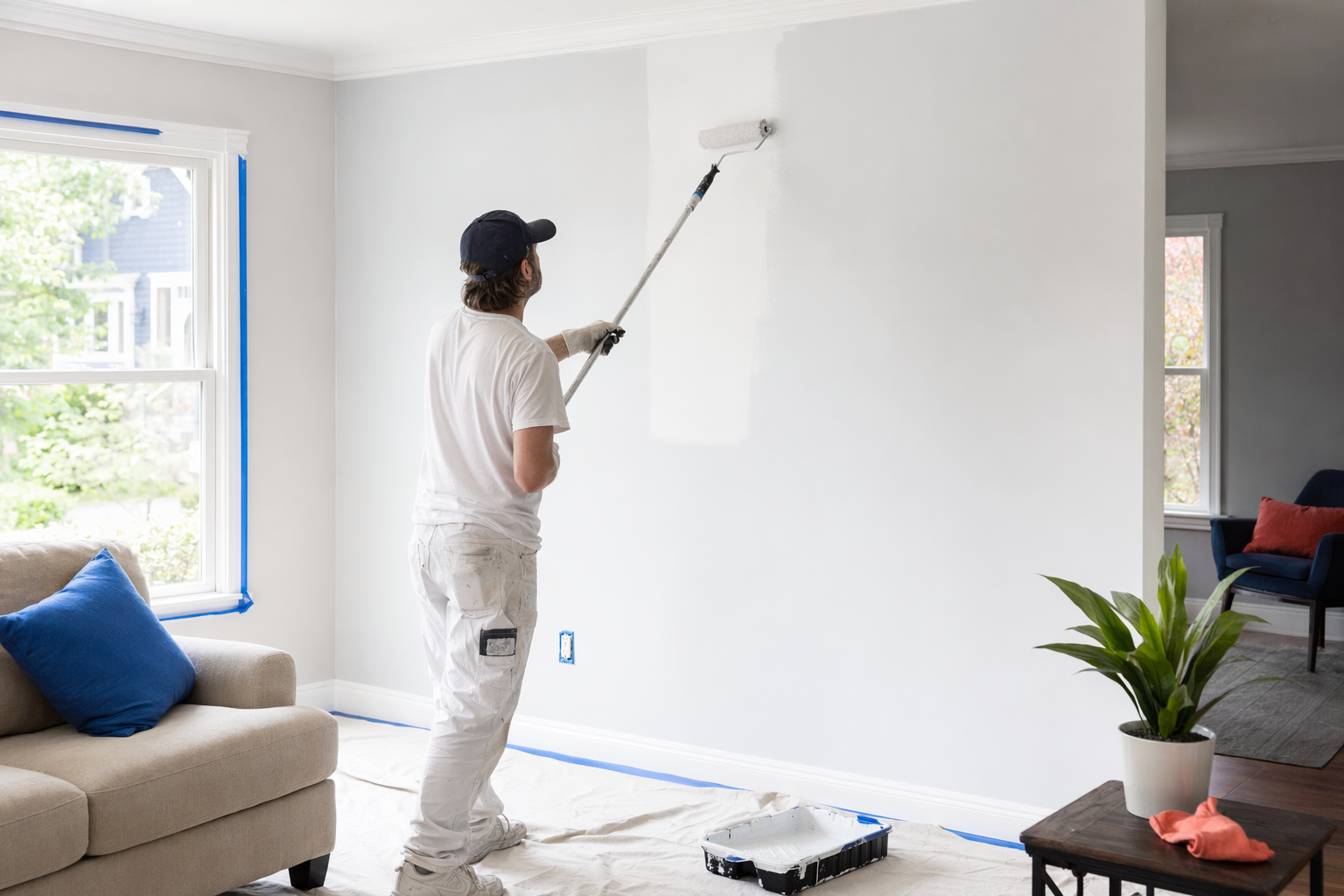
Start with the feeling you want
When people search for the best paint colors for small rooms, they usually mean one of two things: "I want this room to feel bigger" or "I want it to feel less dark and closed in." Paint can help with both, but color works best when you choose it around the room's light, flooring, and furniture.
In many small rooms, soft light colors make the walls seem to move back a little. Off-whites, warm whites, pale greige, light beige, soft gray-green, muted blue, and dusty blush can all work well. The best choice depends on undertones. A white that looks clean in one room can look yellow, pink, green, or blue in another.
That is why there is no single "best" color for every small bedroom, bathroom, office, or apartment. The better question is: which light color works with your room? If you want inspiration first, browse colors and then narrow it down to 2 or 3 options to test at home.
Light colors usually open a room up, but dark colors are not always wrong
Light paint is the classic choice for small spaces because it reflects more light and makes edges feel softer. If your room already gets decent daylight, a warm white or light neutral often makes it feel airy. If the room is naturally dim, a soft color can still help, but the exact undertone matters a lot.
Dark colors can also look beautiful in a small room, just in a different way. Instead of making the room feel larger, they can make it feel cozy, intentional, and stylish. A deep green, charcoal, navy, or brown can blur the corners at night and create a "jewel box" effect. That can be a great choice for a powder room, dining nook, or small bedroom if you want mood more than openness.
A good rule: if your goal is bigger and brighter, stay in the light-to-mid range. If your goal is cozy and dramatic, a darker color may work well. Neither choice is wrong. The room just needs enough contrast, lighting, and a finish that suits the surface.
Pay attention to undertones and natural light
Undertones are the quiet colors hiding underneath the main color. A gray may lean blue, green, purple, or brown. A beige may lean pink, yellow, or peach. In a small room, those undertones show up fast because the walls are close to you and often reflect onto each other.
North-facing rooms often feel cooler, so icy whites and blue-grays can look extra cold there. South-facing rooms usually get warmer light, so creamy whites and warm neutrals may look richer. East-facing rooms can feel bright in the morning and flatter later. West-facing rooms may look more neutral by day and warmer at sunset.
Also look at what will stay in the room: wood floors, tile, countertops, cabinets, rugs, curtains, and large furniture. If the fixed items are warm, a very cool wall color may feel off. If the room has a lot of cool gray finishes, a strongly yellow cream may clash.
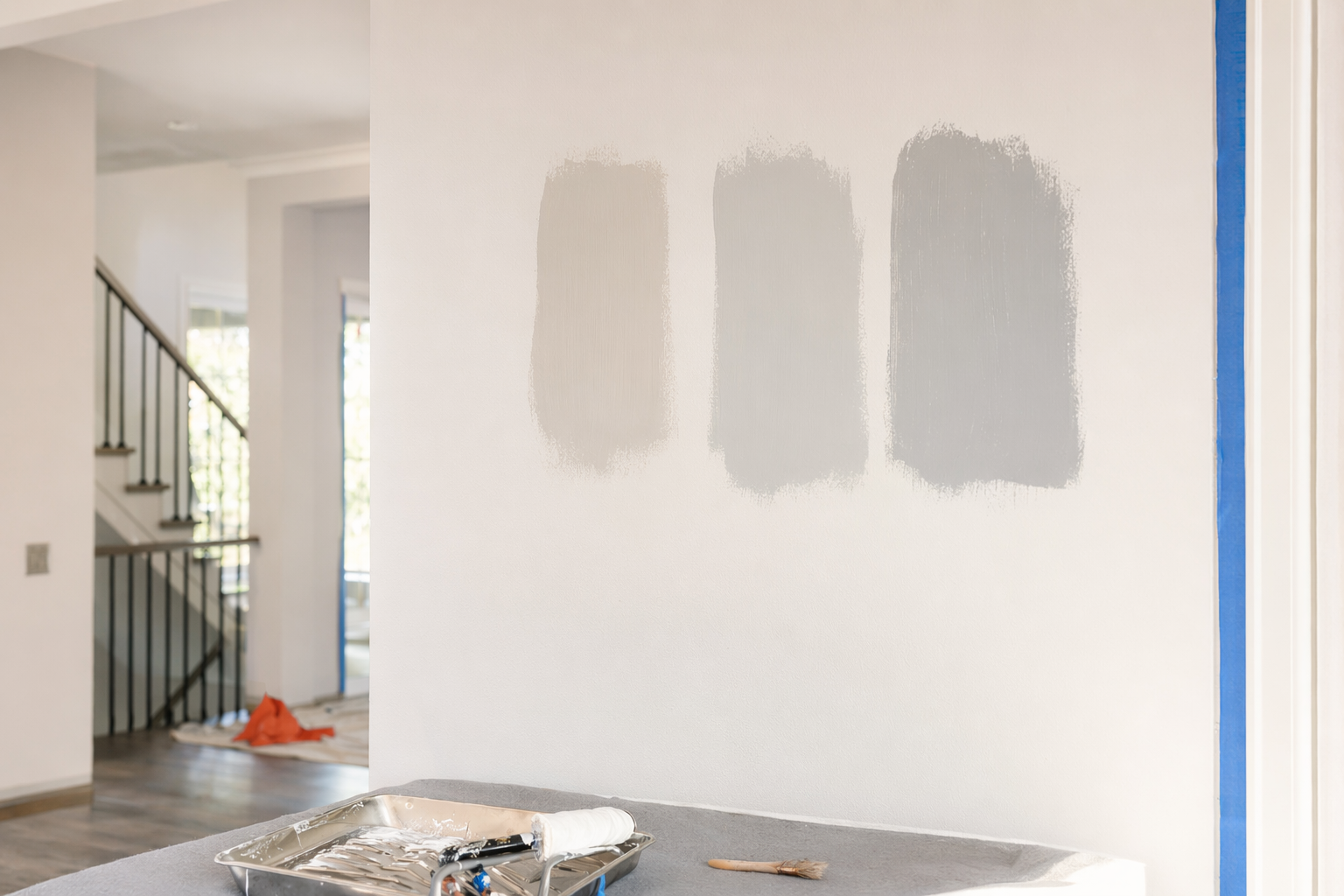
The safest path is to test colors in the actual room before buying gallons. Paint chips are too small, and phone screens are not reliable for exact color.
Simple color ideas that work well in small rooms
If you want the room to feel bigger, choose low-contrast combinations. Walls, trim, and ceiling do not need to be identical, but keeping them fairly close in value can make the room feel less chopped up. Soft white walls with slightly brighter white trim is a common, easy choice.
If you want more personality without making the room feel busy, try a muted color instead of a bright one. A soft sage, pale blue-gray, light mushroom, warm sand, or blush-tinted neutral can add color while still feeling calm.
One accent wall can work, but use it carefully. In a very small room, a strong accent can sometimes make the space feel shorter or more boxed in, especially if it sits on the wrong wall. If you really want one accent, use a softer contrast than you think you need, or bring the color in through bedding, art, or curtains instead.
The ceiling trick can help too. A ceiling painted a little lighter than the walls often feels taller. In some rooms, painting the walls and ceiling the same soft color can also reduce visual stops and make the room feel smoother and larger.
Best paint finishes for small rooms and surfaces
Finish matters almost as much as color. Sheen changes how much light bounces around the room, and it can also highlight wall flaws. In a small room, too much shine can draw attention to dents, patches, and uneven texture.
For most bedroom, living room, and hallway walls, eggshell or matte is a good place to start. Matte gives a soft look and can hide surface imperfections better. Eggshell has a little more wipeability and a slight glow without too much shine. For ceilings, flat is common because it helps hide flaws and reduces glare.
For bathrooms, kitchens, trim, doors, and cabinets, painters often use more durable finishes because these surfaces get touched, cleaned, or exposed to moisture more often. Satin or semi-gloss is common on trim and doors. Kitchens and baths may need a finish and product suited to humidity and cleaning.
If your walls are rough or patched, avoid choosing a finish only because it looks shiny on a sample card. Higher sheen can make small rooms feel brighter, but it can also make every wall imperfection easier to see. A licensed, insured painter can help you match the finish to the surface condition. HuePort is a free matching service, not a painting company, and we can help you connect with local painters to compare options through get matched.
- Ceilings: usually flat
- Most walls: often matte or eggshell
- Trim and doors: often satin or semi-gloss
- Bathrooms and kitchens: use a finish suited to moisture and cleaning
Test before you commit, and get the work details in writing
The easiest way to avoid color regret is to sample first. Put large sample swatches on more than one wall, or paint poster boards and move them around the room. Look at them in morning light, afternoon light, lamplight, and at night. What looks bright at noon may look dull or yellow later.
If you are hiring help for an interior repaint, ask for the full scope in writing before work starts: which rooms, which surfaces, what prep is included, how many coats, what paint line, what finish, and who moves or protects furniture. Compare a few quotes. Be careful with vague pricing, big cash deposits up front, door-to-door "today only" deals, or anyone who pressures you to sign fast. Also verify license and insurance.
For homes built before 1978, old paint may contain lead. Ask how the painter follows lead-safe work practices if sanding or disturbing old paint is part of the job. That is an important safety question, not a design choice.
Interior painting costs vary a lot by room size, wall condition, trim, ceilings, doors, number of coats, paint grade, and your area. As a very general range, a small-room repaint may land anywhere from a few hundred dollars to over $1,500 if prep is simple, and more if there is patching, trim, doors, ceilings, or difficult repairs. These ranges are not quotes. If you want help finding licensed, insured painters near you, see our interior page or use get matched.

For a small room, test light or muted colors in the real space, choose a finish that fits the surface, and get the color, scope, and price in writing before work starts.
Common questions
What paint color makes a small room look bigger?
Usually a light color with the right undertone for the room. Soft whites, warm neutrals, pale greige, and muted colors often make a small room feel more open, especially when the trim and ceiling are kept simple.
Should I paint a small room white?
White can work very well, but not every white works in every room. Test a few whites first, because some look too yellow, too gray, or too blue depending on the natural light and nearby finishes.
Do dark colors always make a small room feel smaller?
No. Dark colors usually make a room feel cozier and moodier rather than larger, but they can still look beautiful. If your goal is airy and open, lighter colors are usually the easier choice.
Is an accent wall a good idea in a small room?
Sometimes, but use it carefully. A strong accent can make a very small room feel more cut up, so many people get a better result from a softer accent color or from adding contrast through decor instead.
What finish is best for small room walls?
For many small-room walls, matte or eggshell is a practical choice. They usually give a soft look without highlighting every surface flaw the way a shinier finish can.
How much does it cost to paint a small room?
It depends on the size, prep, number of coats, paint grade, trim, ceilings, and your area. A basic small-room repaint may be a few hundred dollars to over $1,500, but that is a general range, not a quote.
Can HuePort help me hire a painter?
Yes. HuePort is a free matching service for homeowners, not a painting company. We can help connect you with local licensed, insured painters so you can compare quotes and choose who to hire.