Color & finish
Choosing an exterior color scheme
A good exterior color scheme should look right on your house, in your light, and on your street. Here’s a simple way to choose body, trim, and accent colors without guessing.
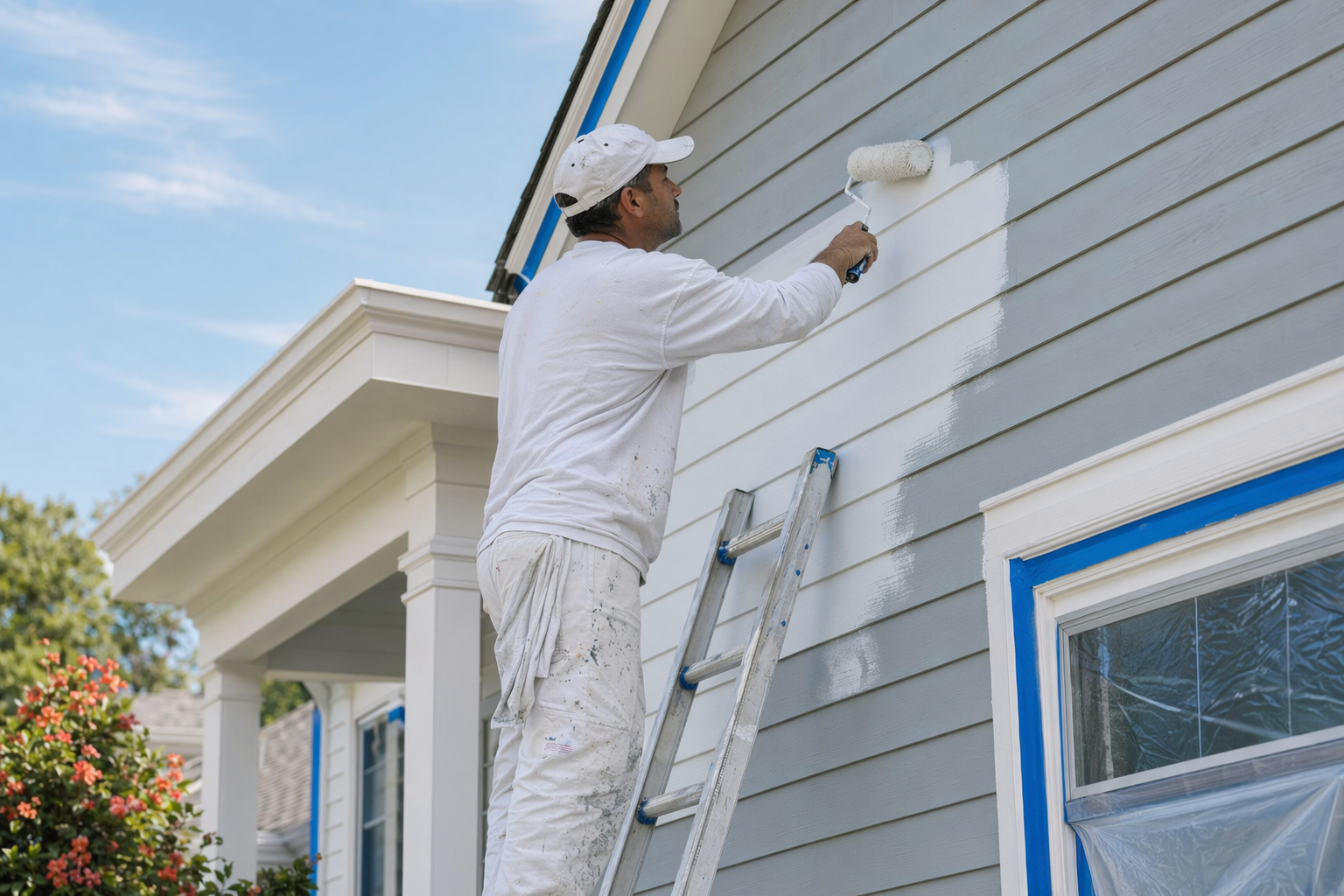
Start with the parts of the house you are not changing
Before you pick paint chips, look at the fixed colors on your home: roof shingles, brick, stone, concrete, windows, gutters, and any metal railings. These materials already have warm or cool undertones, and your paint will look better if it works with them instead of fighting them.
For example, a roof with brown or tan tones usually pairs more easily with warm whites, greiges, taupes, creams, muted greens, or earthy blues. A charcoal or black roof often gives you more flexibility, but it still helps to notice whether nearby stone or brick reads warm, cool, pink, yellow, or gray.
If you are keeping brick or stone, treat that material as part of the color palette, not as a background to ignore. Many exterior color mistakes happen when the body color looks fine on a swatch but clashes with the undertone in the masonry once it is painted across the whole house.
Use a simple 3-part scheme: body, trim, and accent
Most homes look best with three roles in the palette: the main body color, the trim color, and one accent color for the front door, shutters, or small architectural details. Keeping the jobs separate makes the house look intentional instead of busy.
The body color covers the largest area, so choose this first. Trim should support the body color, not overpower it. Accent color is where you can add personality, but use it in smaller amounts so it feels special.
A safe rule is to keep contrast moderate. Very high contrast can be beautiful, but it also highlights every line, seam, and imperfection. Lower contrast often feels calmer and can make a home look larger and more unified.
- Choose the body color first.
- Pick a trim color that is lighter, darker, or cleaner than the body.
- Add one accent color for the door or small details.
- Step back from the curb and make sure the house still looks balanced.
Think about style, neighborhood, and curb appeal
Your home does not need to match every house around it, but it should not feel disconnected from the neighborhood either. A color that looks exciting on a sample board can feel too harsh or too trendy when it covers siding, trim, garage doors, and porches.
Traditional homes often look strong in whites, creams, soft grays, warm neutrals, slate blues, muted greens, and classic dark accents. More modern homes can carry deeper contrast, cleaner whites, black accents, and simpler palettes. Cottage and craftsman-style homes often handle earthy, historic, and slightly softer colors well.
Try to notice what already looks good nearby. That does not mean copying a neighbor's house. It means seeing what works with the local light, landscaping, and common roof colors. If you live in a sunny area, very bright whites and strong colors may read even brighter outdoors. In cloudier climates, colors can look flatter and cooler.
If you want help narrowing choices, browse exterior ideas or explore more paint color guidance.
Undertones and sunlight matter more outside than many people expect
Exterior paint rarely looks exactly like it did in the store. Natural daylight changes throughout the day, and large outdoor surfaces make colors appear lighter and stronger than a small paint chip suggests. That is why many homeowners choose a color they liked indoors and then feel surprised once it is on the siding.
Pay attention to undertones. A gray may lean blue, green, violet, or brown. A white may look crisp, creamy, pink, or slightly gray. Beige and greige can shift a lot in sun and shadow. If your roof, stone, or concrete has a warm cast, a cool paint may suddenly look stark or muddy next to it.
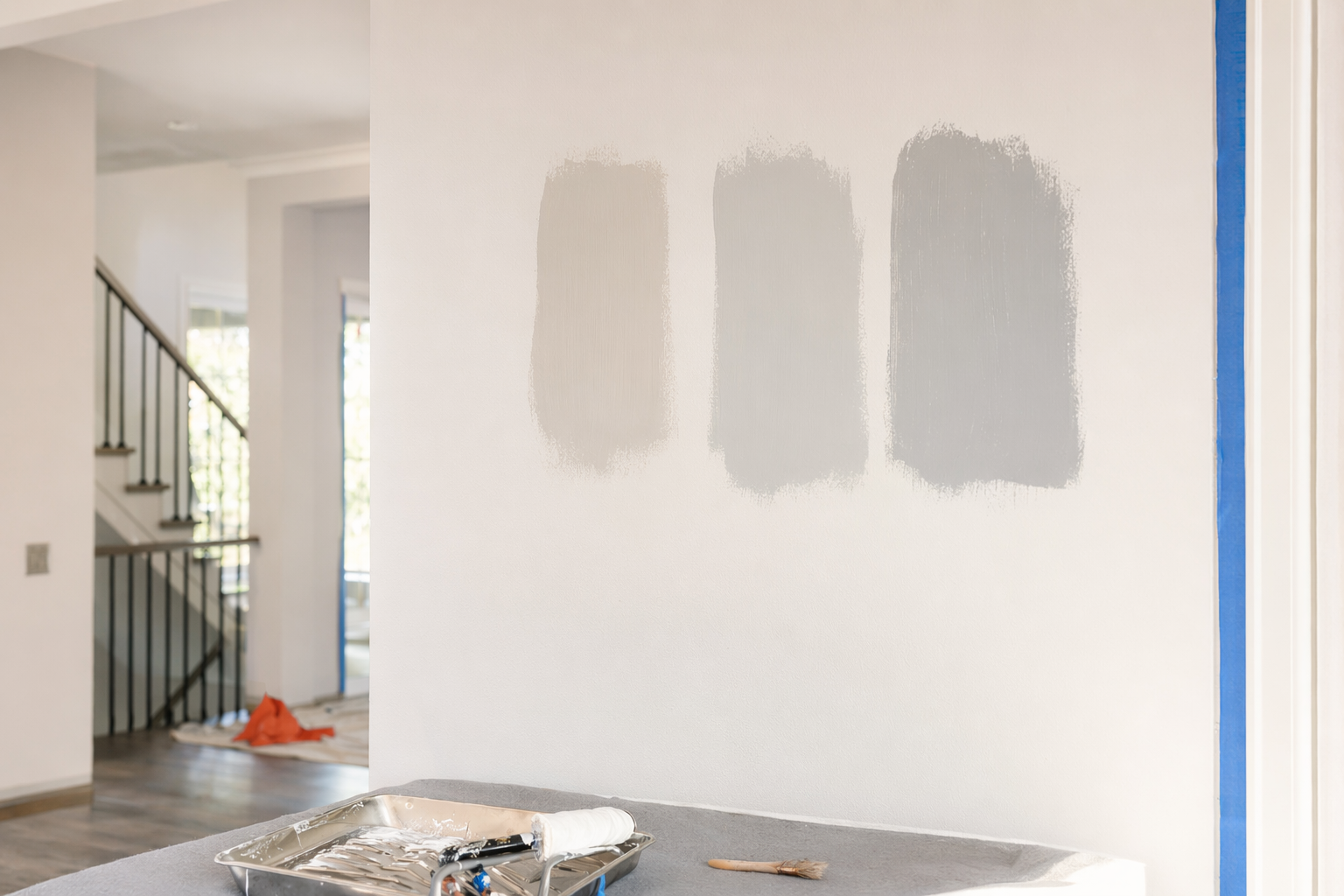
Always test outside on the actual house. Paint large sample boards or sample areas on more than one side of the home, then look at them in morning, afternoon, and evening light. Check sun-exposed walls and shaded walls. A color that feels perfect on the front may look too dark on the north side or too washed out in direct sun.
Good testing saves money. Repainting or changing trim after the job starts can add labor and materials fast. Exterior painting often runs from about $1.50 to $4.50 per square foot for simpler jobs, with many full-home projects landing roughly around $3,000 to $10,000 or more, but the real number depends on the surface, prep, number of coats, paint grade, access or height, and your area. These are general ranges, not quotes.
Which finish works best outside
For exteriors, finish matters almost as much as color. The right sheen helps with appearance, weather resistance, and cleaning. Most homeowners do best with a simple plan: lower sheen on large body areas, slightly higher sheen on trim and accents.
Flat or matte can hide surface flaws, but it may hold dirt more easily and can be harder to clean on some exteriors. Low-lustre, satin, or eggshell finishes are common for siding because they give a little durability without showing every bump. Semi-gloss is often used for trim, doors, and shutters because it stands out slightly and is easier to wipe down.
Not every material should be treated the same. Wood, fiber cement, stucco, engineered siding, metal, and masonry can each call for a different product and prep approach. A licensed, insured painter should explain what finish and coating system make sense for your specific surface and climate.
- Body/siding: usually flat, low-lustre, or satin
- Trim: often satin or semi-gloss
- Front door and shutters: often satin or semi-gloss
- Highly textured or older surfaces: lower sheen may hide flaws better
What to check before you commit
Before work starts, make sure the painter writes down the exact color names, product line, finish, areas being painted, prep included, and the total price. Vague pricing is a red flag. So are large cash deposits up front, door-to-door "today only" offers, pressure to sign immediately, or anyone who cannot show licensing and insurance where required.
Prep is a big part of exterior cost and quality. Scraping, sanding, washing, caulking, patching, protecting landscaping, and dealing with peeling areas all affect the final result. If your home was built before 1978, ask how the painter follows lead-safe work practices. That is an important safety question for older painted surfaces.
HuePort is a free matching service, not a painting company or licensed contractor. We do not do the painting work. We can help you get connected with licensed, insured painters near you so you can compare a few quotes, ask questions, and stay in control of the color and price before work begins.
If you are ready, you can get matched for free. We only collect contact and project details like your name, phone, optional email, project type, ZIP code, preferred language, and notes about the job.

Pick exterior colors that work with your roof and stone, test them on the house in real daylight, and get the color, finish, prep, and price in writing before the job starts.
Common questions
How many exterior colors should a house have?
Three is a good starting point for most homes: one body color, one trim color, and one accent color. Some homes look best with just two, especially if the architecture is simple.
Should trim be lighter or darker than the body color?
Either can work. Lighter trim gives a classic, clean look, while darker trim can feel richer and more modern. The best choice depends on your home's style, fixed materials, and how much contrast you want.
What is the safest exterior color if I do not want to regret it?
Soft whites, warm off-whites, greiges, muted grays, and gentle taupes are usually the easiest long-term choices. They tend to work with many roof colors and feel less risky than very bright or very dark colors.
Do exterior colors look lighter or darker once painted?
They often look lighter and stronger on a large outdoor surface, especially in bright sun. That is why testing large samples on the house is so important before you commit.
What finish is best for exterior siding?
Many painters use flat, low-lustre, or satin on siding, depending on the material and condition. Trim and doors often use satin or semi-gloss for a little more durability and contrast.
How do I avoid getting overcharged for exterior painting?
Get a few written quotes and make sure each one lists the prep, paint, finish, number of coats, and exact areas included. Be careful with vague estimates, pressure to sign fast, large cash deposits up front, or anyone without license and insurance information where required.