Color & finish
How to choose a paint color you'll love
Picking a paint color can feel stressful, but it gets easier when you look at light, undertones, and finish in a simple order. This guide helps you choose with more confidence before you buy gallons of paint.
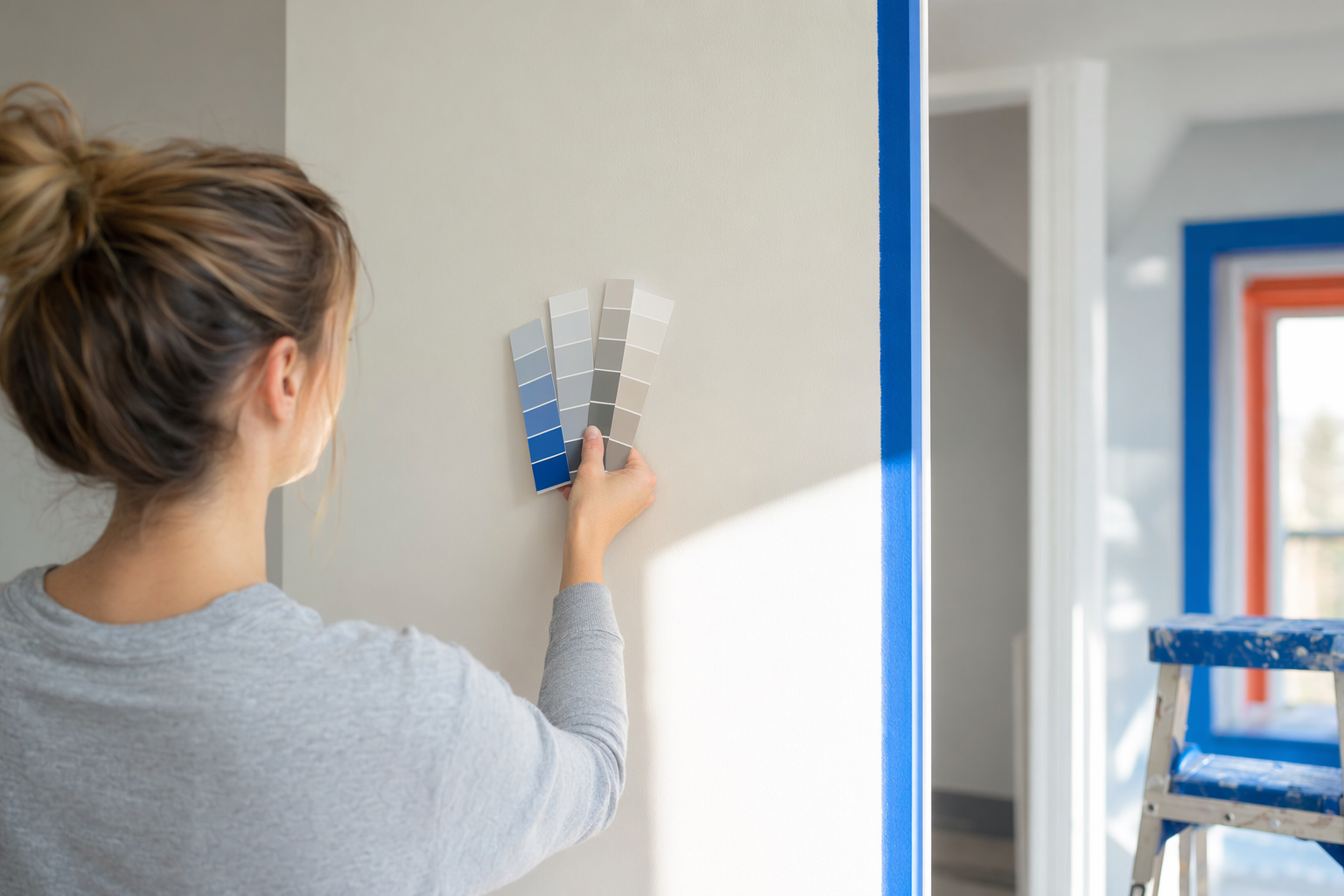
Start with the room you really have
A color chip in the store is tiny, and a photo on your phone is not the same as your home. The best color choice starts with your real room: your light, your floor, your furniture, your cabinets, and how the space feels in the morning and at night.
Before you fall in love with a color name, step back and ask what you want the room to do. Do you want it to feel brighter, warmer, calmer, cleaner, cozier, or more dramatic? That answer helps narrow your choices much faster than looking at hundreds of swatches.
It also helps to notice what is staying in the room. Wood floors, tile, countertops, brick, sofas, rugs, and curtains all have their own undertones. Your paint does not need to match them exactly, but it should live well with them.
If you are still deciding between a full repaint and smaller updates, our interior painting guide and exterior painting guide can help you think through the bigger project.
Understand undertones before you commit
Most paint mistakes are not about choosing a bad color. They happen because the undertone was wrong for the space. A beige may look pink, a gray may look purple, and a white may suddenly feel yellow or blue once it is on your wall.
Undertone is the quiet color hiding underneath the main color. Warm colors often lean yellow, red, or beige. Cool colors often lean blue, green, or violet. Neutral colors still have undertones too, even when they look simple on a paint card.
A good rule is to compare colors side by side. When you put two similar whites together, you can often see that one is creamier and one is crisper. When you compare grays, one may lean green while another leans blue. That comparison is much easier than judging one color by itself.
Look at your fixed surfaces too. Honey oak floors, cream tile, red brick, black counters, and gray stone all push color in different directions. If your floor is warm, a very icy wall color may feel off. If your counters are cool, a very creamy white may look muddy beside them.
Light changes everything
Paint is not a fixed color all day long. Natural light, lamps, shadows, and even trees outside can change how it looks. That is why a color that looked perfect in a friend’s home may feel totally different in yours.
North-facing rooms often bring cooler, softer light, so some grays and whites can feel more blue there. South-facing rooms usually get warmer, stronger light, which can make warm colors glow and make some whites look creamier. East-facing rooms can feel bright and warm in the morning, while west-facing rooms often get warmer later in the day.
Do not forget artificial light. Warm bulbs can make beige, cream, and soft white look richer. Cooler bulbs can make grays and bright whites feel sharper. If you are repainting one room but keeping the same lamps and bulbs, those details matter.
For exterior colors, sun exposure matters even more. A siding color may look lighter and stronger outdoors than it did on the sample. Trim, roof color, stone, and landscaping all affect the final look.
Test big swatches, not tiny samples
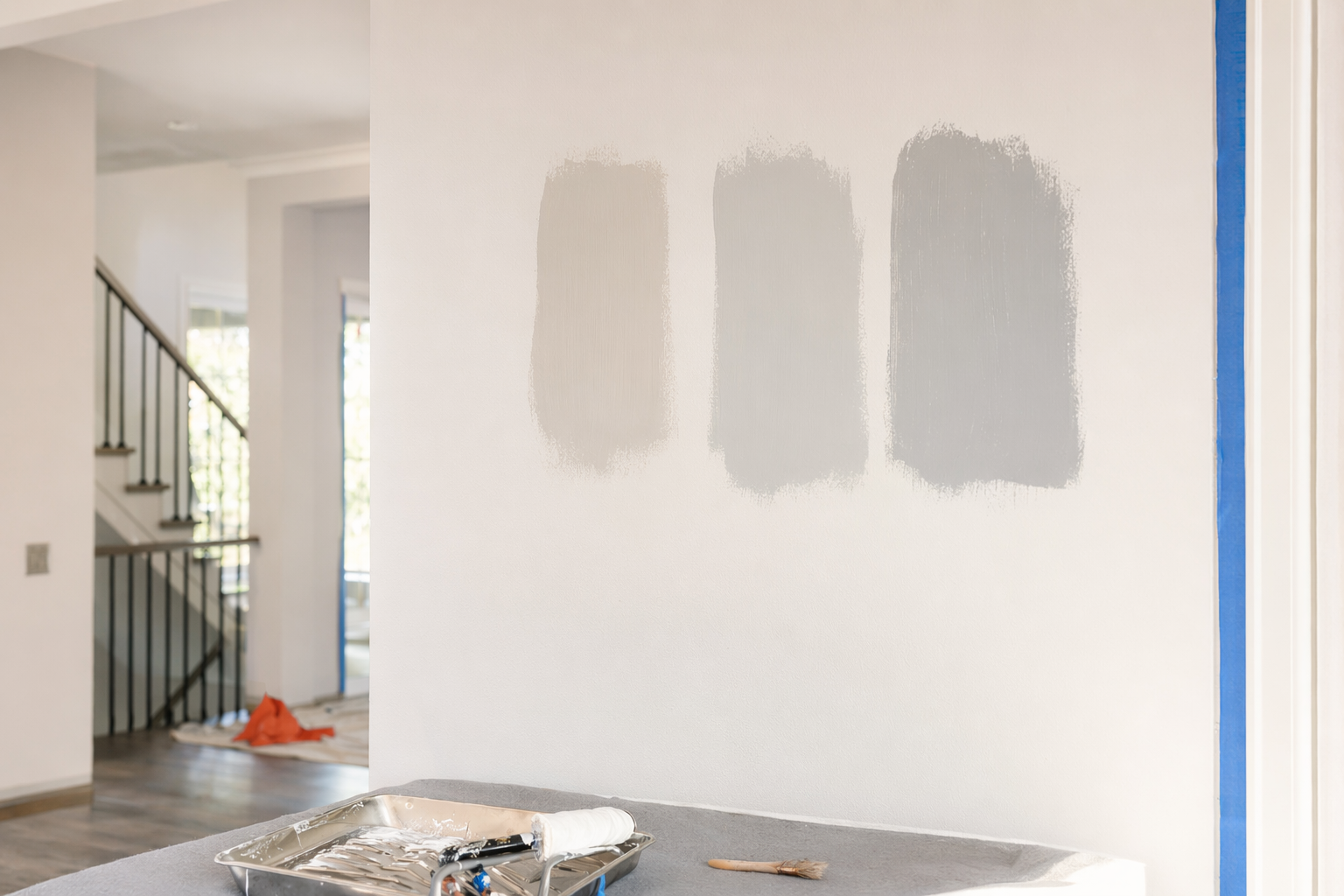
The safest way to choose paint is to test a few colors in large samples before you buy the full amount. Small chips are helpful for narrowing things down, but they are not enough for a final decision.
Paint large test swatches on more than one wall, or use large sample boards you can move around the room. Check them in morning light, afternoon light, evening light, and with your lamps on. Stand close, then step across the room. A color that looks perfect in one corner may look too dark or too green on another wall.
Try to compare only two or three options at once. Too many choices can make everything look wrong. It also helps to live with the samples for a day or two instead of deciding in ten minutes.
If you are hiring a painter, confirm the exact color name, brand line, and finish before work starts. Licensed, insured painters can often help with application and coverage questions, but you should still approve the final color yourself. If your home was built before 1978 and old paint may be disturbed, ask how the painter follows lead-safe work practices.
Choose the right finish for the surface
Color gets most of the attention, but finish matters too. Finish affects shine, cleanability, and how much wall texture shows. In general, more shine means easier wiping but also more visible dents, patches, and surface flaws.
Flat or matte finishes usually hide imperfections best and can give walls a soft look. Eggshell and satin are popular for many living spaces because they add a little durability without too much shine. Semi-gloss and gloss are often used on trim, doors, and cabinets because they are easier to wipe clean, but they show prep flaws more clearly.
There is no single perfect finish for every home. A quiet adult bedroom may do well with a lower-sheen wall paint, while a busy kitchen, bathroom, hallway, or kids' room may benefit from something more washable. Cabinets, railings, and trim usually need more prep and a product made for that kind of surface.
If you are unsure, ask the painter what finish they recommend for your specific surface and how much prep it needs. Prep affects the final look as much as the color does. HuePort is a free matching service, not a painting company, so we do not do the work ourselves — but we can help you connect with licensed, insured painters near you through get matched.
- Walls: often flat, matte, eggshell, or satin depending on traffic and texture
- Ceilings: usually low-sheen to reduce glare
- Trim and doors: often satin or semi-gloss
- Cabinets: usually need a durable, smooth-finish product and careful prep
- Bathrooms and kitchens: finish choice matters more because of moisture and cleaning
Keep the project simple and get the details in writing
If you feel stuck, it is okay to stay simple. Many beautiful homes use one calm wall color, a clean trim color, and a consistent finish plan. You do not need a dramatic color in every room to make your home feel finished.
If you hire a painter, compare a few quotes and make sure each one lists the scope clearly: what gets painted, how much prep is included, the paint line, the number of coats, the finish, and who moves or protects furniture. Honest painters should be able to explain why one option costs more than another. Interior painting often ranges from a few hundred dollars for a small room to several thousand for larger multi-room projects, but the real price depends on the surface condition, prep, number of coats, paint grade, access, and your area. These ranges are not quotes.
Watch for red flags: vague pricing, pressure to sign right away, large cash deposits up front, door-to-door "today only" deals, or someone who cannot show license and insurance information when your area requires it. You stay in control of the color and the price before work starts, and you should confirm the work looks right before paying the final amount.
If you want help finding local painters after you choose your color direction, HuePort can help through our free service. We only collect contact and project details such as your name, phone, optional email, project type, ZIP code, preferred language, and notes. You can also explore more ideas in our paint colors hub.

Choose paint by testing a few colors in your real light, checking undertones against your floors and furniture, and picking a finish that fits the surface and how the room is used.
Common questions
Why does my paint look different at home than it did in the store?
Light is the biggest reason. Your room's daylight, bulbs, shadows, floors, and furniture can all change how a color reads, so always test large samples at home before choosing.
How many paint colors should I test?
Usually two or three is enough. More than that can get confusing and make it harder to see the undertone differences clearly.
What paint finish is best for walls?
It depends on the room and the wall condition. Lower-sheen finishes hide flaws better, while eggshell or satin can be easier to clean in busier spaces.
Should trim and walls be the same finish?
Not always. Many homes use a lower sheen on walls and a slightly shinier finish on trim and doors for durability and contrast.
Can a painter help me choose a color?
Many licensed, insured painters can share practical feedback, but you should approve the final color yourself before work begins. Get the exact color, finish, scope, and price in writing.
How much does it cost to repaint a room?
A small room may cost a few hundred dollars, while larger or more complex rooms can cost more, especially if there is patching, trim work, or multiple coats. The real price depends on prep, surface condition, paint grade, finish, and your area, so ranges are not quotes.