Color & finish
Which paint finish for which surface
The right paint finish can make a room feel calm, bright, washable, or elegant. This quick guide helps you match finish to surface so it looks good, cleans well, and holds up over time.
Start with what the surface needs
Paint finish is about more than shine. It changes how light hits the surface, how easy it is to clean, and how much wall texture or patching shows.
In general, flatter finishes hide flaws better but are less washable. Shinier finishes are easier to wipe, but they highlight bumps, brush marks, dents, and uneven repairs. That is why the “best” finish depends on the room, the surface condition, and how much wear it gets.
A simple rule: low-traffic areas can usually use flatter paint, while wet, busy, or high-touch areas often need a tougher finish. If you are still choosing color too, start with colors first, then narrow the finish.

A quick map: which finish for which surface
These are common, practical choices homeowners use. Brand names vary a little, but most paints fall into the same basic finish levels.
- Ceilings: flat or ceiling paint. It helps hide seams, roller marks, and uneven texture.
- Living rooms and bedrooms walls: matte, flat, or eggshell. Matte/flat is softer; eggshell adds a little washability.
- Hallways, kids' rooms, and busy common areas: eggshell or satin. These clean more easily after scuffs and hand marks.
- Kitchens and bathrooms walls: satin or sometimes eggshell if moisture is low and the paint is made for baths. More durability usually matters here.
- Trim, baseboards, doors, and window casings: satin, semi-gloss, or gloss. These finishes stand up better to touching and cleaning.
- Cabinets: satin, semi-gloss, or a specialty cabinet finish. Smooth prep matters as much as the sheen.
- Exterior siding: flat, low-lustre, satin, or eggshell depending on the material and look you want.
- Exterior trim, shutters, and doors: satin or semi-gloss are common because they are easier to clean and can make details stand out.
If your walls are older, patched, or not perfectly smooth, going too shiny can make every flaw more visible. For rough surfaces, many people are happier with a lower sheen.
How each finish behaves in real life
Flat and matte have very little shine. They are forgiving on older drywall, ceilings, and walls with minor imperfections. The tradeoff is that they can mark more easily, and some very flat paints are harder to scrub without changing the look.
Eggshell is one of the most popular wall finishes because it gives a soft, low sheen without looking shiny. It is often a good middle ground for family rooms, dining rooms, and bedrooms.
Satin has a smoother, slightly more reflective look. It is often chosen for bathrooms, kitchens, hallways, and trim because it wipes down more easily. But it will show roller lines, patching, and wall texture more than matte or eggshell.
Semi-gloss and gloss are durable and reflective. They are common on trim, doors, cabinets, and some exterior details. On large wall areas, many people find them too shiny unless that look is intentional.
Best finish by room and project
For most interior walls, eggshell or matte is the safest place to start. Bedrooms and formal rooms can lean flatter for a softer look. Busy homes with children, pets, or lots of daily wear often do better with eggshell or satin in the main living areas.
Bathrooms, laundry rooms, and kitchens need more thought. Steam, splashes, grease, and wiping are real life. Many homeowners choose satin there for easier cleaning, but if the walls are imperfect, a washable eggshell made for moisture-prone spaces may be a good compromise.
Cabinets and trim are different from walls. These surfaces get touched constantly, so durability matters. Satin and semi-gloss are common choices, but the prep work is what really decides whether the finish looks smooth and lasts. If you are planning a larger interior or exterior project, ask the painter what finish they recommend for each surface and why.
For exteriors, flatter paint can help hide siding flaws, while satin or low-lustre can be easier to wash and may hold up well on trim. Sun, rain, surface material, and your climate all matter, so local experience helps.
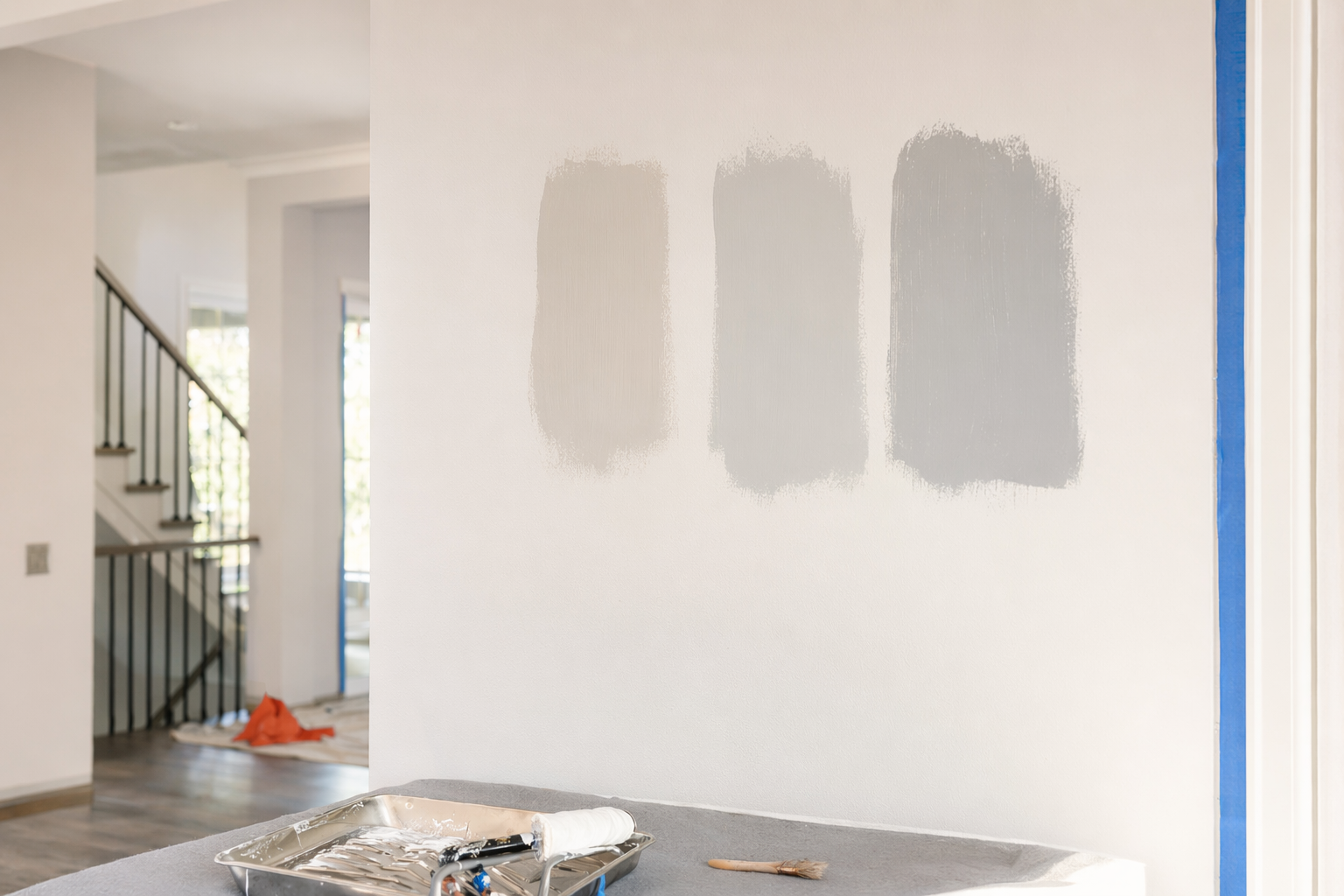
Test before you commit
Finish can look very different in the store, in daylight, and under your lamps at night. A color that seems perfect in eggshell may feel too bright in satin or too heavy in flat.
- Buy a sample or sample board in the color you like.
- Test it on more than one wall, or paint a movable board so you can carry it around the room.
- Look at it in morning, afternoon, and evening light.
- Check it with lights on and off.
- Wipe the sample area gently if cleanability matters.
- Stand close and also across the room to see how much texture the finish reveals.
This simple test can save you from repainting. It is especially helpful in kitchens, baths, dark rooms, and spaces with lots of patched drywall.
What affects price, and how to hire smart
Changing finish can change cost a little, but prep is usually the bigger driver. Glossier finishes and cabinet coatings often need more sanding, cleaning, patching, caulking, and careful application to look right. That means more labor.
As a very general example, many interior wall-painting projects are priced by room size or square footage, and finishes themselves may not change the total dramatically unless the job needs extra prep or specialty products. Cabinet painting often costs much more per square foot than walls because the prep is slower and more detailed. Exterior costs also depend heavily on height, access, scraping, repairs, the number of coats, and your area. These are ranges, not quotes.
Before you hire, compare a few written quotes. Make sure the scope lists the surfaces, prep, number of coats, paint line, and finish for each area. Watch for vague pricing, large cash deposits up front, door-to-door "today only" deals, no license or insurance, or pressure to sign on the spot.
HuePort is a free matching service, not a painting company, licensed contractor, or paint store. We can help you connect with licensed, insured painters near you through get matched. It is always free for the homeowner, and you stay in control of the color, scope, and price before work starts. For homes built before 1978, ask how the painter follows lead-safe work practices.
Pick a flatter finish to hide flaws, a shinier finish where you need easier cleaning, and always test it in your own light before you commit.
Common questions
Is eggshell or satin better for walls?
Eggshell is often the safer all-around choice for most walls because it has a soft look and hides flaws better. Satin is easier to wipe but shows more texture and patching.
What finish is best for a bathroom?
Many homeowners choose satin for bathroom walls because it handles moisture and cleaning well. If the walls are imperfect, a washable eggshell made for bath areas may be a good balance.
Should ceilings be painted flat?
Usually, yes. Flat ceiling paint helps hide seams, patches, and uneven texture, and it keeps the ceiling from reflecting too much light.
What finish should I use on trim and doors?
Satin or semi-gloss are the most common choices. They are durable, easier to clean, and help trim stand out from the walls.
Is semi-gloss too shiny for walls?
For most homes, yes. Semi-gloss on large wall areas can look very reflective and can highlight every bump or repair, so it is more often used on trim, doors, and cabinets.
Does a shinier finish cost more?
Sometimes a little, but the bigger cost difference is usually prep and labor. Smoother, shinier finishes often need better surface prep and more careful application, especially on cabinets and trim.
How do I know if a painter is giving me a fair price?
Get a few written quotes and compare the scope, prep, paint product, finish, and number of coats. Prices vary by surface condition, access, paint grade, local labor, and project size, so a range online is not a quote.
Can HuePort send me a painter?
HuePort is a free matching service, not a painting company. We can help connect you with licensed, insured painters near you, and you choose who to hire after reviewing the details.