Color & finish
Trending vs timeless paint colors
You do not have to choose between “safe” and “stylish.” The best paint color plan usually mixes a few flexible, timeless colors with trendier shades in places that are easy to repaint later.
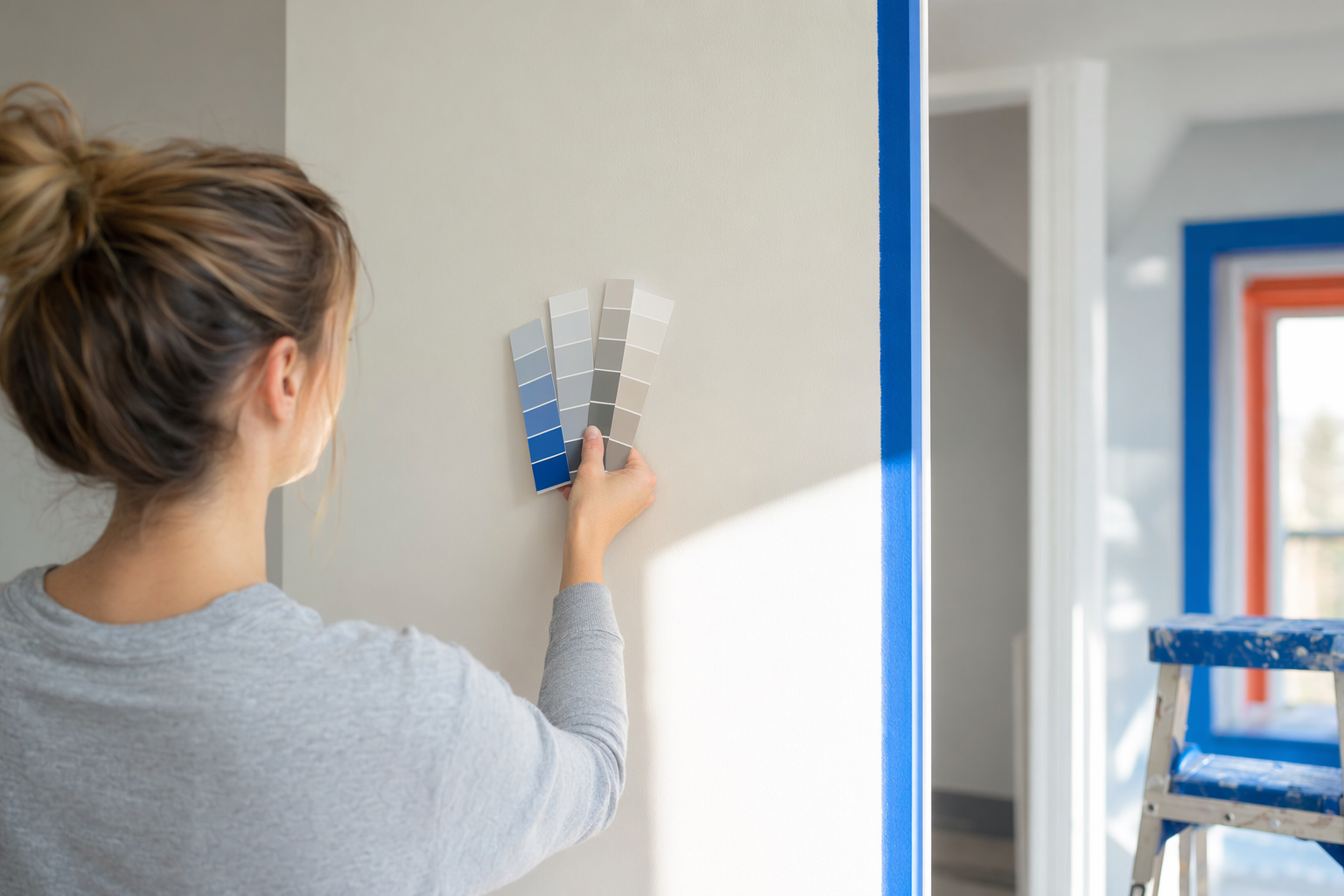
Trend vs timeless: what those words really mean
“Trending” colors are shades showing up a lot right now in design photos, paint collections, and recently painted homes. Think warm whites, earthy greens, moody blue-grays, clay tones, and richer accent colors. They can feel fresh and personal, and sometimes they make a room more memorable.
“Timeless” colors are the shades people tend to live with comfortably for years. These are often soft whites, balanced greiges, gentle beiges, muted grays, and versatile off-whites that work with many floors, cabinets, and furniture styles. Timeless does not have to mean boring — it usually means flexible.
A smart approach is not picking one side forever. It is using timeless colors for larger, expensive-to-repaint areas and saving stronger trends for smaller spaces or features where you can change your mind without a huge cost.
- Timeless usually means easier to match with furniture and flooring
- Trendy usually means more personality and stronger visual impact
- The right choice depends on the room, light, and how long you plan to stay
Where trendy colors make sense
Bold or current colors can work very well when the surface is smaller, lower-risk, or easy to repaint. A powder room, accent wall, front door, built-ins, cabinets, or a bedroom can be a good place to try a color that feels more current. If you love it now, there is real value in enjoying your home now — not only designing for a future buyer.
Trendy colors also work when they fit the fixed parts of the room. A warm olive may look beautiful with honey oak floors, while a cool blue-gray may fight against them. The same color can look elegant in one home and off in another because undertones, natural light, and surrounding materials change everything.
If you are curious but nervous, try the trend in a controlled way. Use it on one wall, lower cabinets, a laundry room, shutters, or trim details instead of the entire main living area. That gives you personality without locking the whole home into one moment in design.
- Good places for trends: powder rooms, doors, accent walls, bedrooms, built-ins
- Less risky if the room is small or the repaint cost is lower
- Always test because online photos can be misleading
Where timeless colors are usually the safer choice
Timeless colors are often the safer move in large open interiors, main hallways, exterior siding, and spaces connected to expensive surfaces like cabinets, stone, tile, or wood floors. These areas affect more rooms at once, and repainting them later can take more labor, more paint, and more disruption.
For resale, broad-appeal neutrals are often easier for many buyers to accept, especially in living rooms, kitchens, and the exterior. That does not mean every room must be white. It means the whole-house palette usually feels calmer and more cohesive when the main color family is steady and the stronger personality comes from accents, art, textiles, or one or two intentional paint moments.
Exterior projects especially reward caution. A trendy exterior color can look beautiful, but siding, trim, shutters, brick, roof color, landscaping, and neighborhood context all matter. If you are painting the full outside of the house, a timeless base color with one bolder accent is often easier to live with for years. See more ideas in our exterior and colors guides.
- Safer for large rooms, open layouts, siding, and expensive-to-repaint areas
- Often easier for resale, though there are no guarantees
- Works well as a base palette with trendier accents layered in
How to test before you commit
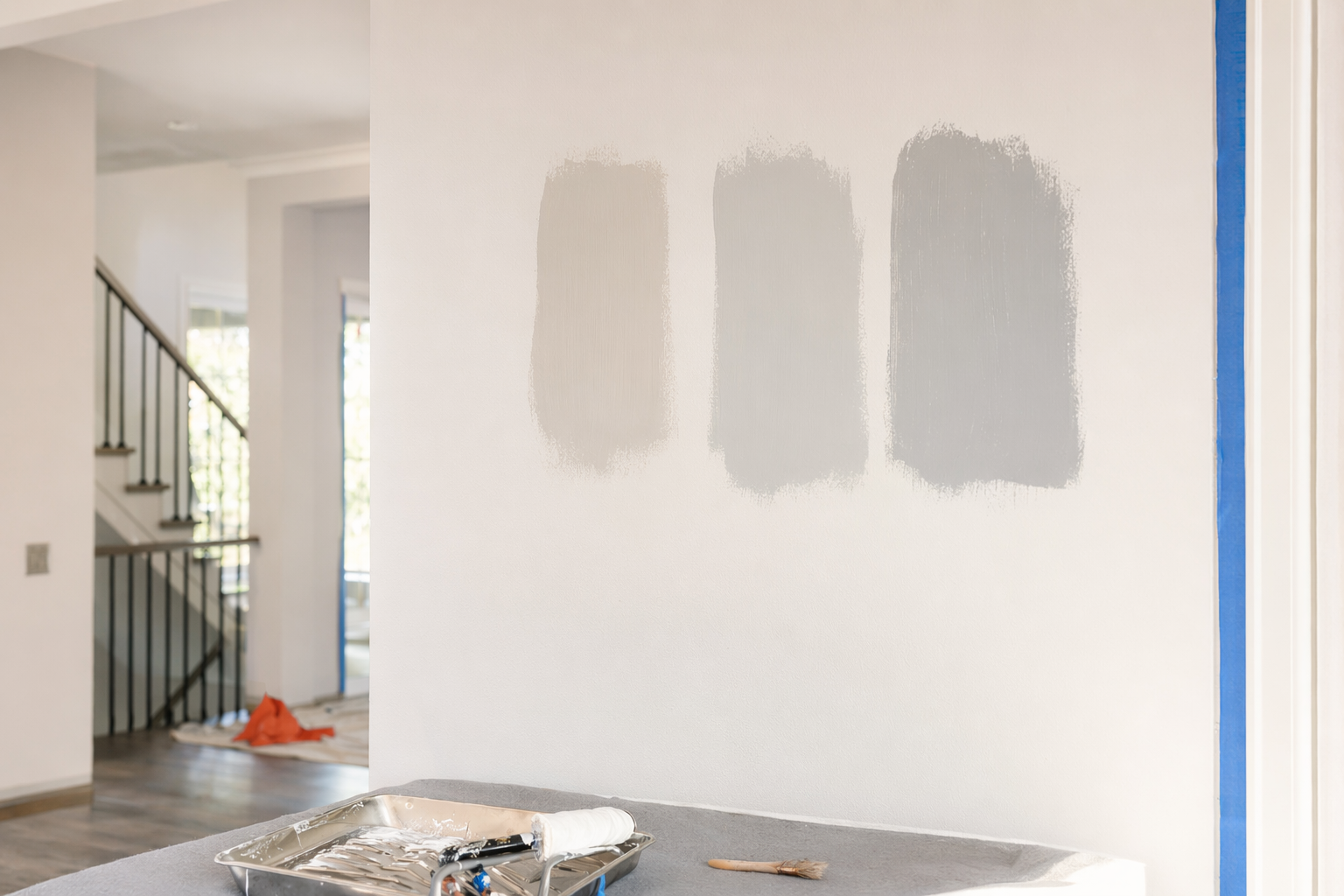
Testing is the part that saves people from regret. Paint chips are too small, and phone screens are not reliable. A color can turn pink, green, yellow, blue, or muddy depending on sunlight, shade, bulbs, flooring, and nearby finishes.
- Narrow your choices to 3 to 5 colors in the same family.
- Look at each one morning, afternoon, evening, and under lamps.
- Compare them next to your floor, countertop, tile, cabinets, sofa, or roof color.
- Test on more than one wall because light changes from side to side.
- Live with the samples for a few days before deciding.
Watch the undertone, not just the color name. A white may lean creamy yellow, soft gray, green, or pink. A beige may feel sandy and warm or read peachy in some light. A gray can suddenly look blue or purple. If a color seems “a little off,” trust that reaction.
If you are hiring a painter, confirm the exact color name, brand line, and finish in writing before work starts. HuePort is a free matching service, not a painting company, so we do not do the painting ourselves. We can help you connect with licensed, insured painters near you through get matched, and you stay in control of who you hire.
- Test in daytime and at night
- Check undertones against fixed surfaces
- Get color, scope, and price in writing before work begins
Best paint finishes for trendy and timeless colors
Color gets most of the attention, but finish matters too. The same shade can look softer in a flat finish or sharper in an eggshell or satin. In general, lower-sheen finishes hide wall imperfections better, while higher-sheen finishes are easier to wipe but show more surface flaws.
For most interior walls, matte or eggshell is a common middle ground. They keep color looking rich without too much shine. For trim, doors, and cabinets, many homeowners choose satin, semi-gloss, or another smoother finish because those surfaces get touched more often. Bathrooms, kitchens, and busy hallways may also need a more washable finish, depending on the product.
For exteriors, the right finish depends on the material and the condition of the surface. Siding, trim, doors, railings, decks, and masonry may all call for different products and sheen levels. Ask a licensed, insured painter what is suitable for your surface and climate. For homes built before 1978, ask how the painter follows lead-safe work practices if old paint may be disturbed.
- Flat or matte: softer look, hides flaws better, less washable on some products
- Eggshell: popular for many interior walls
- Satin or semi-gloss: common on trim, doors, and some cabinets
Cost, resale, and how to make a smart final choice
Choosing a bold color does not always cost more by itself, but some shades need extra coats or a tinted primer to cover well. The real painting price depends on the surface, prep, number of coats, paint grade, access or height, and your area. These ranges are not quotes, but many US homeowners may see interior room painting around a few hundred to over $1,500 per room, cabinet projects from the low thousands upward, and full exterior painting from several thousand dollars and up depending on size and condition.
Prep is what often drives the bill up: patching, sanding, caulking, peeling paint, damaged surfaces, hard-to-reach areas, and detailed trim. If one quote is much lower than the others, ask what is missing. Vague pricing, large cash deposits up front, door-to-door “today only” deals, pressure to sign immediately, or no proof of license and insurance are common warning signs.
If resale matters, ask yourself three questions: Do I love this enough to enjoy it now? Will it work with my home’s fixed finishes? How hard and expensive will it be to change later? If you want help finding a local pro to price the job, compare a few quotes and verify license and insurance first. HuePort is free for homeowners, and we only collect basic contact and project details to help with matching.

Use timeless colors for the big, expensive-to-repaint areas and save trendier colors for smaller spots where you can have fun without a big risk.
Common questions
Should I avoid trendy paint colors if I might sell soon?
Not always. A bold color in a small room or on an easy-to-repaint surface may be fine, but broad-appeal neutrals are often the safer choice for main living spaces and exteriors. Resale is never guaranteed.
What paint colors stay in style the longest?
Usually soft whites, balanced off-whites, gentle greiges, muted beiges, and other colors that work with many materials and furniture styles. The exact “right” neutral depends on your lighting and undertones.
Can I use a trendy color without repainting the whole house?
Yes. Try it on an accent wall, front door, powder room, built-ins, or a bedroom. That lets you add personality without making the entire home harder to change later.
What finish should I choose for interior walls?
Many homeowners choose matte or eggshell for interior walls because they balance appearance and practicality. The best finish depends on the room, traffic, moisture, and wall condition.
Why did the sample look different on my wall than online?
Light, undertones, flooring, furniture, and nearby surfaces can change how a color looks. Always test a few options in your actual room and check them at different times of day.
Can HuePort tell me which painter to hire?
HuePort is a free matching service, not a painting company or contractor. We can help connect you with painters near you, but you choose who to hire, confirm the color and price, and approve the work before final payment.