Exterior
Painting your whole exterior
Repainting your whole exterior is a big job, but good prep and the right coating can protect your home for years. Here’s what affects timing, finish, and cost — and how to compare painters without getting pressured.
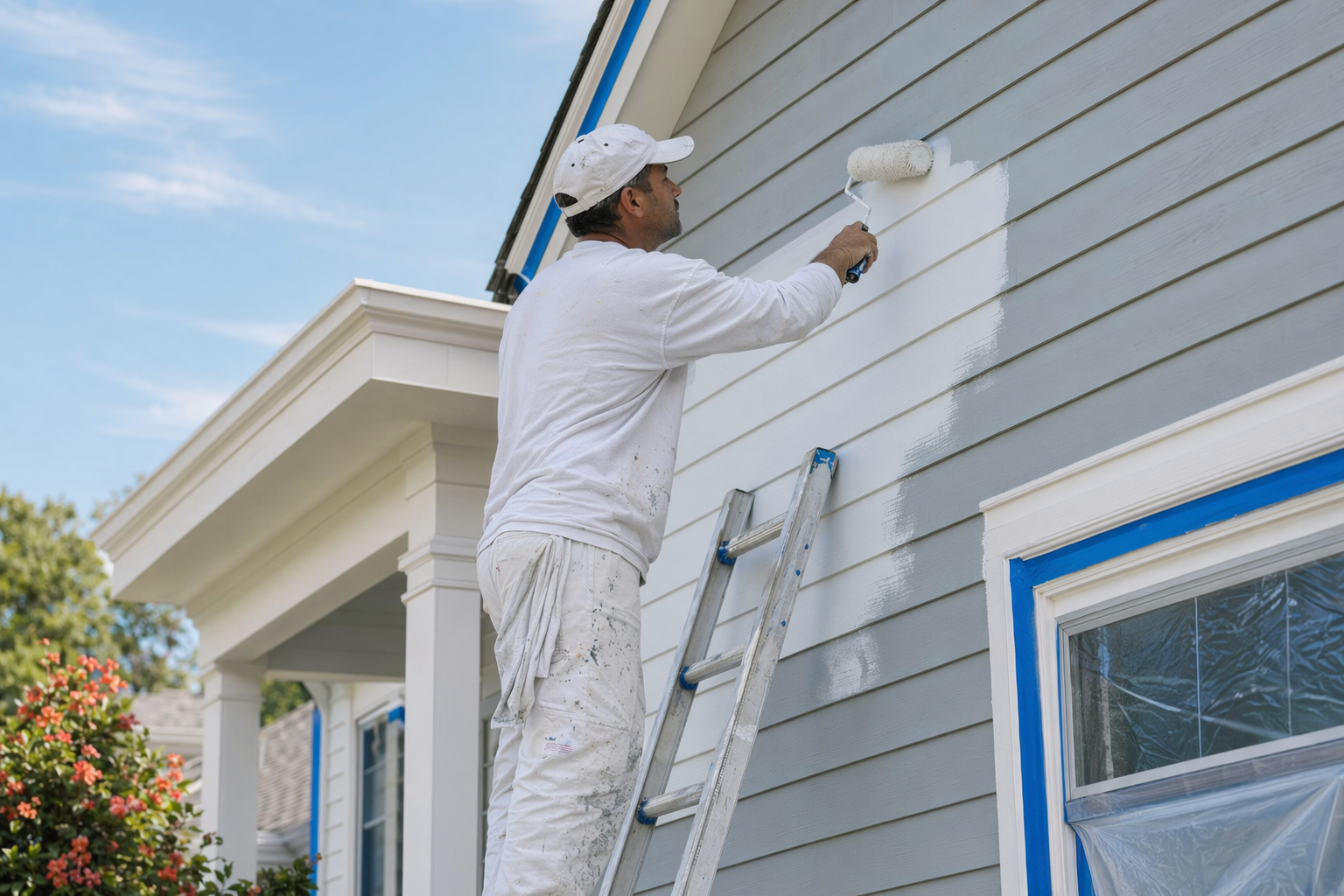
What a whole-exterior paint job really includes
Painting your whole exterior usually means more than just the main walls. The full scope may include siding, trim, fascia, soffits, doors, shutters, garage doors, porches, railings, and sometimes gutters or downspouts. That is why two homes that look similar from the street can have very different prices.
A good exterior job starts with the surface, not the color. Paint lasts longer when the old coating is cleaned, loose paint is removed, damaged areas are addressed, gaps are caulked where appropriate, and the right primer and topcoat are used for the material. Wood, stucco, fiber cement, engineered wood, brick, and metal all need slightly different prep and products.
If you are still deciding on color, it helps to think about sun, shade, roof color, landscaping, and fixed items like stone or brick. You can explore ideas on our colors hub, then compare that with practical exterior planning on our exterior pages.
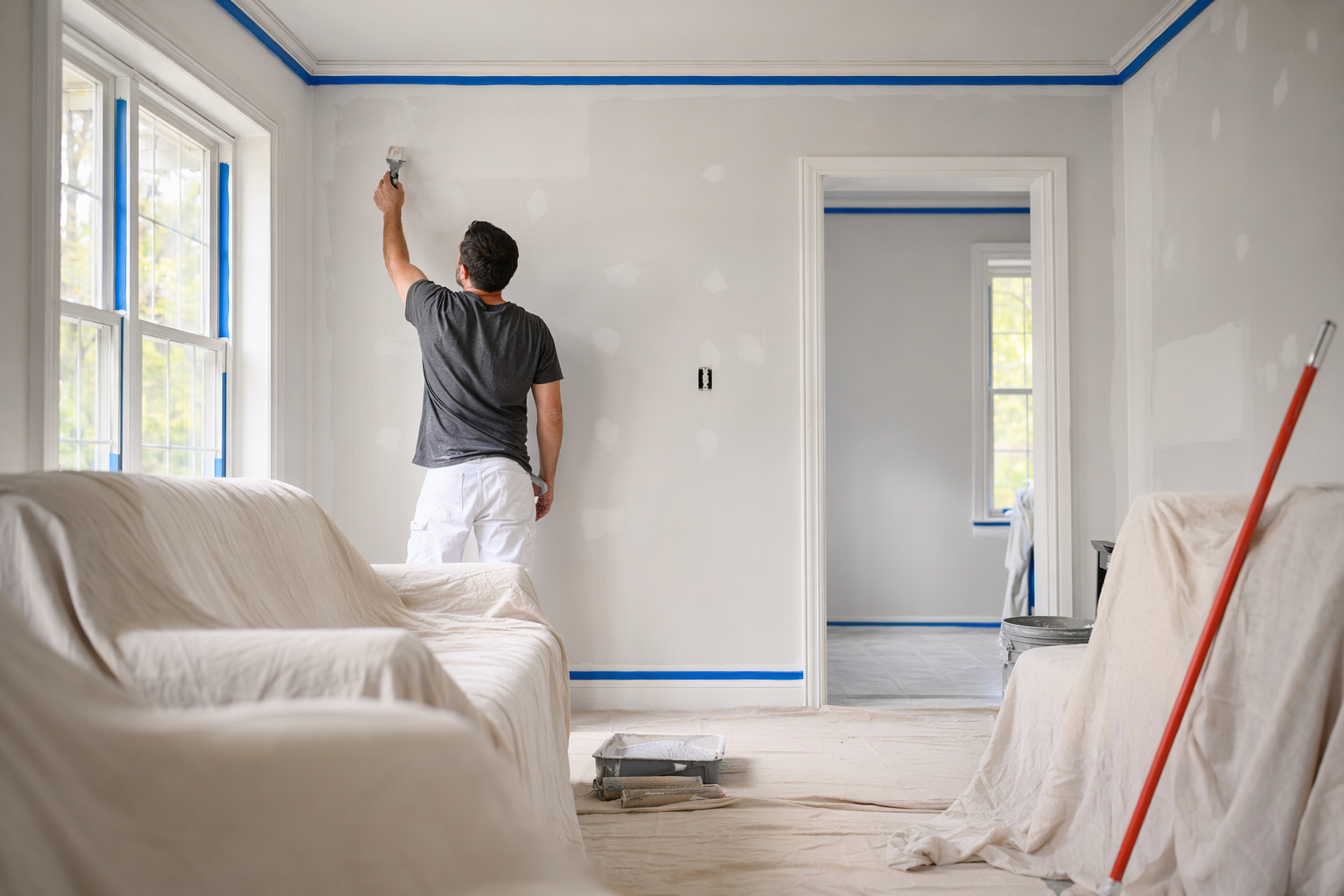
Prep matters more than most homeowners expect
The biggest difference between a paint job that looks good for a long time and one that fails early is usually prep. Pros often start with washing to remove dirt, chalking, mildew, and pollution. After that, they may scrape peeling areas, sand rough edges, spot-prime bare material, seal joints, and protect plants, windows, lights, and walkways.
On wood surfaces, prep may include replacing small sections of rot or damaged trim before painting. On stucco or masonry, hairline cracks may need patching with compatible materials. On metal, rust has to be treated correctly before primer and paint go on. If surfaces are glossy, heavily weathered, or already failing, prep can take much longer and cost more.
For homes built before 1978, old paint may contain lead. That is a safety issue to discuss before work begins. Ask how the painter follows lead-safe work practices when disturbing old paint. HuePort gives general information only and is a free matching service, not a painting company or lead-abatement provider.
Best exterior paint and coating choices by surface
Most whole-house exterior repaints today use high-quality acrylic latex paint because it handles sun, rain, temperature swings, and normal expansion better than many older products. But the best choice still depends on the surface and its condition.
For wood siding and trim, painters often use an exterior acrylic paint system with a bonding or stain-blocking primer where needed. For fiber cement, many pros use 100% acrylic exterior paint with the sheen recommended by the manufacturer. Stucco and masonry may need masonry primer or an elastomeric-style coating in some cases, especially where extra flexibility or filling ability is helpful. Metal trim, railings, and doors usually need rust-inhibitive primer or a direct-to-metal product if appropriate for that substrate.
Finish matters too. Flat or low-luster finishes can soften surface imperfections on siding and stucco, while satin is common on trim because it is easier to clean and shows detail nicely. Higher sheen can highlight dents, patches, or uneven texture, so it is not always better.
A licensed exterior painter should explain why they are recommending a specific primer and topcoat for your siding, trim, or masonry instead of giving a one-size-fits-all answer.
How weather affects timing and results
Exterior painting depends heavily on weather. Even a great paint product can fail if it is applied at the wrong temperature, on a damp surface, or before rain, heavy dew, or freezing conditions. Dry time and cure time are not the same, so a wall that feels dry to the touch may still be vulnerable.
In many parts of the US, spring and fall are popular because temperatures are more moderate. Summer can work well too, but strong direct sun can make paint dry too fast on some surfaces, and high humidity can slow proper curing. In colder areas, the season may be shorter. In hot climates, crews may shift work to morning shade or follow the sun around the house.
Ask the painter how they plan around temperature, humidity, rain risk, and overnight lows. A careful contractor will talk about surface moisture, not just air temperature, and will not promise a perfect finish date if the forecast changes.
If you want to understand local price patterns and timing better, our costs pages can help you compare common ranges.
Honest whole-exterior painting cost ranges
For many homes, whole-exterior painting is often priced by the project, but square-foot ranges can still help you plan. A rough national range for exterior painting is about $1.50 to $4.50 per square foot of paintable surface for more straightforward jobs, and roughly $4.00 to $8.00+ per square foot when prep is heavy, access is difficult, the home is taller, or the surfaces are more complex. These are general ranges, not quotes.
Some painters estimate from your home’s footprint or living square footage, while others calculate actual paintable wall area and trim detail. As a very broad example, many full exterior projects land somewhere around $3,000 to $12,000+, with larger homes, multi-story access, extensive trim, repairs, premium coatings, and difficult prep pushing the total higher.
What raises the price:
- Peeling paint, bare spots, rot, cracks, rust, mildew, or chalking
- Tall walls, steep grades, ladders, lifts, or hard-to-reach sides
- Detailed trim, shutters, railings, doors, or multiple accent colors
- Strong color changes that need extra primer or extra coats
- Higher-grade paint and specialty coatings
- Tight access, landscaping protection, or long project setup time
What may keep the cost lower:
- Sound existing paint with limited prep
- Simple one-story access
- Fewer color changes and less trim detail
- Standard acrylic exterior products suited to the surface
Always get the scope, prep, paint brand or grade, number of coats, and total price in writing before work starts. A low number is not always a good deal if the prep is vague or key items are missing.
How to find and compare a licensed exterior painter
When you hire for a whole-house exterior, look for a licensed and insured painter where your area requires it, and verify it. Ask what surfaces they paint most often, who handles prep, what primer and topcoat they plan to use, how they protect landscaping and windows, and how they handle weather delays.
Watch for common painting scams and overcharging: vague pricing, big cash deposits up front, door-to-door “today only” deals, no license or insurance, or pressure to sign right away. A professional estimate should clearly describe the areas included, prep steps, products, number of coats, exclusions, and payment schedule.
The homeowner stays in control. You confirm the color and price before work starts, choose who to hire, and confirm the work is done right before paying the final amount. It is smart to compare a few quotes, especially on a large exterior project.
HuePort is a free matching service for homeowners, not a painting company, licensed contractor, or paint store. We can help you get connected with painters near you through get matched. We collect contact and project details only: name, phone, optional email, project type, interior or exterior, ZIP, preferred language, and optional notes.

A whole-exterior paint job lasts longer when the prep is thorough, the coating fits the surface, and you compare clear written quotes from licensed, insured painters.
Common questions
How often should a house exterior be repainted?
It depends on the surface, climate, sun exposure, and how well the last job was prepped. Some exteriors may look good for many years, while heavily exposed wood trim or older coatings may need attention sooner.
Is exterior painting usually priced by square foot?
Sometimes, but many painters price the whole project based on surface condition, access, trim detail, and the products needed. Square-foot ranges are useful for planning, but they are not quotes.
What is the best time of year to paint a whole exterior?
Mild, dry weather is usually best, but the right season depends on your local climate. A good painter will plan around temperature, humidity, rain, and surface moisture instead of just picking a date.
Do I need primer on the whole house exterior?
Not always. Some jobs need full priming, while others need spot primer only on bare, patched, stained, or repaired areas. The right answer depends on the surface and the condition of the old paint.
What should I ask before hiring an exterior painter?
Ask for license and insurance information, the full prep plan, the paint system they recommend, the number of coats, what is included in the price, and how weather delays are handled. Get the scope, color, paint, and price in writing first.
My home was built before 1978. Does that change the project?
It can. Older paint may contain lead, so ask how the painter follows lead-safe work practices when disturbing painted surfaces. That is an important safety question before exterior prep begins.