Guides
DIY vs hiring a painter
DIY can save money on simple, low-risk painting jobs, but hiring a painter is often worth it when the surface is large, high, detailed, or badly damaged. HuePort is a free matching service, not a painting company, and we can help you compare licensed, insured painters near you.
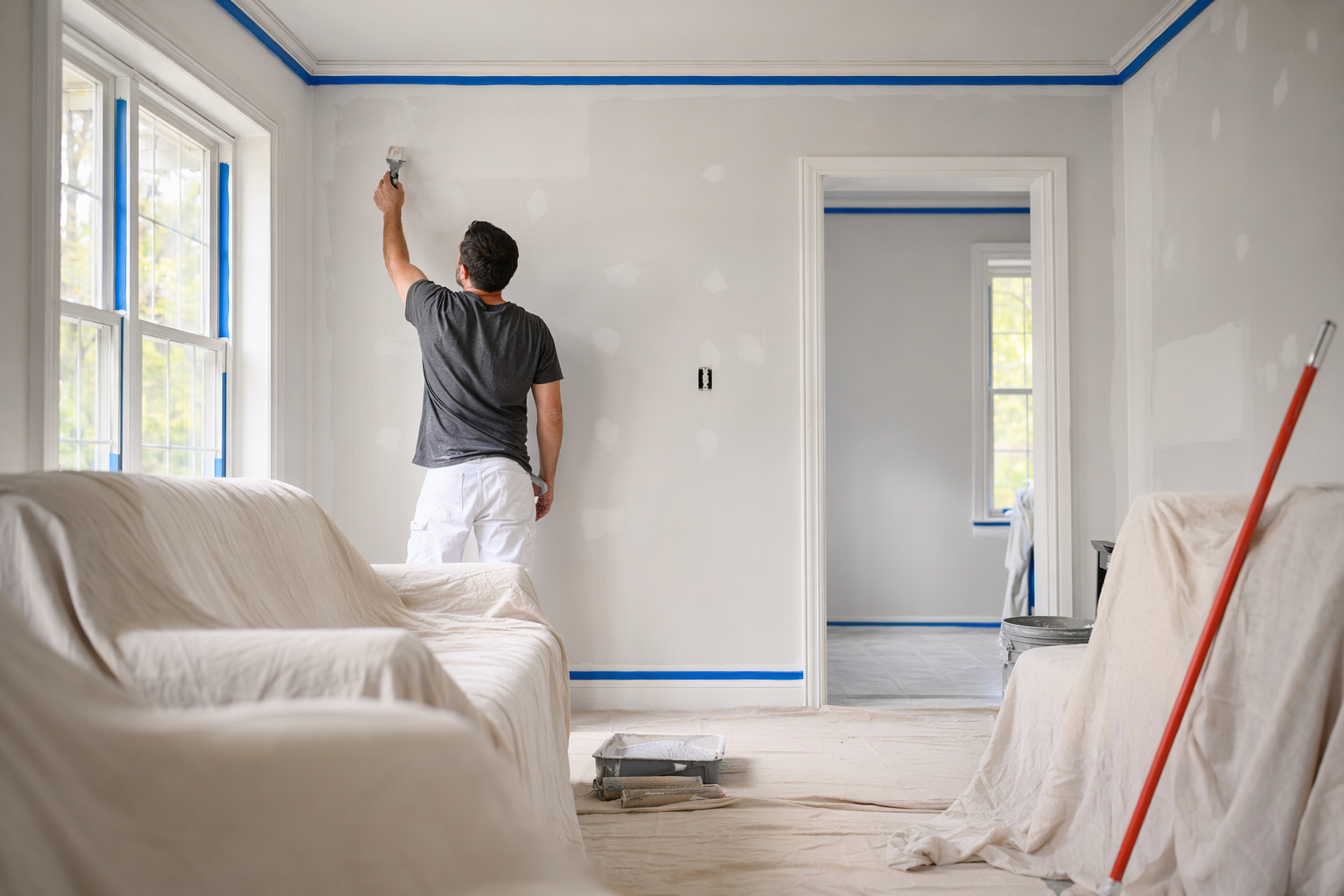
Short answer: DIY for simple jobs, hire a pro for the hard parts
If you are painting one small room, a closet, or a single piece of furniture, DIY often makes sense if you have time, patience, and basic tools. You can control the color, the pace, and the budget.
Hiring a painter usually makes more sense for big rooms, tall walls, ceilings, cabinets, siding, trim, decks, or any job that needs serious prep. A pro can also help when you want a smoother finish, faster turnaround, or less mess.
A good rule: if the job is mostly “paint and go,” DIY may be fine. If it is mostly prep, ladder work, repair, or detail work, a licensed and insured painter is usually the safer bet.

When DIY is a good choice
DIY works best when the surface is in good shape and the project is small enough to finish without rushing. Simple interior walls, a single accent wall, a bedroom, or touch-ups are common DIY projects.
DIY may also be a good fit if you already own some supplies, do not mind learning as you go, and can live with small imperfections. Many homeowners use DIY when they want to save money more than they want a perfect, pro-level finish.
Before you start, make sure you understand the surface, the primer needs, the number of coats, and the cleanup. Those details can change the time and cost more than people expect.
When hiring a painter is worth it
A painter can be worth the cost when the project has height, detail, or heavy prep. That includes exteriors, stairwells, ceilings, cabinets, trim, popcorn or textured surfaces, and older homes with peeling paint or water stains.
Pros also help when timing matters. If you need the job done before guests arrive, before listing a home, or between tenants, paying for labor may be better than stretching a DIY project over weeks.
For homes built before 1978, paint may contain lead. That is a safety point, not something to guess about. Ask any painter how they handle lead-safe work practices, and follow local rules and the painter’s guidance.
What each path really costs
DIY often looks cheaper at first because you are not paying labor. For a small interior room, materials may run about $50 to $250 if you already have some basic tools; with rollers, tape, drop cloths, primer, and better paint, it can be more. For larger or more detailed jobs, DIY material costs can climb to several hundred dollars or more.
Hiring a painter usually costs more because you are paying for labor, prep, protection, setup, cleanup, and experience. As a rough general range, interior rooms may run a few hundred dollars to well over $1,000 depending on size and prep; full interiors, cabinets, exteriors, and decks can range much higher. Costs vary by surface, prep, number of coats, paint grade, access/height, and your area, so ranges are not quotes.
If you want a better sense of what is normal in your area, compare a few written quotes and look at our cost guides.
Red flags: when a paint quote may be too good to be true
Watch out for vague pricing, large cash deposits up front, door-to-door “today only” deals, no license or insurance, or pressure to sign on the spot. Those are common warning signs of overcharging or poor workmanship.
Ask for the color, paint brand/grade, surface prep, number of coats, cleanup, start window, and total price in writing before work begins. Compare a few quotes so you can see what is actually included.
Do not pay the final amount until you confirm the work is done right and the agreed scope is complete. You stay in control of the color, the price, and the painter you choose.
How HuePort helps you compare painters and choose colors
HuePort is a free matching service for homeowners. We do not paint, and we are not a contractor or paint store. We help you share your project details and connect with licensed, insured painters near you.
When you reach out, we only collect contact and project intent details like your name, phone, optional email, project type, interior or exterior, ZIP code, preferred language, and optional notes. We do not ask for financial account numbers, SSNs, income, or other sensitive records.
If you are still deciding on a look, browse our guides or explore color ideas in colors. If you want local help, start here: get matched.

DIY is best for simple, low-risk paint jobs, while hiring a licensed, insured painter usually makes more sense for big, high, detailed, or prep-heavy work.
Common questions
Is it cheaper to paint myself or hire a painter?
DIY is usually cheaper in cash up front because you are paying for supplies, not labor. Hiring a painter costs more, but you are also paying for speed, prep, cleanup, and a more consistent finish.
What painting jobs are easiest to do yourself?
Simple interior walls, small rooms, and touch-ups are the most beginner-friendly. Anything tall, detailed, damaged, or high-prep is usually better for a pro.
How do I know if a painter is trustworthy?
Get the color, scope, paint type, prep, and total price in writing, then compare a few quotes. Verify license and insurance where required, and avoid pressure tactics, big cash deposits, or vague promises.
Do I need special help for an older home?
If your home was built before 1978, ask about lead-safe work practices. That is an important safety question, and a licensed painter should be able to explain how they handle it.