Guides
How many coats of paint do you really need?
You usually need 1–2 coats of finish paint, but the real number depends on the surface, how much color change you’re making, and whether primer is needed. Here’s how to tell what you likely need—so you’re not over- or under-charged.
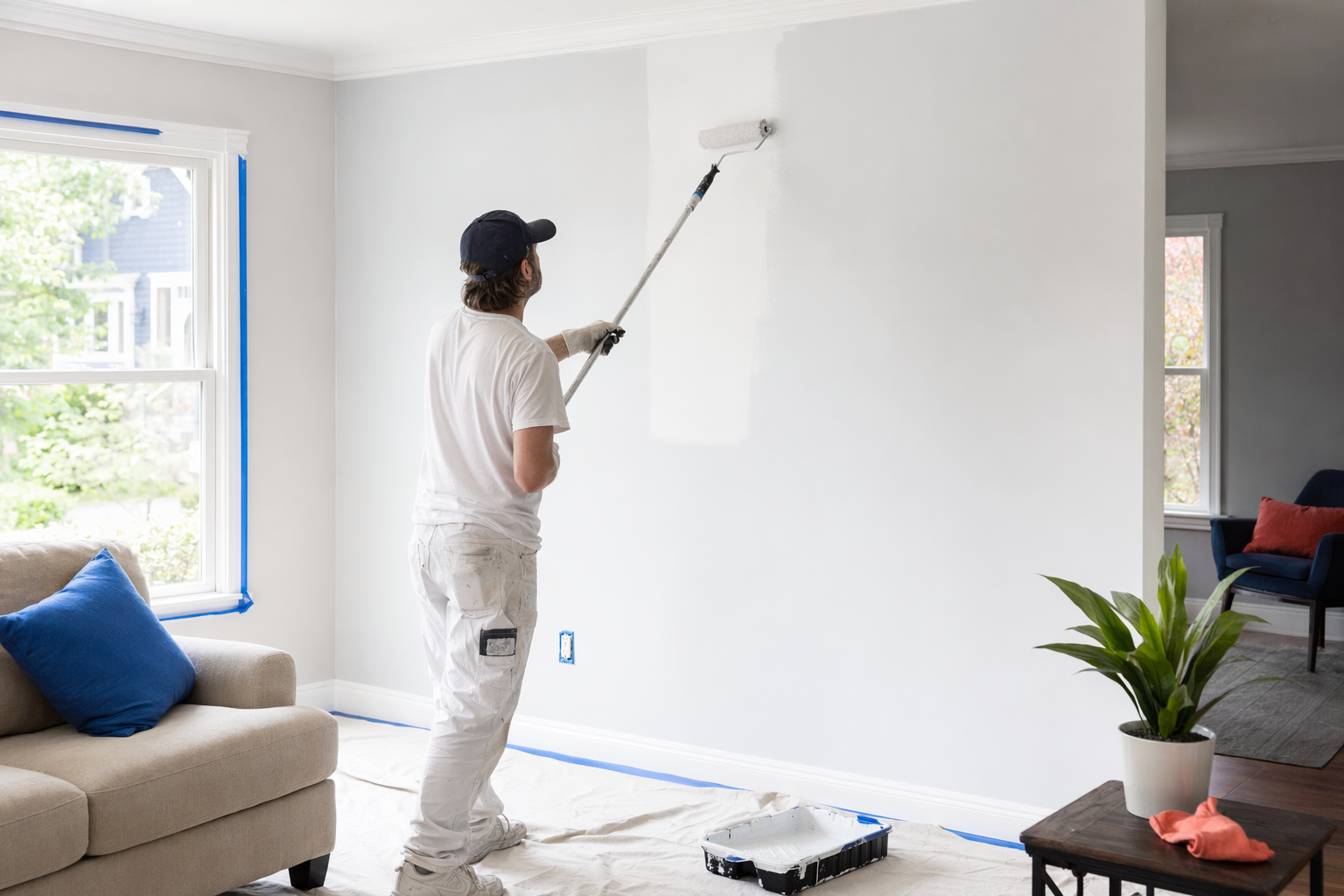
The direct answer: most rooms are 2 coats (sometimes 1), and many projects need primer first
In many interior repaint jobs, contractors plan for 2 coats of finish paint for even color and coverage—especially if you’re changing from a darker to a lighter color, painting patchy drywall, or switching sheens.
Sometimes 1 coat is enough when the existing paint is in great shape and you’re using the same color family (or you’re doing a touch-up that blends in). But for a full, reliable finish, most pros default to 2.
For cabinets, trim, exterior siding, and stains over spots like repaired drywall, you often need a primer and then 2 coats—or more coats if you’re covering heavy marks or going from a very dark color to a very light one.
If you want help matching paint color and planning the job, HuePort is a FREE matching service that connects you with licensed, insured painting contractors near you—so you can compare scope and pricing in plain language. Get started at get matched.

Why “coats” can be confusing: finish coats vs. primer vs. spot-coverage
When people say “how many coats,” they may mean different things.
- Finish coats are the visible layers of the final color.
- Primer is the prep layer that helps the finish paint stick, level, and cover evenly.
- Spot priming/spot coating means only certain areas need extra coverage (like patched spots, stains, or marks).
A job may have “2 coats” total, but still include primer. Or it may have “2 finish coats,” plus extra spot priming. That’s why it’s smart to ask for the scope in writing: what gets primed, how many finish coats are included, and whether the contractor plans for spot treatment.
When you might need 1 coat, 2 coats, or more
Here are practical rules of thumb contractors use. Your exact outcome depends on your starting paint, surface condition, and the paint you choose.
1) Often 1 coat (finish only) when:
- The existing paint is well-bonded, clean, and not too glossy (good adhesion).
- You’re staying close in color (not a big jump from dark to light).
- You’re using a high-quality paint with enough coverage for your surface.
2) Usually 2 coats when:
- You’re painting a room a different color or tinting a big wall area.
- The old paint shows through (patches, uneven color, old stains).
- You’re changing sheen (for example, glossy to satin) and need uniform appearance.
3) More than 2 finish coats (or extra primer/spot coats) when:
- You’re covering very dark walls with a light color.
- The drywall is newly installed, heavily repaired, or has uneven absorption.
- There are stains that need dedicated stain-blocking primer (ask what product and system they’ll use).
- You’re painting exterior surfaces with weathered, chalky, or peeling areas that need more prep and leveling.
Tip: If a quote says “we’ll paint it” but doesn’t mention primer, stain treatment, or how the contractor will handle absorption differences, you may end up paying for extra coats later.
Primer matters: it affects both the look and how many coats you really need
Primer can reduce the number of finish coats *because it changes how the topcoat absorbs and covers*. Without primer, the finish can look uneven—even if it seems like it’s “going on thick enough.”
You’re more likely to need primer when:
- You’re painting over patches in drywall.
- The surface is bare wood, metal, or previously unpainted areas (or has areas that were stripped).
- There are stains or marks that can bleed through.
- The existing surface is peeling, chalky, or not well-adhered (prep and proper bonding steps still matter).
For homeowners: ask the contractor what primer system they’re using and where it’s applied (full primer vs. spot primer). This is one of the clearest ways to understand why one bid includes “2 coats” and another ends up needing “3+” to match.
Costs and what drives “extra coats” (ranges, not quotes)
Coats affect price, but coats aren’t the only driver. Even the same number of coats can cost differently depending on prep, surface condition, paint grade, access, and your area.
Typical cost ranges for painting (very general, varies by city and scope):
- Interior room (walls only): often $2,000–$6,000 for a typical room, assuming prep is included and the job is planned with 2 finish coats.
- Interior whole-house (or major interior scope): often $6,000–$25,000+ depending on size, number of rooms, trim level, and how much prep is needed.
- Cabinets: often $3,000–$12,000+ depending on how many parts are involved, condition, sanding, and finish system.
- Exterior painting (varies widely): often $4,000–$20,000+ depending on siding type, height, prep, and any repainting complexity.
If “extra coats” are needed, costs often go up because of:
- More primer/spot priming
- Additional finish coats for coverage
- More prep time (patching, sanding, scraping, cleaning)
- Higher paint grade for better hiding and durability
- Time for drying/curing between coats
Remember: ranges are not quotes. Always ask for the scope details (surface areas, what’s primed, and how many finish coats) before you compare prices. If you’re trying to estimate budgets, start with costs and then request matching contractors through get matched.
Red flags to watch for (and a lead-safe reminder for pre-1978 homes)
Paint projects go smoothly when expectations are clear. Watch for signs of vague pricing or shortcuts.
Red flags:
- Vague pricing like “it depends” with no breakdown of prep, primer, and coat count.
- Large cash deposits up front or requests to pay before any written scope.
- Door-to-door “today only” deals or pressure to sign immediately.
- No proof they’re licensed and insured (verify before work starts).
- They won’t put the color, paint system, surface scope, and price in writing.
If your home was built before 1978, paint may contain lead. This is not something to guess about—ask the contractor how they handle lead-safe practices and follow local requirements. Use this as a safety checklist point when you get bids, and follow local guidance through licensed professionals.
Before you pay the final amount, confirm the work matches the plan: you should be able to see the intended coverage and finish, and any stain-blocked areas should look consistent. Homeowners stay in control—verify color and scope before work starts, and confirm the job is done right before paying.
How to get an accurate “coat plan” from contractors
To avoid surprise extra costs, ask contractors these questions. You’re not asking them to promise outcomes—you’re asking for their plan.
- What finish paint brand/line are you using, and what does it recommend for coverage?
- How many finish coats are included, and in what areas?
- Is primer included? Full primer or spot primer?
- How will you handle patches, stains, and sheen changes?
- What prep work is included (cleaning, sanding, scraping, repairs)?
- How do you price for areas that may need extra coverage?
Then compare bids on the same basis: coat count, primer plan, and prep scope. If you need help finding nearby licensed, insured painters to compare, HuePort is FREE—use get matched.

Most paint jobs use 2 finish coats, but the real number depends on surface condition, primer, and how much color change or stains you’re covering—so ask for coat and primer details in writing.
Common questions
If my walls are the same color, do I still need 2 coats?
Often, yes—most full-wall repaints look best with 2 finish coats for even coverage and consistency. If the existing paint is in great shape and the new paint is very close in color, some contractors may be able to do 1 coat, but it depends on the paint and surface.
Can primer replace an extra coat?
Primer can reduce the need for extra finish coats because it improves adhesion and helps coverage look uniform. But it’s not always a straight swap—some projects still require 2 finish coats, especially with big color changes or repaired areas.
Why does one company say 2 coats and another says 3?
Usually it’s differences in prep, primer strategy, surface condition, or the paint system being used (including how much coverage the paint expects). Ask both companies to explain what’s primed, what gets spot treated, and the exact included coat count.
Do I need extra coats for cabinets or trim?
Cabinets and trim commonly need more planning for adhesion, smoothness, and durability—often primer plus 2 finish coats, sometimes more depending on the current finish and how thorough the prep is.
What if there’s a stain on the wall—does paint hide it in 1 coat?
Not reliably. Many stains require stain-blocking primer and then 2 finish coats to prevent bleeding or discoloration. Ask what stain type they’re covering and what primer system they’ll use.
My house was built before 1978. Do I need to do anything special before painting?
Paint in homes built before 1978 may contain lead. Ask contractors how they follow lead-safe work practices and local requirements, and make safety a checklist item during bidding.