Guides
Interior vs exterior painting: what's different
Interior and exterior painting use the same basic idea (cover surfaces with paint), but the differences in weather, prep, and durability change everything—time, product choice, and typical cost.
Quick answer: the biggest differences
Interior painting is mainly about surfaces, privacy/dry time, and how the paint looks in your lighting.
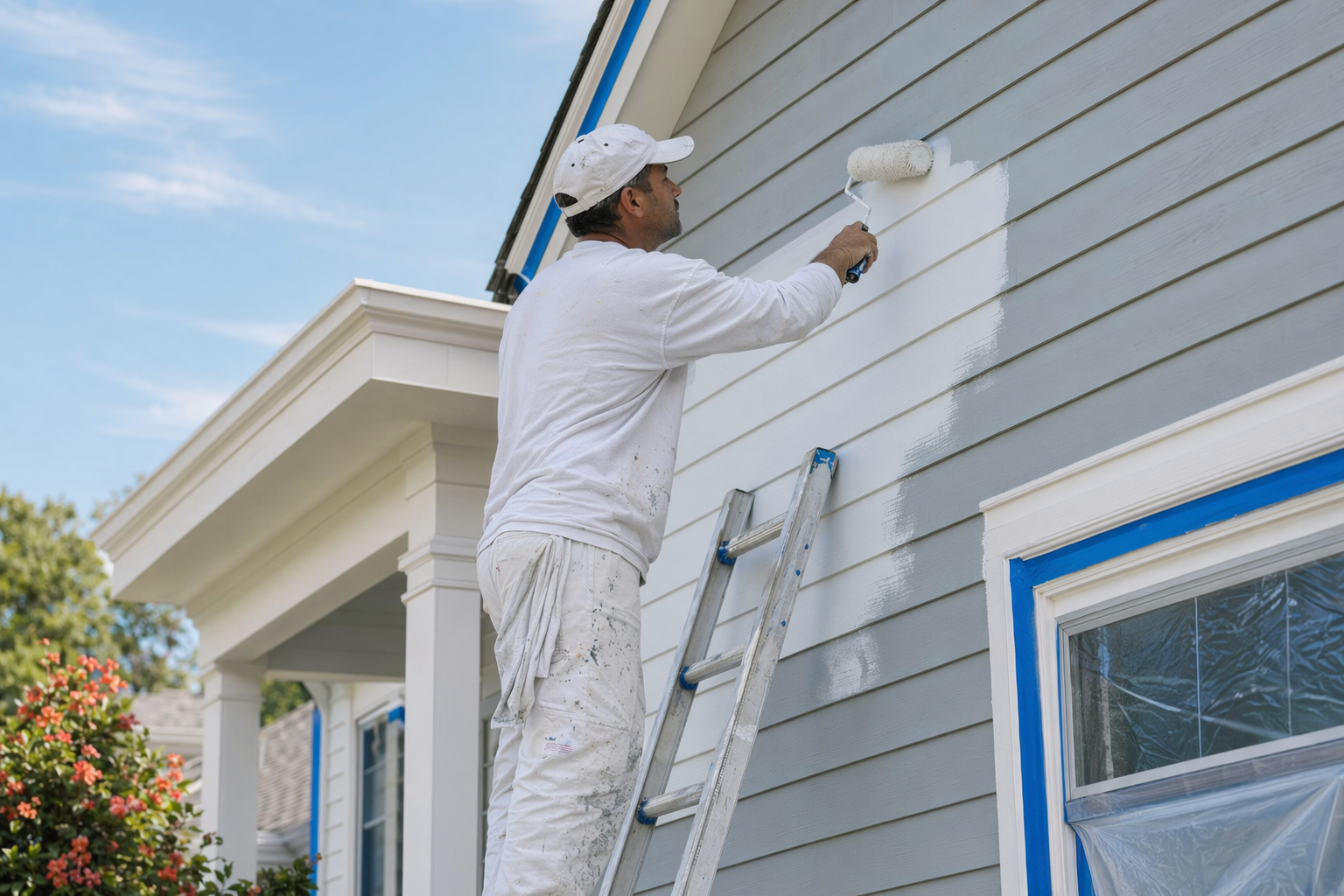
Exterior painting is mainly about weather protection—rain, sun, heat/cold, wind, and how long the finish can handle it.
Because of that, exterior jobs usually need tougher paint, more careful prep, and scheduling around dry conditions. Interior jobs are often faster to access and less sensitive to day-to-day weather.
HuePort is a FREE matching service (not a painting company), so we can help you connect with licensed, insured painters after you decide what you want to paint and what “done right” means to you.

Prep: what changes before paint
Prep is where most of the real quality difference comes from—inside and out, painters should plan for cleaning, fixing, and creating a surface the paint can stick to.
Inside, common prep tasks include cleaning marks or grease, sanding or smoothing rough spots, patching holes, and priming stains (like water stains or old tannin bleed).
Outside, prep can be more involved because paint must survive weather. Expect more attention to:
- Power washing or other cleaning to remove dirt, mold, mildew, and loose paint
- Scraping and sanding peeling/chalking areas
- Caulk checks and replacements around trim, windows, and joints
- Spot-priming bare areas and any stains
Tip: ask painters what they will do for your specific surfaces. “Paint over anything” is a fast way to get peeling later.
Paint & finishes: interior look vs exterior durability
Interior paints focus on appearance and cleanability. You’ll often choose sheen (matte/eggshell/satin/semi-gloss) based on the room and how much the surface gets touched.
Exterior paints focus on durability: resistance to sun fading, water exposure, and temperature swings. That’s why exterior systems often include primer plus an exterior topcoat designed for the climate.
Finishes also behave differently outdoors. Gloss can highlight flaws and may need extra prep for a smooth look. Flat/matte hides imperfections more, but it can be less forgiving on exterior grime depending on the product.
If you’re choosing colors, start with the lighting you have. For ideas and guidance, see color basics and how different sheens can change the look.
Timing & weather: when you can paint
Interior schedules are usually simpler. Painters mainly work around your home’s daily life (keeping doors closed, protecting floors, and allowing proper drying time between coats).
Exterior painting is more weather-dependent. Even if the painter is ready, paint still needs the right conditions to dry and cure. Rain, heavy humidity, and cold temperatures can slow drying or cause defects like poor adhesion.
This is a good time to ask about the plan for contingencies—how they handle forecast changes and how they protect surrounding areas (plants, cars, outdoor furniture, and nearby walkways).
For step-by-step planning for either kind of job, use how to plan your project and connect with painters through get matched.
Cost context: what typically drives interior vs exterior price
Costs vary a lot by area, surface condition, access/height, prep needs, number of coats, and the paint grade. So ranges are helpful, but they’re not quotes.
Interior painting (common scenarios):
- A single room refresh (walls/ceilings, light prep): often about $500–$1,500
- Multiple rooms or whole-interior repaint (more prep, trim work): often about $2,000–$7,000+
- Cabinets (prep and sanding are labor-heavy): often about $1,500–$5,000+ depending on the system and how much is being finished
Exterior painting (common scenarios):
- Small exterior areas (entry doors, trim, small sections): often about $300–$1,200
- Typical house exterior repaint (siding/trim, substantial prep): often about $4,000–$15,000+
- Larger homes, difficult access, lots of peeling/repairs, or multiple elevations: can go higher
What usually makes both interior and exterior more expensive:
- Poor surface condition (more scraping/sanding/patching)
- More coats or stain/odor blocking primer
- Trim work, doors, railings, or fine detail
- Prep that includes caulking, patching, and protecting floors/landscaping
- Difficulty accessing areas (height, ladders/scaffolding)
Want a better sense of budgets? Review general cost guidance at painting costs and then compare written estimates from a few licensed, insured painters.
Safety & lead reminder for pre-1978 homes (especially outside, sometimes inside)
If your home was built before 1978, paint may contain lead. That doesn’t mean you can’t paint—but it does mean you should ask painters how they handle lead-safe work practices.
Look for a contractor who can explain safety steps appropriate for your situation, such as minimizing dust, controlling the work area, and using proper cleanup methods. Treat this as a safety question (not a DIY decision).
Lead rules can be local and situation-specific. For pre-1978 homes, ask for details on how they follow lead-safe practices and what they plan to do to keep dust contained and safely cleaned up.
Red flags and how to protect yourself from overcharging
Whether it’s interior or exterior, you can avoid many problems by demanding clear scope and proof of basics.
Red flags to watch for:
- Vague pricing like “$X per room” with no mention of prep, coats, or trim
- Large cash deposits up front or pressure to pay immediately
- Door-to-door “today only” deals or a sense of urgency that blocks questions
- No proof of licensing/insurance
- No written scope or written price before work starts
Good quotes are specific. You should expect the painter to put in writing:
- What surfaces are included (walls, ceilings, trim, doors, siding sections)
- Prep steps they will do (cleaning, scraping, patching, priming)
- Number of coats (and which primer/topcoat system)
- Color and sheen details
- Protection and cleanup responsibilities
- Total price and payment schedule
You stay in control: confirm the color and price before work begins, and confirm the work meets expectations before the final payment. HuePort helps you find options, but you hire and approve the painter.
Interior painting is mostly about appearance and indoor prep, while exterior painting is about weatherproofing—so prep, timing, and costs usually change a lot.
Common questions
Is exterior paint different from interior paint?
Yes. Exterior paint systems are made to handle sun and weather exposure, while interior paints are chosen more for appearance and everyday indoor wear. Exterior jobs often use a primer plus an exterior-rated topcoat.
Do I need primer inside if I’m using a new color?
Often, but it depends on what’s on the wall now (stains, dark colors, patch repairs, glossy surfaces). A good painter will assess your current surface and explain whether primer is needed and why.
Why is exterior painting usually more expensive?
Exterior work usually involves more prep (cleaning, scraping, caulking, spot priming), weather-sensitive scheduling, and sometimes more labor for height and access. Durability requirements also affect product choice.
Can I paint outside in the winter or right before it rains?
It’s risky. Exterior paint needs appropriate drying and curing conditions, and rain/humidity can interfere. Ask painters what temperature and weather ranges they require for your specific products.
My house is older—should I worry about lead?
For homes built before 1978, paint may contain lead. Ask your painter how they follow lead-safe work practices and cleanup procedures. Follow local rules and their professional guidance.