Quick answers
What's the best finish for a kitchen?
For most kitchens, the best paint finish is satin or semi-gloss on walls, and semi-gloss on trim and cabinets. The right choice depends on what you’re painting, how much steam and grease the room gets, and how much surface prep is needed.
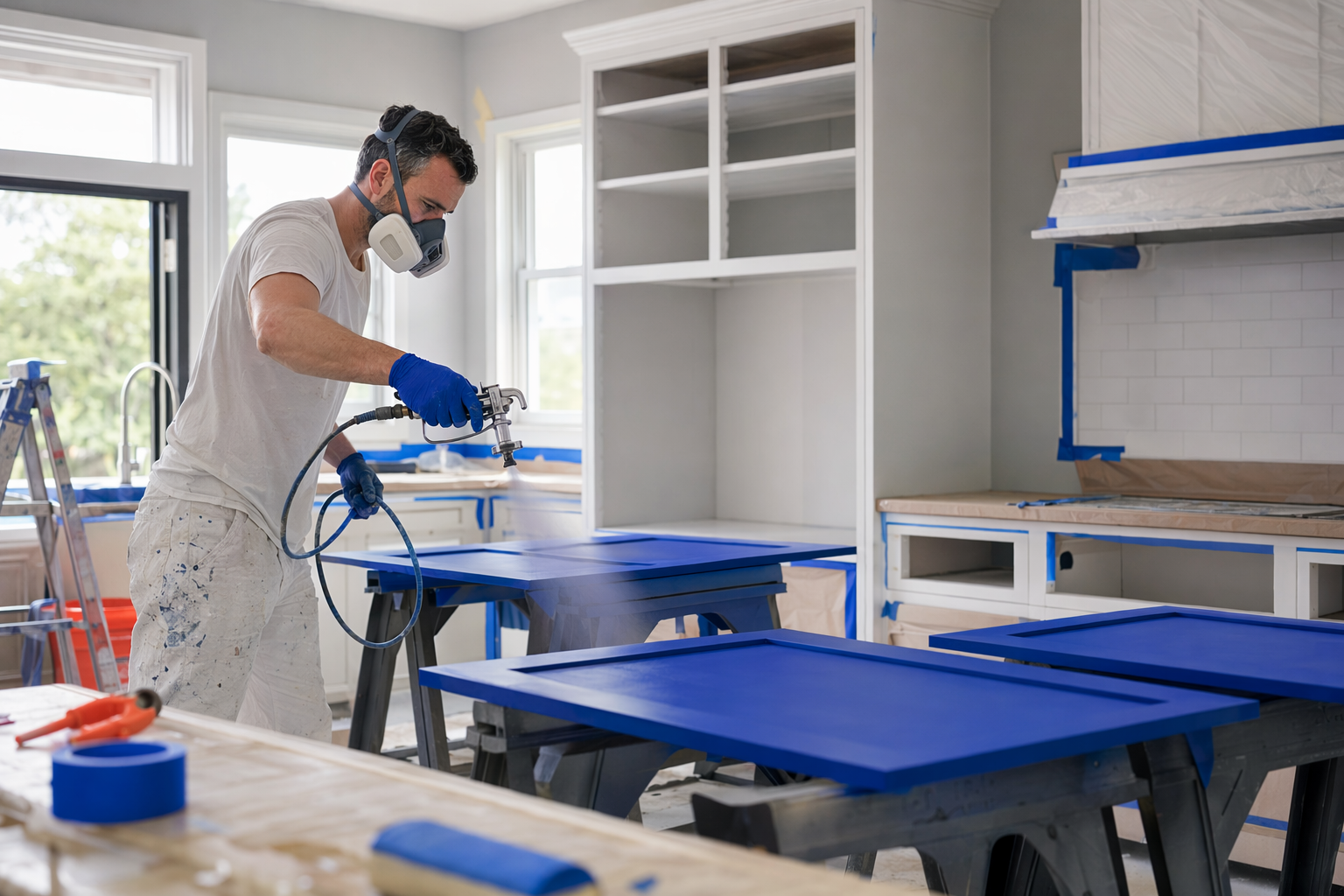
Short answer: satin or semi-gloss is usually best
In a kitchen, paint has to handle more than normal room walls. There is steam from cooking, grease near the stove, fingerprints around doors and switches, and regular wiping. That is why very flat paint is usually not the best choice for most kitchen surfaces.
For kitchen walls, satin is the safest pick for many homes. It has a soft low sheen, is easier to wipe than flat paint, and usually hides small wall flaws better than shinier finishes. If your kitchen gets heavy cooking use, or you want even easier cleaning, semi-gloss can also work on walls, but it will show dents, patches, and roller marks more easily.
For trim, doors, and cabinets, semi-gloss is the usual go-to. It is more moisture-resistant, stands up better to cleaning, and gives a crisp look. Some homeowners also like satin on cabinets for a slightly softer look, but the paint product and prep matter just as much as the sheen.
If you are unsure, think of it this way: walls usually do best with satin, while cabinets and trim usually do best with semi-gloss.

Best finish by kitchen surface
The best finish depends on the surface, not just the room. A kitchen has many different materials, and they do not all need the same sheen.
Here is a simple starting point:
1. Walls: satin for most kitchens; semi-gloss if you want more washability and do not mind more shine.
2. Ceiling: flat in most cases, unless you have a small, very steamy kitchen and a painter recommends a more washable ceiling product.
3. Trim and doors: semi-gloss.
4. Cabinets: satin or semi-gloss, usually with a cabinet-grade product.
5. Backsplash areas that are painted: often satin or semi-gloss, but many people use tile or another wipeable surface there instead.
A shinier finish is usually easier to clean, but it also highlights every patch, brush mark, and uneven area. That matters a lot in older kitchens where walls are not perfectly smooth.
If you want help comparing finishes before you choose, our guides and colors pages can help you narrow down what fits your kitchen style.
How to choose between satin and semi-gloss
Choose satin if you want a kitchen that feels a little softer and less shiny. It is a good fit for many family kitchens because it balances looks and practicality. Satin is forgiving enough for walls that have a few bumps or old patch repairs.
Choose semi-gloss if easy wipe-down is your top priority, especially near cooktops, sinks, kids' eating areas, or busy doors and trim. Semi-gloss reflects more light, so it can brighten a small kitchen, but it can also make flaws more noticeable.
The biggest mistake is picking sheen without thinking about prep. In kitchens, prep often matters more than the final finish. Grease, old caulk, peeling paint, and rough cabinet surfaces all need proper cleaning and prep first, or even expensive paint may not hold up well.
If you are hiring help, ask exactly what prep is included before any work starts. Get the surface, paint brand or grade, number of coats, and finish in writing so you can compare quotes clearly.
What it can cost to paint a kitchen
Kitchen painting costs vary a lot. The real number depends on the surface, the prep, the number of coats, the paint grade, access, and your area. These are general US ranges, not quotes.
A small to mid-size kitchen wall-and-ceiling repaint may land around $400 to $1,500 if the surfaces are in decent shape. If there is heavy cleaning, patching, stain blocking, or a lot of trim and cutting-in, the price can go higher.
Cabinets are often much more expensive than walls because the prep is slower and the finish work is fussier. A kitchen cabinet painting project may range roughly from $1,500 to $6,500 or more, depending on how many doors and drawers you have, how much sanding and priming is needed, whether doors are sprayed or brushed, and the paint system used.
If someone gives you a very low price without looking closely at grease, damage, peeling areas, or cabinet condition, be careful. Low pricing sometimes means weak prep, cheap paint, or too few coats. On the other hand, a high price should still come with a clear written scope so you know what you are paying for.
HuePort is a free matching service, not a painting company or contractor. We can help you connect with licensed, insured painters near you through get matched, but you stay in control of who to hire and what price to accept.
Red flags to watch for before you hire
Kitchen painting can look simple, but it is easy to overpay or get rushed work. A few warning signs are very common.
Watch out for vague pricing, big cash deposits up front, door-to-door 'today only' deals, no license or insurance, or pressure to sign right away. Also be careful if a painter cannot explain what cleaning, sanding, priming, caulking, and coat count are included.
Use this checklist when comparing painters:
- Ask for the scope in writing.
- Make sure the color, finish, paint product, and number of coats are listed.
- Ask what prep is included for grease, peeling paint, cracks, and cabinet surfaces.
- Verify license and insurance if required in your area.
- Compare a few quotes, not just one.
- Confirm how you will review the work before final payment.
The homeowner stays in control. You confirm the color and price before work starts, choose who to hire, and confirm the work is done right before paying the final amount. If you want general help understanding the process, visit help.
Older kitchens and lead-safe reminders
If your home was built before 1978, old paint may contain lead. That does not mean you cannot paint, but it is an important safety point when sanding, scraping, or disturbing old layers.
Ask any painter you are considering how they follow lead-safe work practices for pre-1978 homes. This is especially important in kitchens because prep work can disturb old painted trim, windows, doors, and cabinets.
This page is general information only, not lead-safety, legal, or contractor advice. Local rules can vary, and a licensed, insured painting contractor should explain how they handle prep safely for your home.

For most kitchens, satin works best on walls and semi-gloss works best on trim and cabinets, but good prep matters as much as the finish.
Common questions
Is eggshell good for a kitchen?
Eggshell can work in a low-use kitchen, but satin is usually a better choice because it is easier to wipe clean. In busy kitchens with more steam or grease, many homeowners prefer satin or semi-gloss.
Should kitchen walls be satin or semi-gloss?
Satin is the more common choice for kitchen walls because it balances cleanability and appearance. Semi-gloss is easier to wipe, but it is shinier and shows wall flaws more clearly.
What finish is best for kitchen cabinets?
Semi-gloss is a common pick for kitchen cabinets because it handles cleaning well and gives a durable look. Satin can also work if you want less shine, but proper prep and a cabinet-suitable paint system matter just as much.
Does a shinier kitchen paint last longer?
Not always by itself. A shinier finish can be easier to clean, but long-term results depend heavily on prep, primer when needed, the paint grade, and whether the right product was used for the surface.
How do I find a painter for a kitchen job?
Look for a licensed, insured painter where required, ask for a written scope, and compare a few quotes. HuePort is a free matching service, not a painting company, and you can use [get matched](/get-matched/) to connect with painters near you.