Quick answers
What's the best paint finish for walls?
Most wall finishes come down to how washable you want the paint to be and how smooth your walls are. Here’s the simple guide to choosing the best wall finish—plus what it usually costs and what to watch out for.
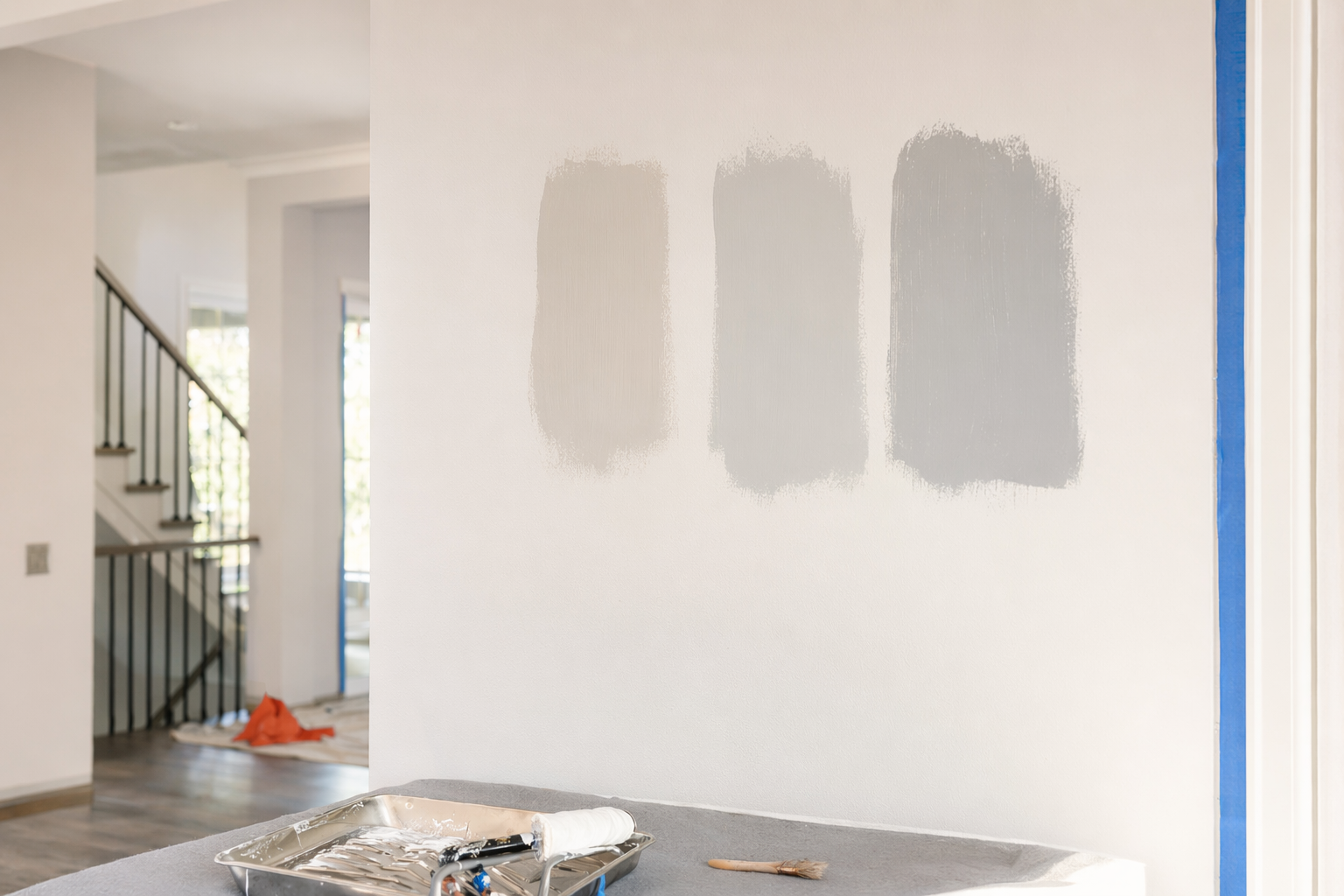
Quick answer: which finish is “best” for most walls?
For most interior walls, a matte or eggshell finish is usually the best balance of look and cleanability.
- Matte (flat): hides wall flaws more, but marks/scuffs are harder to clean.
- Eggshell (low-sheen): still looks nice, and it’s easier to wipe clean—great for living rooms, hallways, and bedrooms.
If you have kids, pets, or lots of fingerprints, eggshell is often the most practical choice. If your walls are very smooth and you want a slightly tougher surface, a satin (light sheen) can work, but it can also show uneven texture more than matte/eggshell.
- Most homeowners choose: **eggshell for walls**
- More forgiving on texture: **matte/flat**
- More cleanable: **satin (more sheen)**

How sheen affects the look (and why walls aren’t just “paint color”)
Sheen changes how light bounces off the wall. Higher sheen (like satin) can make the wall look brighter, but it can also highlight bumps, roller marks, dents, and patch seams.
Lower sheen (like matte/flat) hides small imperfections better, but you may feel it when cleaning—dirt and scuffs can be harder to remove without touching up.
If you’re choosing between two similar finishes, think about your daily life: Are walls touched a lot? Do you need wipe-clean durability? Are your walls perfectly smooth or a little uneven?
- Higher sheen = more durability, but shows texture
- Lower sheen = hides flaws, but is less forgiving to scrubbing
Finish-by-room suggestions (simple, practical)
Here are common choices that work for many homes. Your walls and lighting matter, so treat these as starting points—not rules.
- Living room & bedrooms: matte or eggshell. Pick eggshell if you want easier wipe-clean for everyday life.
- Hallways, entryways, stairways: eggshell (people bump walls; fingerprints add up).
- Kitchens: usually eggshell to satin if the wall gets splashes, cooking residue, or frequent cleaning.
- Bathrooms: often eggshell to satin because you’ll clean more and humidity is higher.
- Kids’ rooms / near doors & light switches: eggshell for a balance of looks and cleanability.
If your walls are older or have repairs, matte/flat can hide patchiness. If your walls are newer and smooth, eggshell to satin can give you easier maintenance.
- Busy areas: eggshell tends to win
- Very smooth walls: satin can be great
- Uneven walls: matte/flat can hide flaws
What it usually costs (and what changes the price)
Painting interior walls is priced based on more than just the finish. Even with the same room size, the cost can change because of prep work and how many coats are needed.
Typical cost ranges (not quotes) for interior wall painting in the U.S. can fall roughly around:
- Per room (walls only): often $500–$2,000+
- Per square foot: often $1–$4+
These are broad ranges. Your final number depends on:
- Surface condition & prep (patching holes, sanding, cleaning, caulk/trim edges)
- Wall size/height and how many walls are involved
- Number of coats (dark-to-light, heavy stains, or repairs may require more)
- Paint quality/grade (better coverage can reduce coats)
- Access (stairs, tight rooms, moving furniture)
- Your area (labor rates vary by city/region)
For a more accurate estimate, ask painters to describe the prep steps and coat plan in plain language. Don’t rely on a single “per room” number—details are what keep you from surprises.
- Prep work is often the biggest driver of cost
- More coats = more time and materials
- Ranges vary widely by city, surface, and wall height
Common red flags (finish choice aside)
A good finish can’t fix bad prep. When you get estimates, watch for pricing and process problems—not just the color.
Red flags to avoid:
- Vague pricing like “$X for the room” with no clear scope (prep, coats, wall condition)
- Large cash deposits up front or pressure to pay before work starts
- Door-to-door “today only” deals or urgency that feels uncomfortable
- The painter can’t show proof of license/insurance (or you don’t feel comfortable verifying it)
- No written details on paint type, sheen, number of coats, and prep
Remember: you stay in control. Confirm the color and the agreed price before work begins, and review the work before paying the final amount. If something is unclear, ask until you’re satisfied.
- Get scope + price in writing
- Verify the contractor is licensed and insured
- Avoid pressure and unclear estimates
Pre-1978 homes: lead-safe reminders for wall painting
If your home was built before 1978, paint may contain lead. This doesn’t mean you can’t paint—it means you should plan for safe work.
Ask painters how they handle lead-safe practices during prep (especially sanding, scraping, and demolition of old coatings). A professional should be able to explain their safety steps and how they protect you and other occupants.
For general help getting started, you can also explore wall color and finish ideas and then use HuePort to get matched with licensed, insured painters near you—just remember HuePort doesn’t do the painting.

For most interior walls, eggshell is a practical best choice, while matte hides flaws more but cleans less easily—cost depends heavily on prep, coats, and your wall condition.
Common questions
Is matte or eggshell better for walls?
Eggshell is often the best “all-around” choice because it’s more wipe-clean than matte while still looking attractive. Matte can look great and hide minor imperfections, but it usually cleans less easily.
Should I use satin on interior walls?
Satin can work well if you want extra durability and easier cleaning, especially in busy areas or kitchens. Just note that satin’s sheen can highlight surface bumps and patching more than matte or eggshell.
What finish should I choose if my walls have dents or patchy spots?
If the surface isn’t perfectly smooth, matte or flat finishes tend to hide flaws better. If you want easier cleaning, eggshell is a common compromise—just expect that surface prep matters a lot.
How much does it cost to paint interior walls?
Costs vary by room size, wall condition, prep, paint quality/grade, number of coats, and your local labor rates. As a rough guide, many projects land around **$500–$2,000+ per room** (not quotes).
I live in a pre-1978 home. Do I need to worry about lead?
Paint in homes built before 1978 may contain lead. Ask your painter about lead-safe work practices, especially around sanding or scraping, and follow any local requirements through licensed professionals.
How do I avoid being overcharged for wall paint work?
Ask for a written scope: what prep is included, how many coats, what paint/finish will be used, and what areas are covered. Avoid vague estimates, big cash deposits up front, and “today only” pressure—then compare a few written quotes.