Quick answers
What paint should I use on a ceiling?
For a ceiling, the “best” paint is usually a durable, washable flat/eggshell ceiling paint in a light color. Here’s what to choose, what to ask a painter, and what typically affects cost—plus how to avoid common scams.
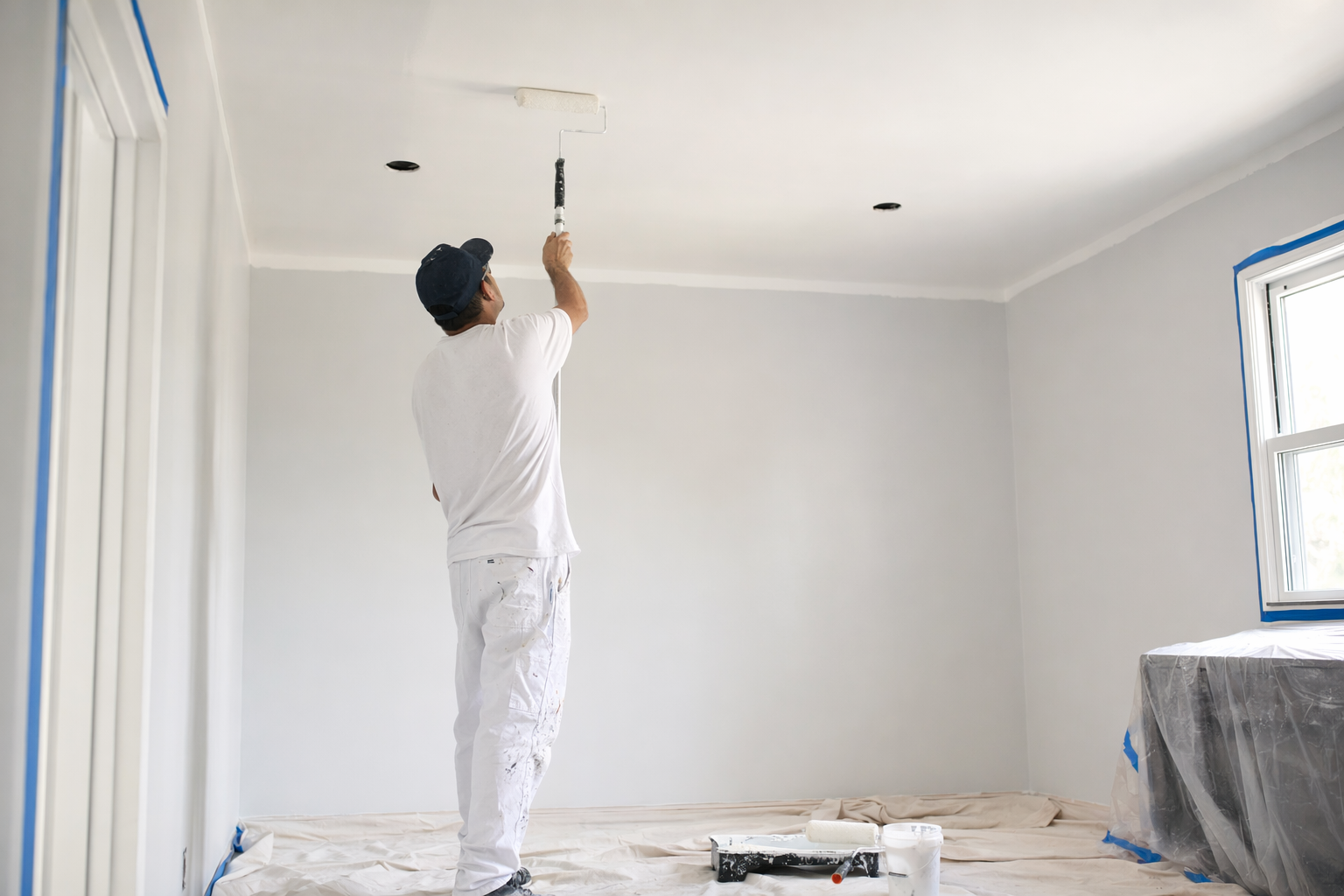
Quick answer: what paint should you use on a ceiling?
Most ceilings look best with a flat or very low-sheen “ceiling paint.” It hides imperfections (like roller marks or small bumps) and doesn’t glare as much as higher-sheen finishes.
If you want something easier to clean, ask about “matte” or a low-sheen eggshell made for ceilings. In bathrooms or kitchens, you may also hear about mildew-resistant ceiling options.
Still unsure? Pick your ceiling paint based on these two things: (1) how noticeable surface bumps are, and (2) how much cleaning the room needs. Then confirm the exact product with your painter or paint store before work starts.
- Usually: ceiling paint labeled **flat** or **ceiling/matte** finish
- For harder-to-clean rooms: look for **mildew-resistant** and **low-sheen** options

Choose the finish first: flat vs matte vs eggshell
Ceiling light reflects differently than wall light. A flat finish absorbs light and tends to hide small flaws—so it’s the classic ceiling choice.
A matte finish is similar, often a touch more forgiving for light scuffs than true flat, depending on the brand. Eggshell has a bit more sheen, which can make roller marks or uneven areas more noticeable, but it can be a good fit if you need wipeability.
A practical rule: if your ceiling has visible texture, hairline patching, or older uneven spots, start with flat or matte. If the ceiling is smooth and you expect frequent cleaning, consider a low-sheen ceiling product (not a glossy finish).
- Bumpy/uneven ceiling → flat or matte helps hide flaws
- Smoother ceiling + more cleaning → low-sheen matte/eggshell (ceiling-rated)
Color: white is common—but confirm the “undertone”
Most people go with white for ceilings, but “white” can lean warm, cool, or gray depending on the paint. If your walls are off-white (creamy, warm white, soft gray), the ceiling color can look noticeably different.
If you’re painting whole rooms, consider matching the ceiling to the wall system (same brand/line) or testing a small sample. Lighting matters: north-facing rooms can feel cooler; warmer light can make whites look creamy.
If you’re using a darker paint or a strong color palette on walls, a slightly warmer ceiling white can keep the room feeling cohesive. For a confident choice, browse ideas using ceiling and interior color guides and consider a sample test where you can.
- Ceiling “white” can have undertones—test in your lighting
- If walls are warm or cool, your ceiling white can shift how the room feels
What to ask for: primer, patching, and coats
Paint performance on ceilings is mostly about what’s under it. Ask your painter (or yourself, if you’re DIY) about the plan for patching and prep: sanding rough spots, filling cracks, removing loose paint, and cleaning dust.
Whether you need primer depends on the surface and condition—new drywall, stains, smoke damage, water spots, or older paint that’s chalky may require a dedicated primer. Also ask about how many coats they recommend for your chosen paint grade and color.
When you get estimates, don’t only ask “How much?” Ask for a simple written scope: prep steps, primer yes/no, paint brand/line or at least paint grade, number of coats, and cleanup/disposal. If anyone avoids specifics, that’s a red flag. For more prep and planning ideas, see interior painting project help and home painting basics.
- Ask: primer needed? patching plan? number of coats?
- Get a written scope (prep + product/grade + coats + cleanup)
Cost context: what ceilings painting usually costs (ranges, not quotes)
Ceiling painting is priced mostly by surface size, the condition of the ceiling, and the work needed to prep and reach areas safely (tall ceilings, tricky corners, stair access). The paint grade matters too: basic vs mid-grade vs premium products can change material costs.
In many U.S. areas, ceiling painting (rooms or partial areas) may land around $1.50–$4.50 per square foot for labor and materials combined, depending on the project and how much prep is required. Whole-interior projects are often priced differently than “just the ceiling,” so your best comparison is to ask for the scope and total line items.
If your ceiling needs significant patching, stain-blocking primer, multiple coats to cover a darker color, or careful cleanup, costs usually go up. If the ceiling is clean, mostly smooth, and already the right color, it may be lower. Any “final” price should be based on an on-site look—range estimates are not guarantees.
- Typical rough range (U.S.): about **$1.50–$4.50/sq ft** for many ceiling painting jobs, but varies by prep and access
- Big drivers up: heavy prep, stains, patching, primer, extra coats, hard access
Lead-safe reminder for pre-1978 homes + red flags to watch
If your home was built before 1978, ceiling paint may contain lead. For your safety, ask painters what lead-safe practices they follow (for example, how they minimize dust and protect the area). Use this as a safety question—not as a DIY plan.
Also protect yourself from overcharging or scams. Red flags include: vague pricing, large cash deposits up front, door-to-door “today only” pressure, no proof of license and insurance, or refusing to put the color, paint, scope, and price in writing.
HuePort is a FREE matching service that connects you with licensed, insured painting contractors near you. We don’t do the painting ourselves. Before work starts, you should confirm the exact paint (including finish), the number of coats, and the total price. Ask them to explain prep and provide a written agreement so you stay in control.
- Pre-1978 homes: ask about **lead-safe work practices**
- Avoid: vague scope, huge cash deposits, no license/insurance, pressure to sign immediately
How HuePort can help you plan (and find a contractor) for your ceiling
Not sure what to choose—flat vs matte, or which primer makes sense? HuePort can help you share your project details so you’re matched with licensed, insured painters near you.
It’s free for homeowners. We only collect contact + project intent details (like your name, phone, project type, interior/exterior, ZIP, and preferred language). Then you can talk directly with the contractor about your ceiling surface, access needs, and finish.
If you want to start now, use get matched for your project and also review how to prepare for a painting quote so you know what to ask before hiring.
- FREE matching: you stay in control of the color, scope, and price
- Ask contractors to confirm paint finish, coats, prep, and written pricing

For most ceilings, choose a ceiling paint labeled flat or matte (and use primer/prep when needed), then get written scope and pricing from a licensed, insured painter—especially if your home is pre-1978.
Common questions
Should I use flat paint or eggshell paint on a ceiling?
Most ceilings look best with flat or matte ceiling paint because it helps hide small imperfections. If you expect frequent cleaning and your ceiling is fairly smooth, a low-sheen ceiling product (like matte/ceiling-rated eggshell) can be a practical option—avoid high-gloss finishes.
What paint color should I use for a ceiling?
White is most common, but “white” can have warm or cool undertones that may clash with your wall color. If you’re painting multiple rooms, test a sample in your lighting or pick a ceiling white designed to pair with your wall colors.
Do I need primer on a ceiling?
Sometimes, yes—especially for new drywall, stains (water marks, smoke, or tannin stains), or when covering a very different color. The right answer depends on the ceiling’s condition, so ask what they plan to do and why.
How much does it cost to paint a ceiling?
Costs vary by ceiling size, prep needs, stains, primer, paint grade, and access (like height or stairs). As a rough U.S. context, many ceiling painting jobs are often in the neighborhood of about $1.50–$4.50 per square foot, but any specific price depends on an on-site estimate.
My home is older than 1978—what should I ask about lead?
Ask the painter how they handle lead-safe work practices, especially how they minimize dust and protect the area. Lead-safe steps should be handled by trained, appropriate contractors, and local rules may apply.