Quick answers
What paint should I use on trim?
For trim, you usually want a paint that’s smooth, durable, and easy to wipe. Here’s a plain guide to choosing the right type, finish, and color—and how to talk with a licensed, insured painter about prep and cost.
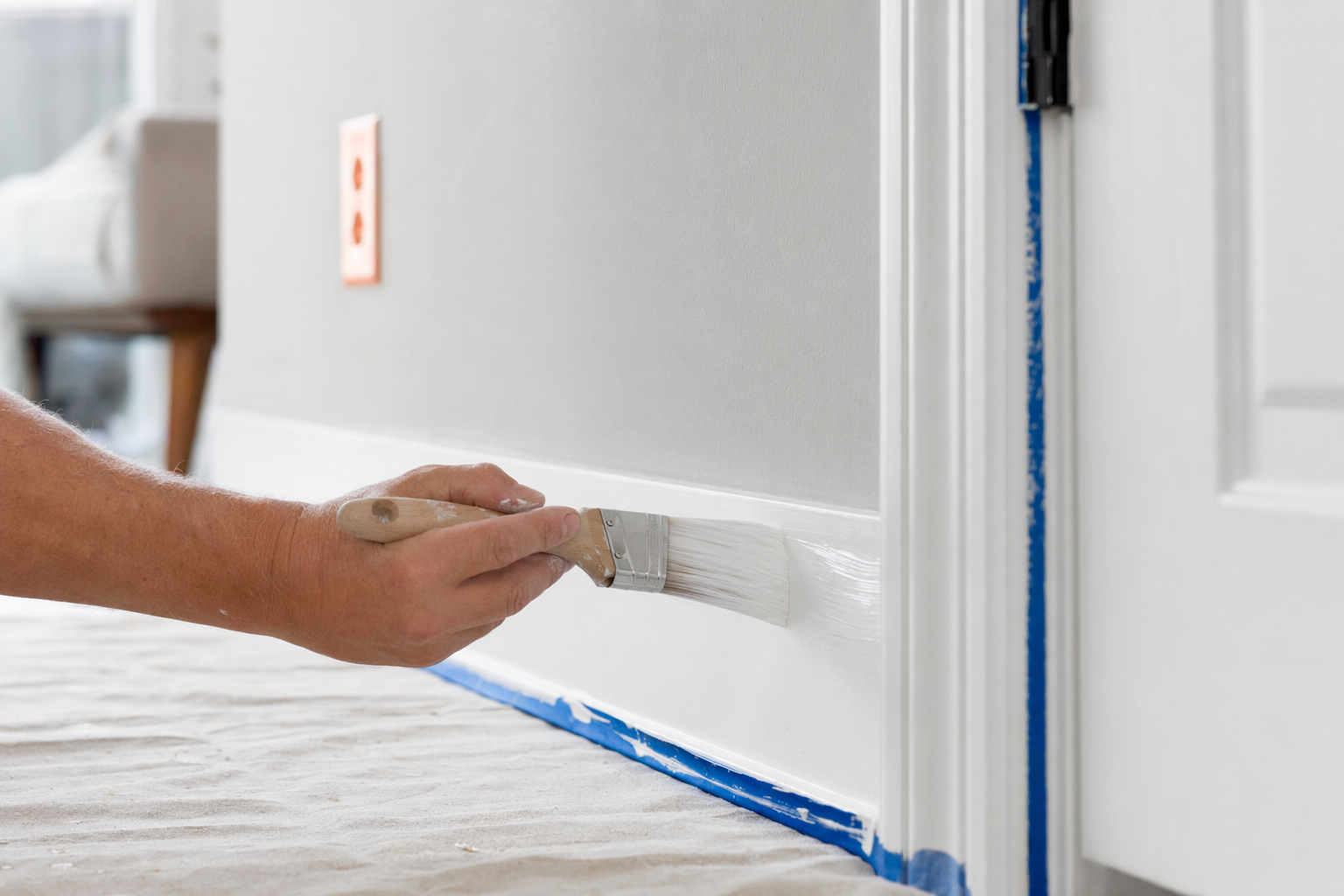
Quick answer: what paint should you use on trim?
Most homeowners do best with a trim paint formulated for doors, trim, and walls nearby—typically either an oil-based enamel, a water-based enamel, or a “trim & door” product.
In terms of finish, many people choose semi-gloss or satin for trim because they’re more washable and hold up to fingerprints, scuffs, and cleaning. If your trim gets very little touch, eggshell can work, but semi-gloss/satin is the common go-to.
Color choice depends on the look you want: trim is often slightly lighter or crisp white for contrast, or matched to the walls for a softer blend. If you’re unsure, take a test area and confirm in your actual light (daylight + evening).
- Choose a “trim & door” / enamel-type paint (water-based is common now).
- Pick semi-gloss or satin for most trim; eggshell is less common for high-touch areas.

Finish basics (semi-gloss vs satin) and what they mean in real life
Think of finish as how shiny the paint looks and how well it cleans. Semi-gloss reflects a bit more light, so it can highlight roller/brush marks if prep isn’t solid. Satin sits in the middle—often a sweet spot for trim.
If you want a sharp, crisp look—especially for baseboards, window trim, and door casings—semi-gloss is popular. If you want less shine and a smoother “designer” feel, satin is a common choice.
For very detailed trim (moldings), smooth application matters. Good painters will focus on prep and technique so the finish looks even, not wavy or streaky.
- Semi-gloss = easier to clean, often a crisp look.
- Satin = durable but slightly less shiny.
Water-based vs oil-based: which is better for trim?
Both can work well—what matters most is the product’s formulation for trim and doors, plus the painter’s process. Water-based enamels are widely used because they’re lower odor for most jobs and clean up with soap and water. Oil-based paints can create a very smooth, durable film, but they typically have stronger odor and require specific cleanup.
Your best choice often depends on what’s already on your trim and what prep is needed. If existing trim is in rough shape (peeling, flaking, heavy sheen differences), the right primer and sanding matter more than the label “water vs oil.”
Because paint compatibility can be tricky, ask the painter how they’ll handle adhesion and sheen matching. They should describe the prep steps and the products they plan to use—then you can confirm you agree before work starts.
- Compatibility and prep usually matter more than “water vs oil.”
- Ask what primer they’ll use and why (especially over glossy surfaces).
Prep is the real foundation of great trim paint
Trim paint fails most often because of surface issues: dust, grease, glossy existing paint, loose paint edges, and moisture or old repairs that weren’t properly addressed. Good prep helps the new coating bond and look smooth.
A typical prep conversation with a licensed, insured painter should include: cleaning, sanding/scuffing the existing sheen, filling/caulking gaps, and addressing any peeling or flaking. Caulk and filler choice matters on trim because it affects how crisp the edges look.
If you’re painting in an occupied home, ask about masking, dust control, and how they’ll protect floors and furniture. You want clean lines without overspray or messy cleanup.
- - Cleaning + sanding/scuffing for adhesion
- - Caulk/fill to keep edges crisp
- - Masking/protection to avoid mess and overspray
Color tips: how to pick trim paint without regret
Trim color can make a room feel taller, brighter, or more “finished.” But colors look different depending on lighting, wall paint, and nearby surfaces.
A practical approach: choose a trim color that matches your wall’s undertone (warm vs cool). If your walls are warm (yellow/cream tones), a warm white trim often looks calmer. If your walls are cool (gray/blue tones), a cool white trim may work better.
Before committing to the whole home, do a small test patch on a section of trim where you can see it throughout the day. Then check it in evening light. If you want, you can explore color options using color inspiration and project ideas in interior painting guidance.
- Match undertones more than you match “exact shade.”
- Test in daylight and evening before painting everything.
Cost context: what trim painting usually costs (ranges, not quotes)
Trim painting cost depends on the amount of trim, length of runs, height/access (stairs, high ceilings), condition (peeling/patching), how much prep is needed, and how many coats the painter plans. It also varies by city/state and labor rates.
As a general range, homeowners often see interior trim painting priced around $1,500–$4,500 for typical rooms-to-multiple-rooms projects. Small jobs (like a single room or a limited amount of baseboards/door trim) can be lower, while whole-interior trim, heavy prep, or complex casing/molding work can be higher.
If you’re getting estimates, ask for a written scope: how they’ll prep, what primer/paint products are included, number of coats, how they’ll handle caulking/filling, and cleanup. Be cautious of vague pricing or pressure to pay on the spot.
Common overcharging red flags:
- “Today only” deals or pushy scheduling to sign immediately
- Large cash deposits up front with no clear written plan
- No license/insurance proof
- Vague “price per room” talk without details on prep and coatings
HuePort is a FREE matching service, not a contractor—we’ll help you connect with licensed, insured painters near you through get-matched. You stay in control: confirm the color and price in writing before work starts, and double-check the final work before paying the last amount.
- Ranges vary by trim quantity, condition, prep level, access/height, and your area.
- Get the scope + price in writing and compare a few quotes.
If your home is pre-1978: lead-safe reminders (safety first)
If your home was built before 1978, paint may contain lead. This doesn’t mean you should panic—but it does mean you should ask your painter about lead-safe work practices.
Look for painters who can explain how they’ll minimize dust (for example, appropriate containment and cleanup methods) and who follow local rules and safety requirements. If you’re unsure about your surface condition, ask questions before any sanding or scraping.
This is a safety point—not legal advice. For your area, confirm local requirements with licensed professionals and follow their lead-safety guidance. A good painter will treat this seriously and describe the steps they’ll take.
- Ask how they follow lead-safe practices on older homes.
- Minimize dust and use proper cleanup methods.

For trim, use a durable trim/enamel paint (often satin or semi-gloss), focus on prep for smooth edges, and get a clear written scope and price from a licensed, insured painter.
Common questions
Should I use semi-gloss or satin on trim?
Most people choose semi-gloss or satin because trim gets touched and needs to be wipeable. Semi-gloss is often a bit easier to clean and looks crisp; satin is slightly less shiny and can look smoother.
Can I use the same paint as my walls on trim?
It’s usually not ideal. Wall paint (often flatter finishes) can scuff more and may not clean as well on trim. Trim paints/enamels are designed to form a more durable, smoother finish.
Do I need primer on trim?
Often, yes—especially if you’re changing sheen a lot, covering stains, painting over uneven repairs, or working with glossy existing surfaces. The right primer depends on what’s there now and the condition of the trim.
How many coats of paint will trim need?
Many trim jobs use 2 coats, but it can be 1–3 depending on the paint color change, existing color/condition, and how well the first coat covers. Ask your painter what they expect for your specific trim.
How do I avoid overpaying for trim painting?
Get a written scope that lists prep steps, primer/paint included, number of coats, and protection/cleanup. Compare a few quotes and be careful with vague pricing or large deposits without clear details.
What should I ask a painter before they start trim work?
Ask about prep (cleaning, sanding/scuffing, filling and caulking), what primer and finish paint they’ll use, how many coats they plan, dust/mess protection, and how they handle lead-safe practices if your home is pre-1978.