Quick answers
How long does it take to paint a room?
A typical room paint job usually takes a few days, but the timeline depends on prep, repairs, drying time, and how many coats you need. Here’s how to estimate it and what to ask before hiring.
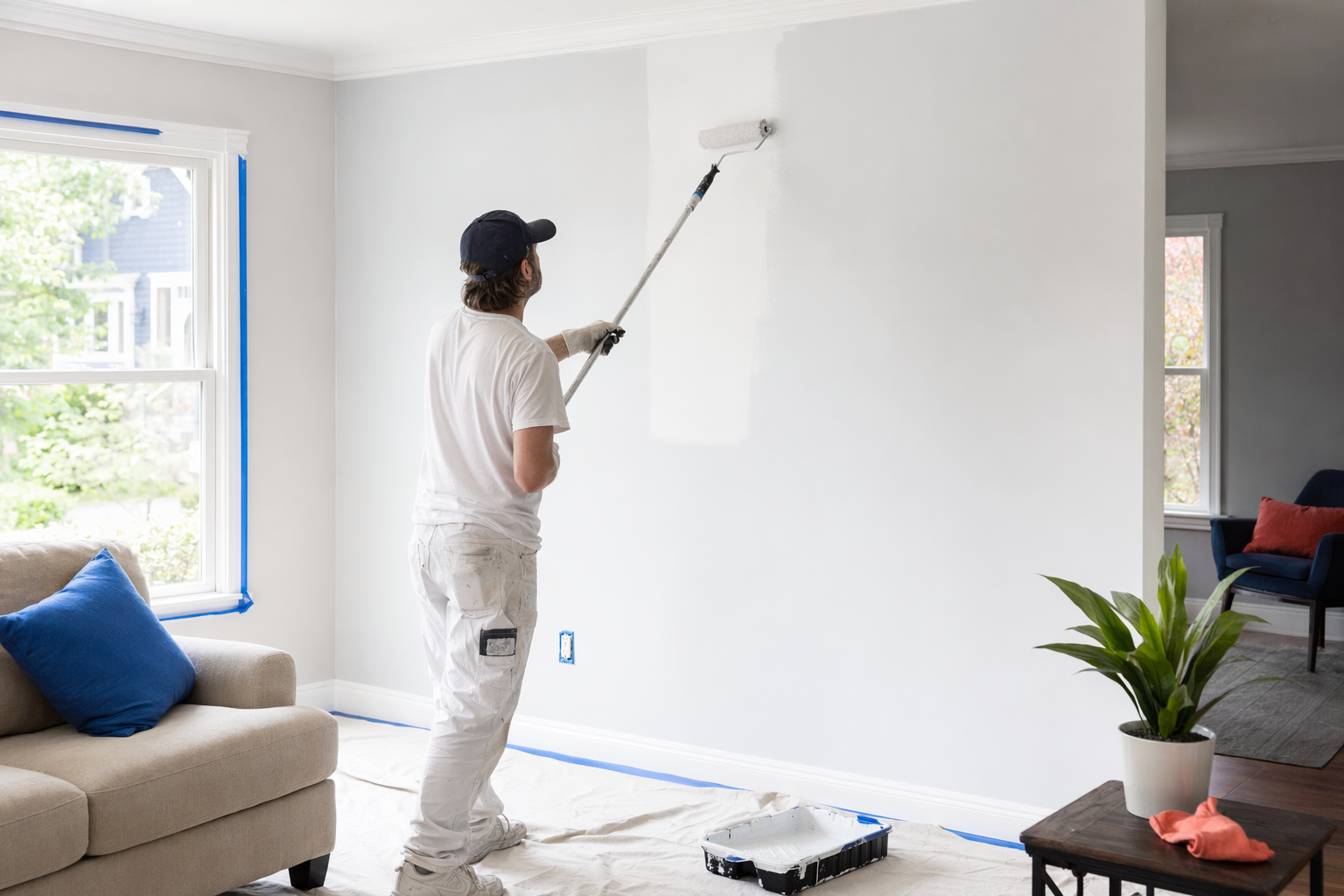
Quick answer: how long it usually takes
For many standard rooms, painting is often about 2–4 days total from start to finish (prep + paint + dry time). If the room needs extra prep—patching, sanding, stains, or heavy wall repairs—expect closer to 4–7+ days.
The “paint time” itself is usually shorter than the total timeline. Drying and curing between coats (and drying around edges/corners) is what stretches the calendar.
If you’re planning around move-in/move-out or daily life, ask painters to share a simple schedule for prep day, painting days, and final touch-ups. You can also explore room color and finish basics so you choose options that match your schedule.

What affects the timeline (the real reasons it takes longer)
The biggest drivers are usually prep and conditions—not just the amount of wall. A painter may be quick to roll paint, but they still have to protect floors, mask edges, remove/cover hardware, and make surfaces ready for paint.
Common timeline factors include:
- Wall condition: Holes, dents, peeling paint, uneven drywall texture, or lots of patching take more time.
- Stains and repairs: Water stains, smoke odor staining, or repaired areas may require stain-blocking primer and more coats.
- Color change: Going from a dark color to a light color (or vice versa) often needs extra coverage.
- Number of coats: Most wall jobs use 2 coats, but some situations need 3.
- Ceilings + trim: Painting ceilings, baseboards, doors, and window trim adds time.
Weather and ventilation can matter too—cool rooms or poor airflow can slow drying.
A realistic timeline you can plan around
Here’s a common example for a typical interior room (walls only or mostly walls), assuming surfaces are reasonably ready:
- Prep day (often 1 day): Protect floors and furniture, remove or cover outlet plates/hardware (as needed), clean surfaces, patch/sand, caulk gaps, and mask edges.
- Prime (sometimes 1 day): If needed for repairs, stains, or big color changes.
- First coat (1 day): Paint walls after prep/primer is ready.
- Second coat + touch-ups (another day): Apply second coat and handle edges, missed spots, and small repairs.
If you also paint trim and doors, plan extra time. It’s common for trim to need careful edge work and separate drying/handling so it doesn’t get smudged.
Want a match with a painter who’s used to your type of project? Use get matched—HuePort helps you connect with licensed, insured local painters. We don’t do the painting ourselves.
How drying and recoat timing affects the calendar
Even if a painter finishes rolling/brush work in a day, they can’t always “coat over” right away. Paint needs time to dry enough for the next coat, and sometimes more time before it’s fully cured.
Drying time depends on:
- Temperature and humidity in the room
- Ventilation (fans help, but they must be used safely)
- Paint type and brand
- Surface porosity (new drywall vs. older sealed walls)
Because drying conditions vary, don’t expect every room to be finished on the same clock. Ask painters what they recommend for recoat timing in your specific room.
Cost context: what time usually means for price
Time and cost are connected, but not perfectly. A room might take longer because of prep or access, and prep is often where cost lives.
Typical interior room painting cost ranges (not quotes) in the US often fall around $400–$1,500+ for a standard-sized room depending on scope (walls only vs. walls + trim/doors/ceilings), surface condition, and your area. If there’s heavy prep, stain blocking, or extra coats, costs can go higher.
What can push the price up:
- Repairs/patching and sanding
- Stain-blocking primer for stains/odor issues
- Lots of masking and detailed trim work
- Moving and protecting many items
- Multiple coats for full coverage
What can lower costs:
- Walls already in good shape
- Fewer colors/less dramatic change
- No ceilings/trim/doors (or you already have them done)
If you’re comparing options, ask for a clear explanation of what’s included in the scope (prep, primer, number of coats, trim, cleanup). For more practical help, visit guides and help.
Red flags to watch for (and what to ask so timing stays realistic)
To avoid surprises, make sure you get specifics—not pressure. A common problem is “vague pricing” or last-minute changes that blow up the schedule.
Watch for red flags:
- No license or insurance (always verify they’re properly licensed and insured for your area)
- Big cash deposit up front or requests for payment before the work is clearly defined
- “Today only” door-to-door urgency or pressure to sign on the spot
- No written scope (color/finish, what surfaces, primer if needed, coats, prep work, and cleanup)
- Promises like “finished by Friday no matter what” without acknowledging prep/drying reality
Before work starts, confirm these in writing:
- The exact surfaces to be painted (walls, ceilings, trim, doors)
- The paint brand/grade and finish you agreed on
- Whether primer is included and when it’s required
- The expected number of coats
- A realistic schedule for prep, coating, and touch-ups
Finally, remember: homeowners stay in control. You should confirm the color and price before work starts, and review the work before paying the final amount.
One safety note: pre-1978 homes and lead-safe practices
If your home was built before 1978, paint may contain lead. This doesn’t automatically mean you can’t paint—many projects are done safely—but you should ask painters how they follow lead-safe work practices.
Look for painters who discuss safety steps appropriate for your situation (for example, containment and cleanup methods) and who will follow local requirements.
Use this as a safety conversation point—not as a substitute for local code guidance or professional safety advice. If you’re unsure, a licensed, insured painter can explain what they do for lead-safe prep and cleanup.

Most rooms take about 2–4 days total, mainly because of prep and drying time, and the best way to plan is to get a written scope with realistic steps and ask about primer, coats, and lead-safe practices if your home is pre-1978.
Common questions
Can a room be painted in one day?
Sometimes—especially if it’s a small room, walls are in good shape, and you’re just doing one coat or using a paint product designed for faster turnaround. Most standard wall jobs still need prep and at least two coats, so “one day” is not typical.
Why does painting always take longer than I expect?
Prep and drying are the main reasons. Cleaning, patching, sanding, masking edges, and letting coats dry/recoat properly often take longer than the actual brush-and-roller time.
How long should I stay out of the room while it dries?
It depends on the paint and conditions, so follow what the painter recommends and the product label. In general, you may be able to enter carefully for inspections after initial drying, but avoid heavy contact or putting furniture back until it’s dry enough and touch-ups are complete.
What should I ask painters to get an accurate timeline?
Ask about prep needs, whether primer is included, how many coats they expect, and their plan for drying/recoat timing. Also ask for a simple schedule (prep → coat 1 → coat 2 → touch-ups) and what could change it.
How much does “more time” cost?
More time usually means more prep and labor—repairs, sanding, stain blocking, extra coats, and trim detail. Typical interior room ranges are often **$400–$1,500+**, but the real number depends on scope, surface condition, number of coats, and your area (not a fixed quote).
Are there scams I should avoid when booking a painter?
Yes. Be cautious with vague pricing, large cash deposits, “today only” pressure, no license/insurance, or anyone who won’t put the scope and price in writing. Compare at least a few quotes and keep full control of the final decision.