Quick answers
How much does it cost to paint a bedroom?
Painting a bedroom usually costs a few hundred dollars for a small room and more for multiple coats, repairs, or premium paint. Below are real-world cost ranges and what to ask before you hire.
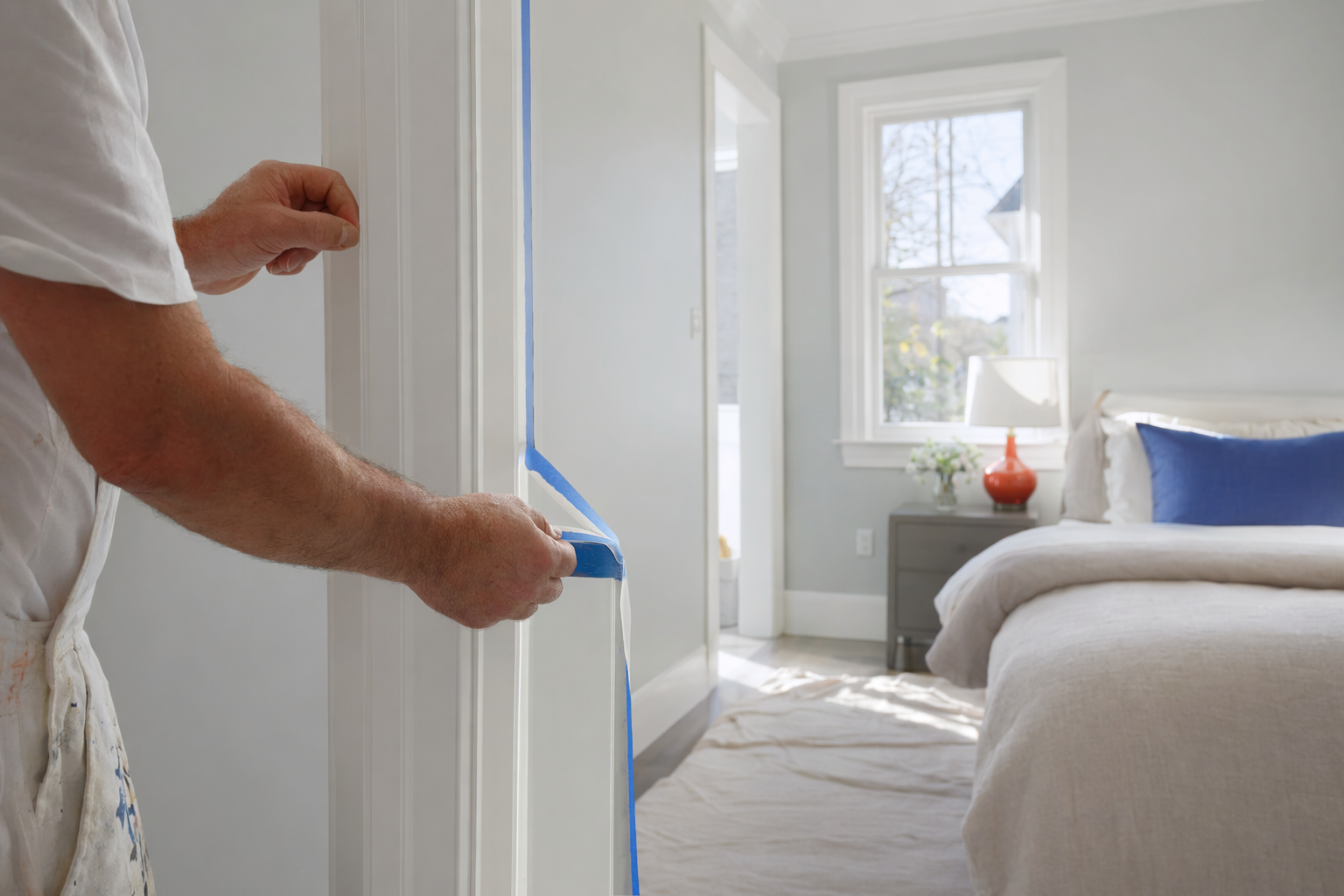
Quick answer: typical bedroom painting costs
In most U.S. homes, painting just the interior walls of a bedroom commonly lands in the $400–$1,200 range.
If you also paint the ceiling and do trim/doors/closets, many projects fall around $800–$2,500. These are general ranges, not quotes—your final price depends on prep, number of coats, paint quality, and how much work the painter needs to do.
To get a more accurate number, you’ll want a written estimate after someone looks at your room. HuePort is free for homeowners and can help connect you with licensed, insured painters near you for an estimate: get matched.
- Walls only: often about $400–$1,200
- Walls + ceiling + trim/doors: often about $800–$2,500

What drives the price up (or down)
Bedrooms can look simple, but painters price the *real work*: surface condition, prep time, and how many coats are needed. A room with clean drywall will cost less than a room with stains or patches.
Big factors that change cost include:
1) How many surfaces you paint (walls only vs. walls + ceiling + trim)
2) Condition and prep (patching holes, sanding rough spots, removing wallpaper, fixing water stains, caulking gaps)
3) Coats and color change (dark-to-light or strong color changes can require more coats)
4) Paint grade/brand (higher-quality paint may cost more per gallon but can cover better)
5) Access and time (tall ceilings, lots of trim detail, moving/covering furniture, limited access)
6) Your local market (labor rates vary widely by city and region)
Ask what’s included in the estimate—especially prep and the number of coats—so the price makes sense.
- More prep and more coats usually means higher cost
- Premium paint can sometimes reduce coats, but it depends on your starting color and surface
Cost breakdown by what you’re painting
Here are common ways bedroom projects are priced. Your painter may combine or separate these items, but the idea is the same: the more surfaces and details you include, the higher the total.
Typical scenarios:
1) Walls only (one main color): often the lowest cost
2) Walls + ceiling: usually adds time and materials
3) Walls + ceiling + trim (baseboards, window/door trim): higher, because masking, cutting-in, and detail painting take longer
4) Doors, closet doors, and built-ins: can raise cost depending on how many items and how smooth the finish needs to be
5) Repairs (patching, sanding, caulk work) and stain blocking (for smoke/water stains): can add cost even if the room looks small
If you’re trying to budget, ask your painter what part of the work is “required for a good result” versus “nice to have.”
- Walls only is often the budget-friendly starting point
- Trim and doors usually add noticeable time
A plain-language list of questions to ask for an estimate
Before you hire anyone, ask for clear answers in writing. Good painters should be able to explain the plan and include details that affect price.
Use this checklist:
- Which surfaces are included? (walls, ceiling, trim, doors, closets)
- How many coats of paint will you apply? And when is extra coating needed?
- What prep is included? (patching, sanding, caulking, removing flaking paint, wallpaper removal)
- Are supplies included? (primer, paint, sanding materials, caulk, drop cloths)
- What paint finish are you recommending and why? (flat/matte vs. eggshell vs. satin)
- Do you remove/cover furniture and how? (and what you need to do before arrival)
- How do you handle stains or dark colors? (e.g., whether primer or stain-blocking is included)
- What are the payment terms? (avoid big cash deposits up front)
- What’s the schedule and what happens if weather or materials change? (no promises, but a reasonable plan)
For help choosing finishes, you can explore finish ideas and color basics in color guidance.
- Get the scope and number of coats in writing
- Clarify prep—prep is often where price differences come from
Scams, overcharging, and red flags to watch for
Unfortunately, some people try to win by being vague. A real estimate should be specific about *what* will be done and *what it costs*. If someone is rushing you, that’s a warning sign.
Red flags include:
- Vague pricing like “$___ for the job” with no list of surfaces, coats, or prep
- Large cash deposits up front or pressure to pay before work starts
- Door-to-door “today only” deals or heavy pressure to sign immediately
- No proof of license and insurance (ask and verify)
- No written contract/estimate or refusal to put details in writing
- Unclear cleanup (how they protect floors and handle debris)
You stay in control: confirm the color, the work scope, and the price before work begins. And confirm the job is done right before paying the final amount.
- Avoid quotes without scope—ask for details on coats and prep
- Verify painters are licensed and insured before you sign
Lead-safe reminder for pre-1978 homes
If your home was built before 1978, the existing paint may contain lead. This does not automatically mean you must do a special project—but it *does* mean you should treat painting work as a safety topic.
Ask the painter how they follow lead-safe work practices that are required by local rules, including steps to reduce dust and properly contain and clean up materials. A reputable contractor should be comfortable explaining their approach.
For general guidance and prep expectations, you can also check help. And if you’re unsure whether lead-safe work is needed for your specific situation, ask the painter to explain what they’ll do and how it follows local requirements.
- For homes built before 1978, ask how they handle potential lead-safe practices
- Use safety questions to protect your family—not to delay the right estimate

A typical bedroom paint job often costs $400–$1,200 for walls only or $800–$2,500 when you add ceiling and trim, and your final price depends mainly on prep, coats, paint quality, and your local area.
Common questions
Is it cheaper to paint just the walls or the whole bedroom?
Yes. Painting walls only is usually the lowest-cost option. Adding the ceiling, trim, doors, and closet items typically increases labor time and materials, so the total cost goes up.
Why do two quotes for the same room cost different amounts?
Prices often differ because of prep (patching, sanding, caulking), the number of coats needed for your starting color, and whether the estimate includes primer or stain-blocking. Paint grade and access details can also change the cost.
What finish should I use in a bedroom?
Bedrooms are commonly painted in matte/flat or eggshell finishes. Flat/matte can hide wall imperfections well, while eggshell is often a bit easier to clean. Your painter can recommend based on your walls and lifestyle.
Do I need to move furniture before the painter arrives?
Often yes, or at least you’ll need to clear paths and protect items. Many painters cover furniture and floors, but the estimate should state what they do and what you’re expected to handle before they start.
How can I avoid overpaying for a bedroom paint job?
Get the scope and price in writing, including which surfaces are included, the number of coats, and the prep plan. Compare a few estimates and ask for proof of license and insurance.