Quick answers
How much does it cost to paint kitchen cabinets?
Painting kitchen cabinets usually costs between about $2,500 and $7,500+, depending on the cabinet size, condition, how much prep is needed, and the paint/finish. Use this guide to understand pricing so you can compare quotes confidently.
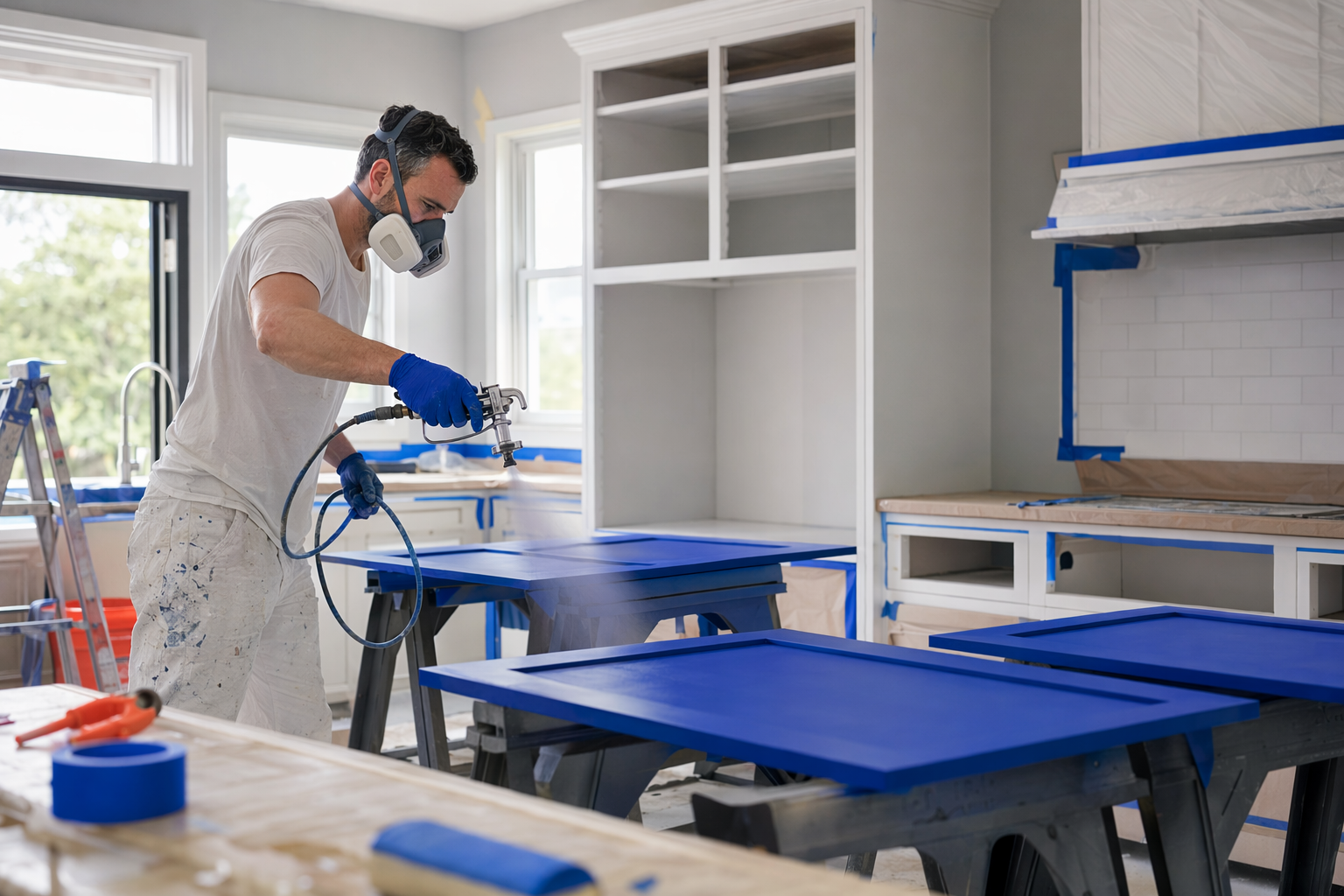
The quick answer: cabinet painting cost ranges
Most homeowners in the U.S. pay roughly $2,500–$7,500+ to professionally paint kitchen cabinets.
Your final price depends on details like how many cabinet boxes and doors you have, whether drawers need painting too, how much sanding/repair is required, and whether the painter recommends a higher-end paint or a more durable finish.
If a quote seems too good to be true, ask what’s included: prep, primer, number of coats, sanding level, whether hardware is removed, and whether you’re getting a “paint and go” approach or a more thorough prep.
HuePort is a FREE matching service that connects you with licensed, insured painters near you, but we don’t do the painting ourselves. You’ll still choose the contractor and confirm the scope and color/price before work starts.

What drives the price up or down
Cabinet painting is mostly labor and prep. Even though it’s “just painting,” cabinets take time because they must be cleaned well, sanded, and often primed—then coated multiple times for a smooth, durable finish.
Common factors that change cost:
- Cabinet count and layout (number of doors, drawers, cabinet boxes, and whether you have tall pantry cabinets)
- Condition (grease/oil buildup, peeling, chipped areas, water damage, previous paint quality)
- Door style (simple flat doors are often easier than detailed frames/raised panels)
- Prep requirements (repairs, deep cleaning, sanding, degreasing, masking)
- Paint system and finish (some finishes are more time-consuming and may cost more for materials)
- Number of coats (many projects need multiple coats plus primer)
- Hardware handling (whether hinges/knobs are removed, and how they’re protected)
- Access and complexity (small kitchen, many obstacles, high cabinets, tight spaces)
Because of these variables, ranges are helpful—but they’re not guaranteed quotes.
Typical cost breakdown (what you’re really paying for)
A cabinet painting quote usually covers prep, materials, and labor—not just brush or spray time.
Here’s a plain-language way to think about it:
- Prep: degreasing/cleaning, sanding/scuffing, repairing spots, and masking areas you don’t want painted
- Primer (often needed): helps the topcoat stick and improves durability
- Coats: usually multiple coats for even color and a lasting finish
- Drying/curing time between steps: to prevent sticking, blemishes, and uneven gloss
- Reassembly: reinstalling doors/drawers and protecting your kitchen surfaces
If you see a “low” price, it might mean less prep, fewer coats, or unclear responsibilities (for example, who handles repairs, or whether the painter replaces worn hardware). Always ask for the scope in writing.
Cost context by project style (and what’s included)
Not every “cabinet painting” job is the same. Two kitchens can have the same number of doors but very different prep needs.
To compare quotes fairly, ask whether they will:
- Remove doors and drawers (often recommended for best results)
- Prep surfaces the right way for cabinets (cleaning/degreasing and proper sanding)
- Use primer and how they choose it for your cabinet material and existing finish
- Apply how many coats of paint (and whether they include topcoat/clear protection if relevant)
- Sand/smooth between coats (this is where many “smooth finish” results come from)
- Protect the kitchen during work (countertops, floors, walls, and hardware)
A helpful next step: if you’re still choosing color, explore cabinet color and finish ideas so your quotes can match the look you want. Then use get-matched to talk with licensed, insured painters who can explain what they include for your exact cabinet setup.
Red flags when pricing sounds off
A fair cabinet painting quote should feel specific. Be careful if you hear anything vague or pressured.
Red flags to watch for:
- Vague pricing: no line items for prep, primer, number of coats, or how many doors/drawers are included
- Large cash deposit up front (ask what payment schedule is standard; reputable pros usually keep things reasonable and tied to milestones)
- “Today only” pressure, door-to-door sales tactics, or reluctance to put details in writing
- No proof of licensing and insurance, or unclear warranty/guarantee language
- No mention of prep steps (cabinet results depend heavily on cleaning, sanding, repairs, and coat count)
- A quote that doesn’t ask questions about cabinet count, condition, or layout
Scam-safe approach: request the color, paint type/brand or system, prep steps, number of coats, and the final price in writing. Compare a few quotes and choose the person who explains the process clearly—not just the lowest number.
Lead-safe reminder for pre-1978 homes
If your home was built before 1978, older paint may contain lead. That doesn’t mean you can’t paint—but it does mean you should prioritize safe work practices.
Ask the painter how they handle lead-safe precautions. A reputable contractor should describe steps to reduce dust and properly manage any paint disturbance, and follow local requirements and lead-safe standards.
This is a safety check, not DIY advice. For specifics about your situation, rely on licensed, insured painters who can follow proper procedures and local rules.
How to get a better cabinet painting quote (without surprises)
You can’t control labor costs or the condition of your cabinets, but you can reduce guesswork by preparing a few details.
Before you request bids, gather:
- Rough cabinet count: doors and drawers (pantries included)
- Photos of fronts, sides, and the inside of cabinets (especially around sink/grease areas)
- Notes on condition: peeling, chips, water stains, heavy wear, or prior finishes
- Your target look: color + finish (matte, satin, semi-gloss—what you prefer matters)
- Whether you want hardware reused or replaced
When contractors quote, you stay in control. Confirm the exact scope, the number of coats, the prep plan, and the total price before work begins. Before paying the final amount, walk through the results with them and address any issues while they’re still on site.

Professional cabinet painting commonly runs about $2,500–$7,500+ depending on prep, cabinet count/condition, and the paint system, so compare written scopes from licensed, insured painters.
Common questions
Is it cheaper to paint just the cabinet doors instead of the whole cabinets?
Often it can be a bit cheaper because cabinet boxes and interiors are more work. But the best price depends on how much prep is needed and whether the painter will still do a consistent finish across the areas you can see.
Do I need to replace my cabinets instead of painting them?
Painting can be a good option when cabinets are structurally sound and the surfaces can be properly prepped. If there’s heavy damage, moisture issues, or widespread delamination, a contractor may recommend other options—ask a licensed, insured painter to assess your situation.
Why are cabinet painting quotes so different from one painter to another?
Because “painting cabinets” can include very different prep levels, primer choices, paint systems, and number of coats. Always compare what’s included in the scope, not just the total number.
What finish should I choose for kitchen cabinets (matte vs satin vs semi-gloss)?
Satin and semi-gloss finishes are commonly chosen for kitchens because they tend to wipe more easily, while matte can hide some surface imperfections but may be more delicate. Your choice should match your daily cleaning needs and how smooth the final surface will be.
If my home is older, is it safe for someone to paint cabinets?
Cabinet painting can be safe when proper lead-safe work practices are followed (especially in homes built before 1978). Ask how the painter reduces dust and manages any potentially lead-containing paint, and confirm they follow local requirements.