Quick answers
How do I pick the right white paint?
Choosing white paint is mostly about the “undertone” (warm, cool, or neutral). This guide helps you pick the right white for your space, plus what to ask painters so you get a fair, safe result.
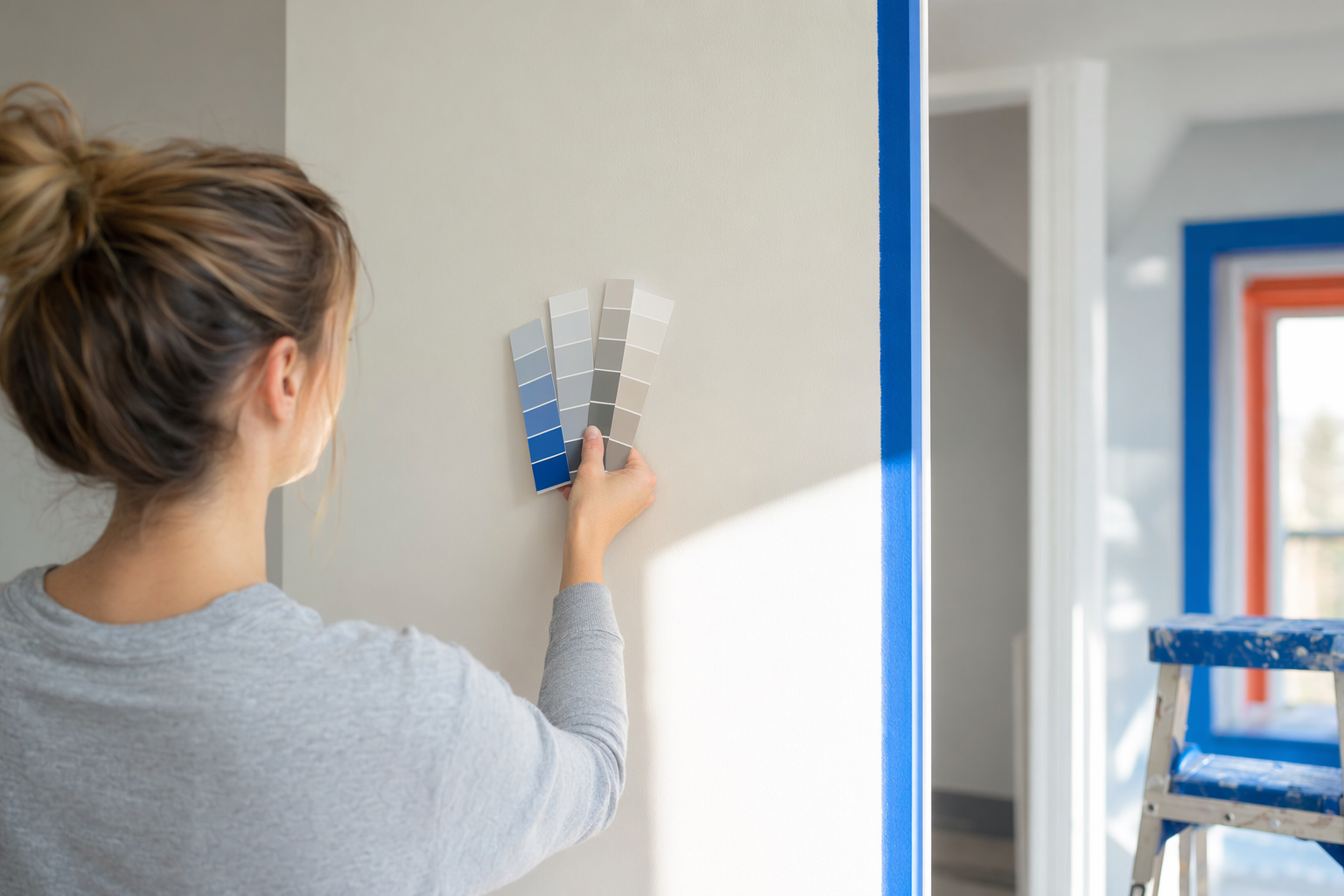
Start here: the quickest way to choose a good white
Pick a white based on how it looks with your light. In most homes, the “right” white depends on your room’s daylight, wall color, and what’s in the space (floors, cabinets, countertops, metal fixtures).
First decide: do you want the room to feel warm and cozy, bright and crisp, or clean and neutral? Then test—because two whites can look totally different once they’re on your walls.
If you want a fast starting point, look for words on paint samples like “warm,” “cool,” “neutral,” or “greige/ivory” (for whites that lean slightly beige). When in doubt, start with a few sample pots and compare them in the room at different times of day.
- Warm white: looks a little creamy (often works great with wood and honey tones).
- Cool white: looks more crisp/icy (often works well with modern grays and blue-gray accents).
- Neutral white: usually sits between warm and cool (often the safest choice across many spaces).

Learn undertones: what “white” really means
White paint isn’t one color—it’s a family of shades with different undertones. Even “bright white” can lean slightly yellow, pink, gray, or green once it’s in your lighting.
Try this simple test: place your white samples on the wall next to each other, not just in your hand or on a tiny swatch. Look at them morning (more blue light) and evening (more warm light). The best white is the one that stays pleasant in your lighting—not just the one that looks good under the store lights.
Also think about nearby colors. If you have white trim, consider whether you want the walls to match trim exactly or contrast slightly. In many homes, trim and walls are close but not identical—otherwise the space can look flat or “off” to the eye.
- If a white looks “dirty” or yellow in a room, it may be too warm for that light and those nearby colors.
- If a white looks “blue” or feels too stark, it may be too cool.
- If everything looks gray, you may need a warmer or cleaner neutral white.
Match white to the room: walls, trim, cabinets, and ceilings
Different surfaces can change how white reads. Ceilings usually look better in a flatter finish, while trim and doors often look sharper with semi-gloss or satin (for easier cleaning). Cabinets are often a different paint system than basic wall paint.
A common approach: choose the undertone first, then pick finishes based on how the surface is used. For example, if a room gets a lot of fingerprints or cooking splashes (kitchen, hallway, kids’ rooms), a more washable finish on walls can help.
For trim and doors, consider whether you want them to feel “crisp” next to the walls. Sometimes a slightly warmer trim makes a neutral wall look richer; sometimes a cooler trim makes the wall look cleaner. Testing is still the final answer.
- Ceilings: flatter sheen typically reduces glare and hides minor imperfections.
- Trim/doors: satin or semi-gloss often cleans more easily and shows detail.
- Kitchens/high-traffic: washable wall finishes can make upkeep easier.
Do a smart sample test (so you don’t waste time or money)
Buying one sample and making a decision the same day is where many people get stuck. A better test takes a weekend but saves months of regret.
Use these steps:
1. Tape up sample cards or paint samples in a few areas (corner, near a window, and on an interior wall).
2. View them at least twice: morning daylight and evening light.
3. Let samples dry fully (paint colors can shift as they cure).
4. Compare with real elements in the room: flooring, countertops, hardware, and existing trim.
If you’re painting over a strong color, the undertone can also be affected by what’s underneath. Ask the painter how they plan to prevent previous colors from bleeding through. This is normal, and it’s part of good prep—not a “mystery.”
- Don’t judge by the first 10 minutes after paint goes on—drying and lighting matter.
- Choose the white that looks best in your room, not the one that wins in the store.
Cost context: what white painting usually costs (and why it varies)
A white paint job can cost less or more depending on what you’re painting, how many coats are needed, and how much prep is required. A “fresh white” may take less work than repainting heavily stained walls, but prep is still the key driver.
Typical US cost ranges (very general—NOT quotes):
- Interior rooms (walls only): often about $1,500–$4,500 per room, depending on size, condition, and prep.
- Whole interior (walls/ceilings): often about $5,000–$15,000+ for many homes, depending on number of rooms, height, and surface condition.
- Trim/doors/cabinets (additional): can add several hundred to several thousand dollars depending on how many surfaces and how detailed the work is.
Exterior painting often costs more per square foot due to height, surface prep, and weather protection. Exterior projects commonly run several thousand to $10,000+ (or more) depending on house size, siding condition, and whether trim/doors are included. Your area and access can make a big difference.
What usually pushes cost up:
- Heavy prep (patching holes, sanding, fixing peeling paint, cleaning smoke/grease)
- Stained or uneven surfaces needing more coats or sealing
- Higher ceilings, lots of doors/windows, or hard-to-reach areas
- Better paint grade (or specialty coatings) and more thorough priming
Pick a painter you can trust (and avoid white-paint scams)
HuePort helps you find licensed, insured painting contractors near you—free for homeowners. We’re not a painting company and we don’t do the work ourselves. Your job is to confirm the color, scope, and price with the contractor before work starts.
Before you hire, ask for these items in writing:
- The exact paint line/grade (and finish) for walls/trim
- Number of coats (and what’s being primed/sealed)
- Prep plan (what they do to clean, repair, and sand)
- Protection plan for floors/furniture and cleanup expectations
- Total price, payment schedule, and when final payment is due
Red flags that can lead to overcharging or disappointing results:
- Vague pricing with no clear scope (“we’ll see what it costs”)
- Large cash deposits up front or pressure to pay before you get details
- “Today only” door-to-door offers or urgency to sign on the spot
- No license/insurance (or unwillingness to show it)
- Quotes that don’t mention coats, prep, or paint brands/grades
If your home was built before 1978, paint may contain lead. Don’t panic—just treat it as a safety point: ask the painter how they follow lead-safe work practices and local requirements. Follow the guidance of licensed pros and local rules for your area.
- HuePort is free and collects only contact + project intent (like type of project, interior/exterior, and ZIP). No sensitive financial information is needed.
- You should stay in control: confirm the final color and price before work begins, and check the work before paying the last amount.

Pick the undertone (warm, cool, neutral), test it on your real walls in day and night light, then hire a licensed, insured painter and confirm prep, coats, and price in writing.
Common questions
Should I choose a warm white or a cool white?
It depends on your room’s lighting and nearby colors. Warm whites usually feel cozier with wood and beige tones, while cool whites often look crisp with gray and blue-gray accents. Testing a few samples on your actual walls is the most reliable way to decide.
How do I test white paint without wasting days?
Paint a few samples on the wall in different spots and look at them morning and evening. Even better, compare them side-by-side on the same wall so you’re judging color under your real lighting.
Can I use one white for both walls and trim?
You can, but many people prefer slight differences—either the same undertone or a tiny shift in shade—to keep the room from looking flat. If you want a match, choose paint that’s intended to align (and test).
Why does white paint look different after it dries?
Lighting changes and paint can shift as it cures. Also, the old color under it, plus sheen, can affect the final look. That’s why drying time and prep matter.
How much does it cost to paint with white?
It varies by room size, surface condition, prep, number of coats, paint grade, and your location. Interior room painting often falls in the rough range of about $1,500–$4,500 per room, and whole-interior projects often start around $5,000 and can go much higher. Always treat ranges as guidance, not quotes.
If my home is older, do I need to worry about lead when painting?
For homes built before 1978, lead paint may be a concern. Ask your painter how they handle lead-safe work practices and follow local requirements. Use licensed professionals for the right safety steps.
How do I find a contractor for my white paint project?
You can use HuePort’s free matching service to connect with licensed, insured painters near you. Submit your project type and ZIP, then compare options and confirm scope, paint details, and price in writing before work starts: /get-matched/.