Quick answers
Is one coat of paint ever enough?
Sometimes one coat is enough—but often it isn’t. Whether you need one coat depends on the surface, the paint color change, and how well the old paint is bonded.
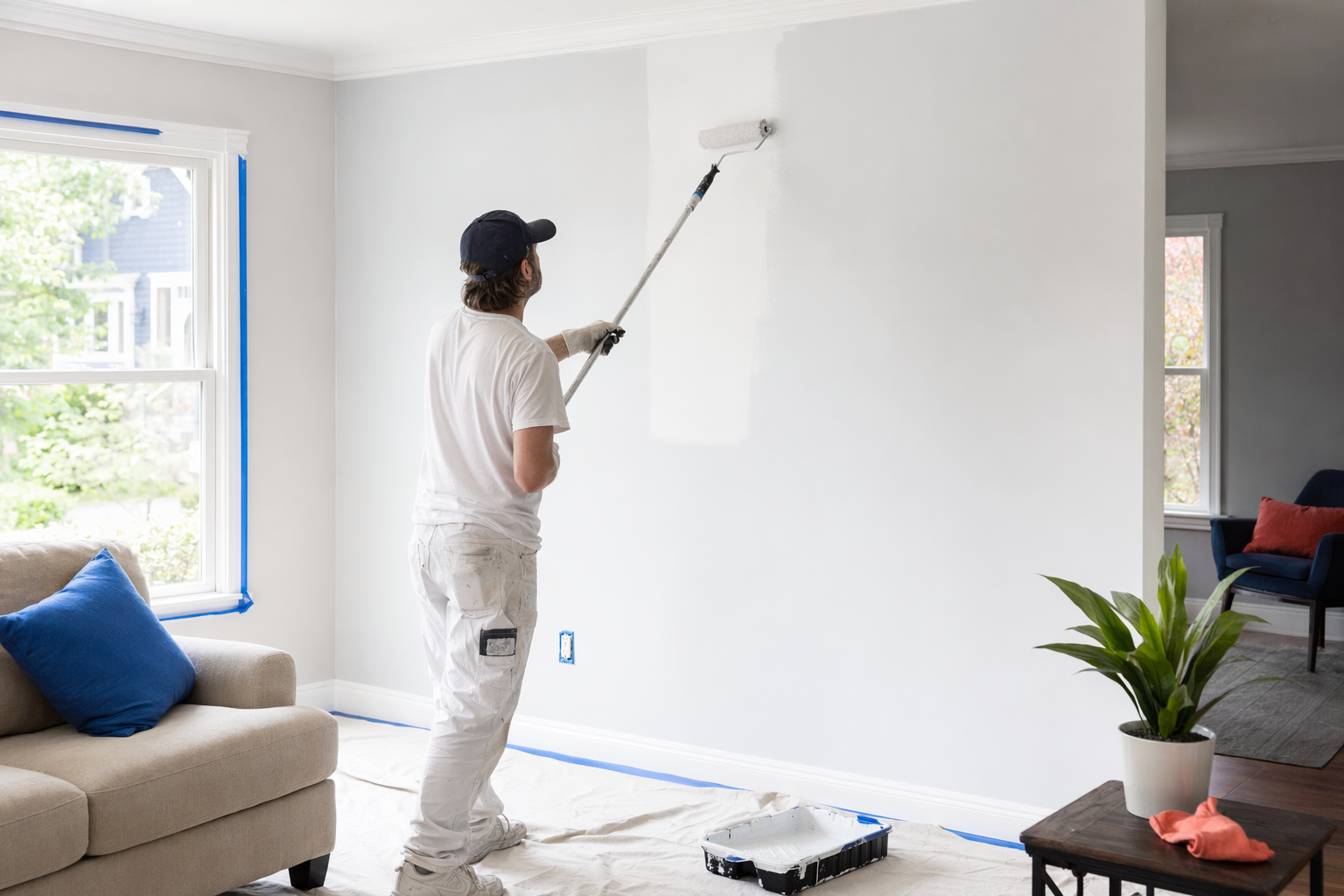
Short answer: one coat is usually rare (but possible)
In many real projects, one coat only covers if the conditions are easy: the surface is smooth, the old paint is similar in color, and the new paint is applied correctly.
If you’re changing from a light color to a much darker shade (or covering stains, smoke damage, or patchwork), one coat commonly won’t look even—so most homeowners end up doing two coats for a clean, finished look.
HuePort can help you plan the project and connect with licensed, insured painters near you (we’re a free matching service, not a painting company).
- One coat can be enough for “like-to-like” situations: similar color and no major stains
- Two coats are most common for a durable, even finish

When one coat can work
One coat may be enough when you’re painting over a surface in great condition and you’re not asking the new paint to “do too much.” That usually means:
- The existing paint is already well-adhered (not peeling, flaking, or chalky)
- The surface is clean and dry
- The color change is modest (for example, light-to-light)
- You’re using a paint system meant for the surface (primer vs. topcoat matters)
Also, some paint products are designed to provide better coverage, but “better coverage” still doesn’t always mean “one coat.” Coverage depends on application, sheen, and how absorbent the surface is.
- Smooth, clean walls + close color match = best odds for one coat
- Even application matters (cut-in/edges and rolling can affect coverage)
When you should expect two coats (or more)
Two coats is the common goal because it gives you more consistent color and fewer thin-looking spots—especially in sunlight and near trim.
You’ll likely need more than one coat if any of these are true:
- Big color shift (dark to light or light to dark)
- Stains bleed through (water marks, nicotine, rust, tannin stains)
- New drywall or repaired areas were patched and need “even absorbency”
- The old paint is shiny and not properly scuff-sanded
- You’re painting cabinets, doors, or trim where a flawless look matters
Sometimes the “extra coat” is actually a primer plus one topcoat, depending on the condition and what needs sealing or bonding.
- Stains, patching, and major color changes are the biggest “one-coat won’t be enough” triggers
- Primer can be part of the plan—even if the painter says “one coat of topcoat”
The cost reality: what one coat can change (and what it won’t)
Cost depends on surface area, prep, how many coats (and primer) are needed, and how much time it takes to do the job right. One coat can lower material use, but prep is usually the bigger driver of cost.
For many interior projects, common homeowner cost ranges (not quotes) are roughly:
- Interior room walls/ceilings: about $1,000–$4,500 for typical single-room work, depending on size, height, and prep needs
- Trim/doors/cabinets: often higher because it’s slower and more detailed work
For exterior projects, typical ranges (also not quotes) might look like:
1. Siding/whole exterior repaint: about $3,000–$15,000+ depending on house size, siding type, height, and surface condition
If someone offers a “one coat only” guarantee without discussing primer, stains, and surface condition, be cautious. The paint job is often won (or lost) in prep and the number of coats required for even coverage.
- Ranges vary a lot by area and condition—ask what drives the estimate (prep, coats, primer, paint grade)
- Thin coverage today can mean more touch-ups tomorrow
Red flags: pricing tricks and “one coat” promises
Painting scams and overcharging often show up as vague promises or aggressive pressure. Watch for:
- “Today only” deals or pressure to sign on the spot
- Large cash deposits up front
- No license/insurance (ask for proof)
- Vague pricing like “cheap per room” with no written scope
- Refusing to put the color, paint type, surface prep, number of coats, and price in writing
Be especially careful with “one coat” talk if it’s disconnected from the surface reality (peeling paint, stains, repairs, glossy surfaces). Ask how they’ll handle adhesion and uneven absorption so you get a finished result you’ll be happy with.
- Get the scope and price in writing before work starts
- Confirm who provides materials, what paint/primer is used, and how many coats are planned
Pre-1978 homes: lead-safe reminder (safety point, not advice)
If your home was built before 1978, there’s a chance the paint contains lead. That doesn’t mean you can’t paint—just that the work should be handled safely.
Ask a licensed, insured painter how they follow lead-safe work practices for preparation and dust control (for example, how they protect surfaces, contain dust, and clean up). If lead is suspected, the safest path is to follow local rules and professional guidance—not DIY experimentation.
A good painter won’t dismiss lead-safe steps, and they’ll explain how they keep people safe while preparing for repainting.
- For pre-1978 homes, treat lead safety as a key question before prep begins
- Ask for their lead-safe process and cleanup approach
How to decide for your project (quick checklist)
If you want an honest answer about whether one coat is realistic, you can ask a few practical questions before anyone starts.
- What’s the current paint condition? (peeling, flaking, stained, glossy, patched?)
- Are we using primer if needed? If yes, where and why?
- What exact change in color is planned? (big shift usually means more coats)
- How many coats of topcoat are included in the written scope?
- What prep is included (cleaning, sanding, caulking, patching)?
Then, when quotes come in, compare them like-for-like: same rooms/surfaces, same prep level, same coat plan, and similar paint grade. The homeowner stays in control—confirm the color and the price before work starts, and verify the finish before paying the final amount.
- HuePort is free—use [get matched](/get-matched/) if you want help connecting with local licensed, insured painters
- Explore [guides](/guides/) and [colors](/colors/) to plan your color + finish choices

One coat can be enough when the surface is in great condition and the color change is minor, but two coats are usually needed for even, durable coverage—ask about prep and primer, especially for pre-1978 homes.
Common questions
Can I just do one coat to save money?
Sometimes, but it depends on the surface and the color change. If the wall is repaired, stained, or you’re moving to a very different shade, one coat often won’t look even and you may spend more on touch-ups later.
What matters more: one coat or good prep?
Good prep usually matters more than the number of coats. Cleaning, sanding, fixing patches, and using primer when needed help the paint bond and look consistent.
If the painter says one coat is enough, what should I ask?
Ask what prep is included, whether primer will be used, how stains/repairs are handled, and how many total coats (primer + topcoat) are planned. Get the scope and price in writing.
Does paint brand guarantee one-coat coverage?
No. Coverage still depends on the surface, sheen, application, and color underneath. Even “one-coat” products may need additional coats for an even finish in real-world conditions.
My home is older—do I need to worry about lead?
If your home was built before 1978, paint may contain lead. Ask your painter about lead-safe work practices and dust control, and follow local requirements through licensed professionals.
How do I avoid overpaying for a paint job?
Compare a few written quotes with the same scope: surfaces included, prep steps, primer plan, number of coats, paint grade, and total price. Watch for vague estimates and big cash deposits.