Quick answers
Should I paint my brick house?
Yes, you can paint a brick house, but it’s a big decision—mainly because prep, moisture, and the right coating matter. Here’s how to think it through and what to ask a licensed, insured painter.
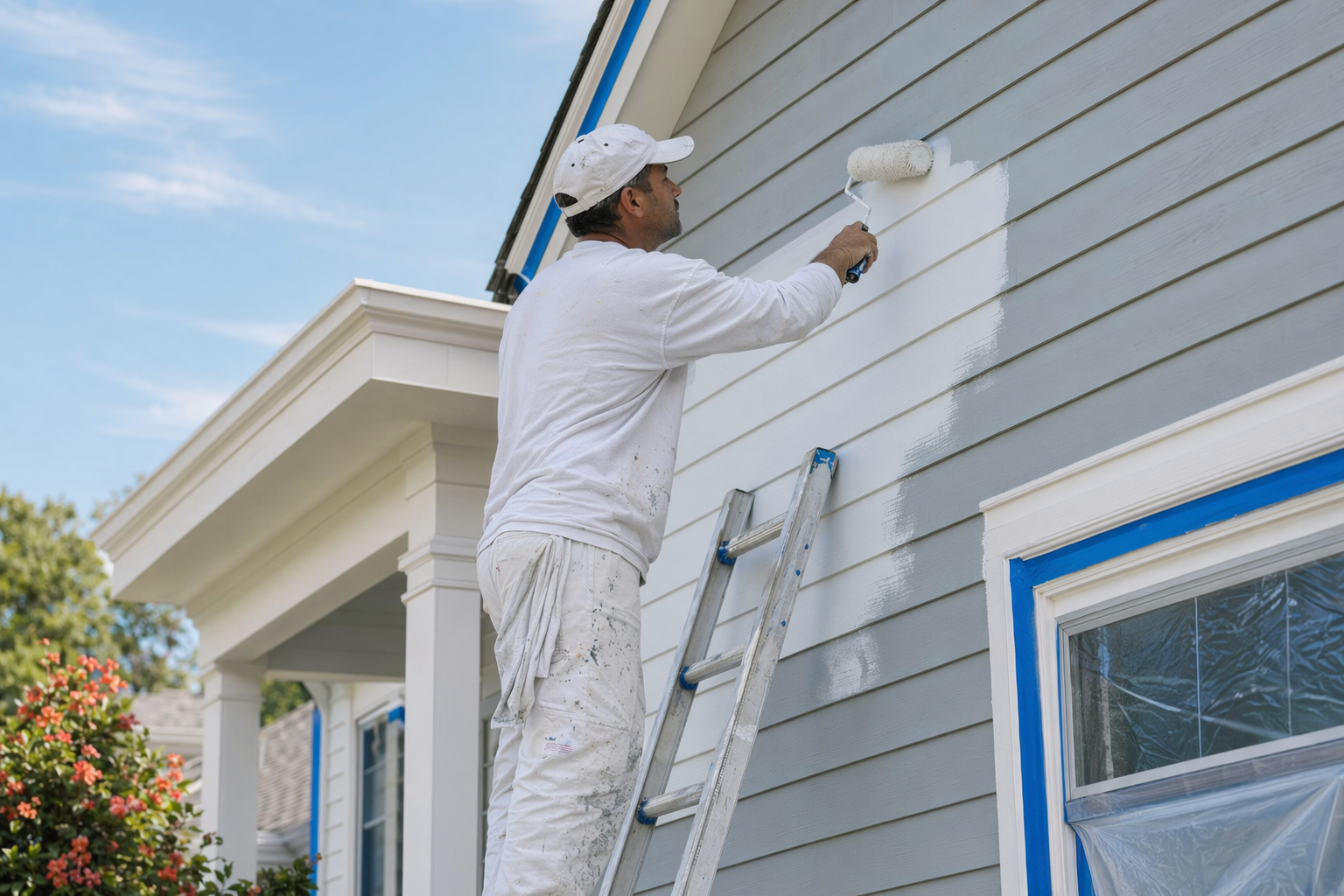
Quick answer: when painting brick is a good idea (and when it’s not)
Painting brick can be a great refresh if the brick is generally solid and you want a new color (or to unify patches from repairs). It can also help if the brick looks faded, stained, or uneven—though not all stains will disappear.
It may be a poor choice if the brick has ongoing moisture problems, loose mortar, widespread cracks, or signs water is entering and staying behind. In those cases, paint can trap moisture and make issues worse, so it’s better to fix the root problem first.
If you’re considering painting, start with a practical check: look for crumbling mortar, bulging spots, damp areas, peeling paint, or white powdery residue (often called efflorescence). A licensed, insured painter can assess your specific brick and recommend the right system.
HuePort is a FREE matching service that connects you with nearby painters for an estimate—so you can compare options and get the right guidance for your home. We do not do painting work.
- Good fit: you want a color change and the brick/mortar are in generally good condition
- Be careful: visible moisture issues, failing mortar, or major structural concerns

The real key: brick prep and the right coating system
Brick is porous and holds moisture. That’s why brick painting usually isn’t “brush on paint”—it’s a system: cleaning, surface prep, priming (often specialized), and then the finish coating.
Expect prep to take time and cost. Cleaning can include removing dirt, mildew, and old coatings (if present). Many painters also address chalky residue and make sure the surface is properly dry before coating.
Ask painters what product system they use for brick (primer + finish), how they will test or judge dryness, and what their cleaning/prep steps are. A strong plan should be written in your estimate so you can compare companies fairly.
If you want to explore color ideas, start with our brick-friendly color tips and then bring your favorites to the painters you compare through get matched.
- Prep and correct primer matter as much as the final color
- Brick usually needs a planned system, not random “leftover” coatings
What does it cost? Honest brick-painting cost context (ranges, not quotes)
Cost depends a lot on your house size, the condition of the brick, how much cleaning/prep is needed, whether there’s existing paint, the number of coats, the paint grade, and how easy it is to access the surfaces (stories, landscaping, scaffolding, etc.). Your local labor and materials prices also affect the total.
As a rough guide for many areas of the US: exterior brick painting often runs somewhere around $3,000 to $12,000 for average one- to two-story homes, but larger homes or heavy prep can be higher. If you need more surface prep, repairs, or specialty coatings, the range can expand.
These are not quotes—each home is different. A licensed, insured painter should assess your brick and give you a written scope and price. If you’re budgeting, ask for line items like cleaning/prep, primer, finish coats, number of coats, and any allowances for repairs.
To avoid surprises, review our home painting basics before you request estimates, so you know what to ask for.
- Typical range (US guide): about $3,000–$12,000+ depending on size and prep needs
- Prep and primer system choices often change the price more than the “color” does
How to choose a color and finish on brick (so it looks good and lasts)
Brick color can look different once painted because brick has texture. Darker colors can highlight dust and surface variations, while lighter colors can make the house feel brighter—but they may show stains or unevenness if prep is weak.
Finish is also a practical choice. Exterior coatings commonly fall into low-sheen categories (like eggshell or satin) for balance between appearance and cleanability. Glossier finishes can look sharper but may also emphasize surface texture. Your painter can recommend what’s appropriate for brick and your climate.
Before committing, ask about color matching and testing. Many painters can apply a small test area or help you compare samples on your lighting conditions. If you’re not a native English speaker, it’s okay to bring printed photos of your choices and ask the painter to explain the steps and the product names in simple terms.
If you want a simple starting point, browse color guidance and then shortlist 2–3 options. The best “decision” is one that you can confirm with your contractor in writing before work starts.
- Texture affects color—sample first if possible
- Exterior low-sheen finishes are often chosen for look + durability
Questions to ask your painter (and what to watch out for)
When you get estimates, keep control. You should confirm the exact color, the full paint system (primer + finish), the number of coats, prep steps, and the total price before any work begins. This is the best way to avoid misunderstandings.
Ask things like:
1. What cleaning and prep steps will you do for brick (and how will you handle dust, mildew, or old coatings)?
2. What primer and finish products are you using, and what is the total system?
3. How do you decide the surface is dry enough before coating?
4. What repairs are included if mortar needs attention or if there are cracks/stains?
5. How do you protect windows, doors, landscaping, and nearby surfaces?
Also watch for red flags. Be cautious if a company gives vague pricing, demands a large cash deposit up front, offers pressure tactics like “sign today only,” can’t show proof of licensing and insurance, or won’t put the scope and price in writing. Avoid painters who won’t discuss lead-safe practices for pre-1978 homes.
HuePort helps you find nearby licensed, insured options for a quote, but we’re not the painter and we don’t perform the work. You stay in charge of hiring and confirming details.
- Good estimates explain prep + coating system, not just a single number
- Red flags: no license/insurance, vague scope, big cash deposits, pressure to sign, no written plan
Pre-1978 homes: lead-safe reminder (safety point to ask about)
If your home was built before 1978, paint on brick and nearby surfaces may contain lead. This is a safety issue—how the painter works matters. For guidance, ask your painter how they follow lead-safe work practices (for example, cleaning methods and dust control) and what precautions they take.
You don’t need to handle lead concerns yourself. But you should treat this like a serious “how do you protect the household?” question, and make sure the painter’s approach fits the situation and your local requirements.
If you’re unsure about your building’s history, you can also ask your contractor what testing or documentation they rely on before disturbing surfaces.
For more planning help, see how to get ready for an exterior paint project and then use get matched to connect with painters who can walk you through the right prep and safety steps.
- For homes built before 1978, ask about lead-safe practices (don’t ignore it)
- Make safety a question you confirm before work starts

Painting a brick house can look great, but the best results come from proper prep, the right coating system, and choosing a licensed, insured painter—especially if your home is older and may need lead-safe precautions.
Common questions
Will painting brick cover stains like rust or water marks?
Sometimes, but not always. Stains can come from active moisture, rusting metal, or deep discoloration in the brick. Ask what stain-blocking primer (and cleaning) they use and whether the cause needs to be fixed first.
Do I have to strip old paint off brick before repainting?
Often, surfaces need proper cleaning and loose material removal. Whether full stripping is necessary depends on what’s currently on the brick and how it’s bonded. A painter should inspect and include the correct prep steps in a written estimate.
Can I paint brick myself to save money?
You can try, but brick prep and the right primer system are what usually make or break the result. Hiring a licensed, insured painter can reduce risk, especially for safety (heights/access) and proper surface preparation.
How do I know if my brick has moisture problems?
Look for damp spots, repeating efflorescence (white powdery residue), peeling coatings, or cracking mortar that seems to worsen over time. A contractor should assess moisture sources before recommending paint so you don’t trap problems behind a coating.
What should be in the estimate before I approve work?
Confirm the scope (prep steps), the primer and finish system, number of coats, the exact color, protection of surrounding areas, timeline expectations (as estimates, not guarantees), and the full price in writing. Compare at least a few quotes.