Interior
Painting an accent wall
An accent wall can change a room fast without painting every wall. Here’s how to choose the right wall, color, finish, prep, and budget — and how HuePort can help you connect with licensed painters near you for free.
Why an accent wall works
An accent wall is one wall painted a different color from the others. It can add warmth, contrast, or a focal point without making the whole room feel dark or busy. This is why people often try it first in a bedroom, living room, dining room, home office, or nursery.
The best accent walls usually feel natural in the room. Good examples are the wall behind a bed, behind a sofa, around a fireplace, or the wall you see first when you enter. A wall with strong architecture — built-ins, trim, or a clear center point — often works better than a random side wall.
A bold color can look great, but placement matters as much as the color itself. If the wall has many doors, windows, vents, or odd angles, the result can feel chopped up. In many rooms, the cleanest wall with the strongest visual importance gives the best result.

How to choose the right wall and color
Start with the room’s fixed items: flooring, cabinets, tile, countertops, brick, or large furniture. Your accent color should work with those pieces, not fight them. If the room already has a lot happening, a softer muted accent may look better than a very bright one.
Dark colors can add drama and depth. Mid-tone colors often feel rich without overpowering the room. Warm shades can make a large room feel more inviting, while cooler shades can feel calm and clean. If you want color but feel nervous, try a dusty blue, muted green, warm clay, deep greige, or charcoal instead of the brightest version of a color.
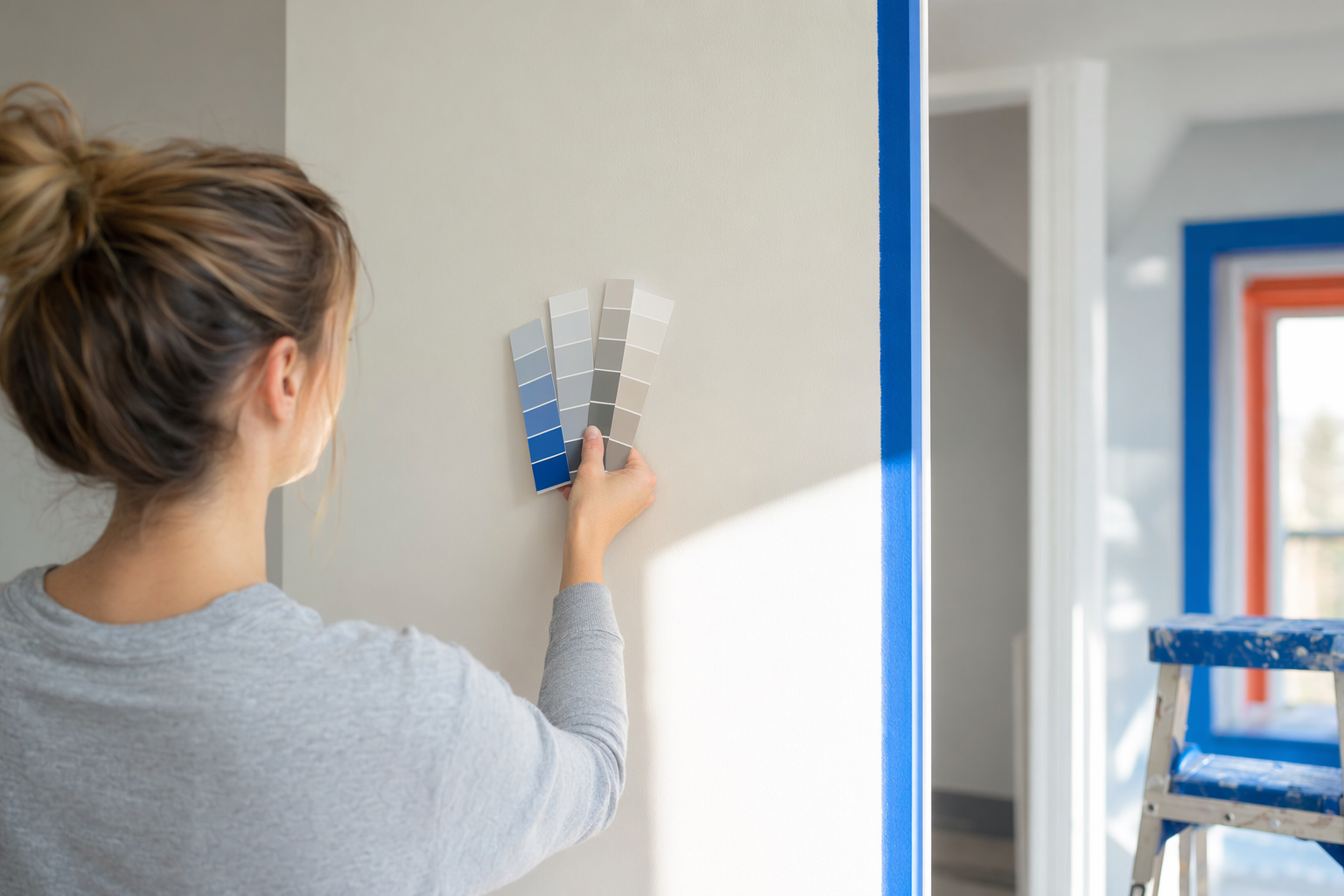
Before you decide, test the color at different times of day. Natural light, lamps, and shadows can change a paint color a lot. A sample on the wall is usually more helpful than looking at a tiny chip.
If you are still deciding, our color ideas hub can help you narrow down tones that fit your room and style.
Best finish for an accent wall
For most interior accent walls, eggshell or satin is the safest choice. These finishes have a soft look, are easier to wipe than flat paint, and usually work well in bedrooms, living rooms, and dining rooms.
Flat or matte can look beautiful on a wall with a bold color because it hides small surface flaws and reduces glare. But it may mark more easily, especially in homes with kids, pets, or heavy traffic. Satin is a little more washable, but it can show patches, roller marks, and wall texture more clearly if the prep is not good.
In kitchens, hallways, mudrooms, or other busy spots, many homeowners prefer eggshell or satin for easier cleaning. The right finish depends on the wall condition, the light in the room, and how much touching or scrubbing the wall may need.
Prep, primer, and how many coats to expect
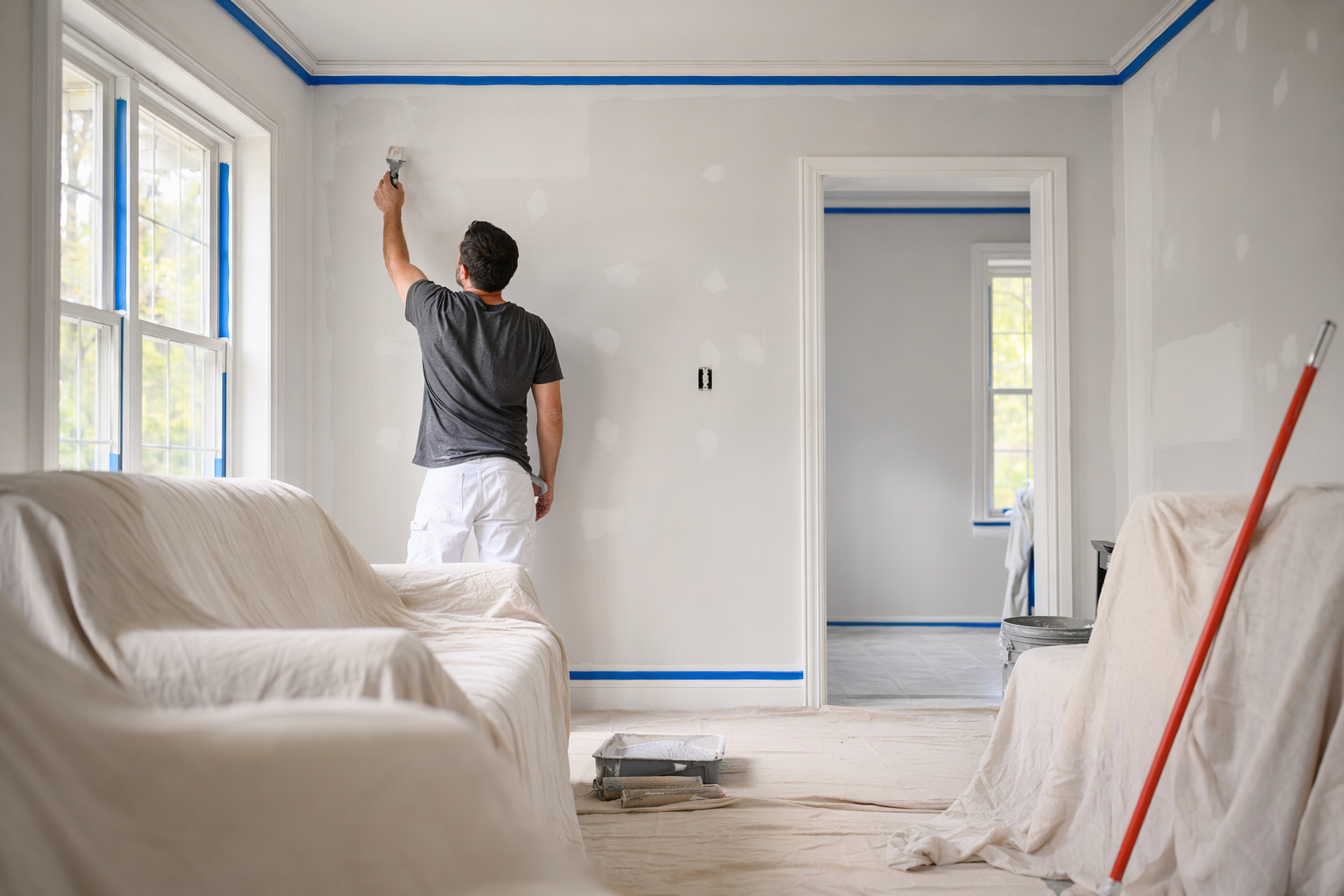
A good-looking accent wall still depends on prep. Even though it is just one wall, painters may need to move furniture, protect floors, remove switch plates, patch nail holes, sand rough spots, caulk small gaps, and clean the surface before painting. If the old paint is glossy, damaged, or dirty, prep matters even more.
Many accent walls need two finish coats for even color. Dark colors, bright colors, reds, deep blues, and major color changes often need extra attention and sometimes a tinted primer to help coverage. If the wall has repairs or stains, primer may also be needed before the finish paint goes on.
Sharp lines are a big part of the look. A professional painter will usually spend time cutting clean edges where the accent wall meets the ceiling, trim, and other walls. That detail work is one reason an accent wall can cost more than people expect for a small area.
If your home was built before 1978, old paint may contain lead. Ask any painter you consider how they follow lead-safe work practices. That is an important safety question, especially if sanding or surface disturbance is involved.
What an accent wall costs
For one interior accent wall, a common ballpark is about $150 to $500 for a simple wall in a standard room, and sometimes $500 to $900+ if the wall is large, high, damaged, hard to access, or needs extra prep. Detailed trim, deep color changes, strong patching, textured surfaces, or premium paint can raise the price. These are general ranges, not quotes.
A painter may charge a minimum trip price even for a small project, because setup, protection, edging, and cleanup still take time. In some homes, one accent wall is part of a larger room job, which can change the pricing. Costs also vary by area across the US.
What moves the price up or down:
- wall size and ceiling height
- amount of patching, sanding, or stain blocking
- whether primer is needed
- number of coats for full coverage
- paint quality and finish
- obstacles like furniture, shelves, TVs, or built-ins
- your location and local labor rates
You can compare more general painting costs and learn what affects pricing before you talk with painters.
How to hire smart and get matched for free
HuePort is a free matching service, not a painting company, licensed contractor, or paint store. We do not do the painting work. We help homeowners connect with licensed, insured painting contractors near them so they can compare options.
When you talk with painters, ask for the scope in writing: which wall will be painted, what prep is included, whether primer is included, how many coats, what paint brand or grade, what finish, and the total price. Compare a few quotes if you can. Watch for vague pricing, large cash deposits up front, door-to-door “today only” deals, no license or insurance, or pressure to sign right away.
The homeowner stays in control. You choose the color, confirm the price before work starts, choose who to hire, and make sure the work looks right before paying the final amount.
If you want help getting started, you can get matched for free. We only collect basic contact and project details like your name, phone, optional email, project type, ZIP code, preferred language, and notes about the job.
A great accent wall is mostly about choosing the right wall, testing the color in real light, and paying for careful prep and clean lines — not just buying bold paint.
Common questions
Which wall should be the accent wall?
Usually the best choice is the wall that already feels important in the room, like behind the bed, sofa, or fireplace. A clean wall with fewer doors and windows often gives the strongest result.
What paint finish is best for an accent wall?
Eggshell or satin is a common choice because it looks good and is easier to clean than flat paint. Matte can also look great, especially for deep colors, but it may mark more easily.
Does an accent wall usually need two coats?
Often yes. Many accent walls need two coats for even color, and dark or bold shades may also need primer depending on the old color and wall condition.
How much does it cost to paint one accent wall?
A simple accent wall often falls around $150 to $500, but larger or more difficult walls can run $500 to $900 or more. The real number depends on prep, coats, paint grade, wall size, access, and your area, so these ranges are not quotes.
Can HuePort send me a painter?
HuePort is a free matching service for homeowners, not a painting company. We can help you connect with licensed, insured painters near you so you can compare quotes and decide who to hire.
What should I ask before hiring a painter for an accent wall?
Ask what prep is included, whether primer is included, how many coats they expect, what finish they recommend, and whether they are licensed and insured. Get the color, scope, and total price in writing before work starts.