Interior
Painting ceilings
Ceilings seem simple, but they show every lap mark, drip, and missed patch. This guide covers color, finish, prep, cost, and when it makes sense to hire a licensed, insured painter.
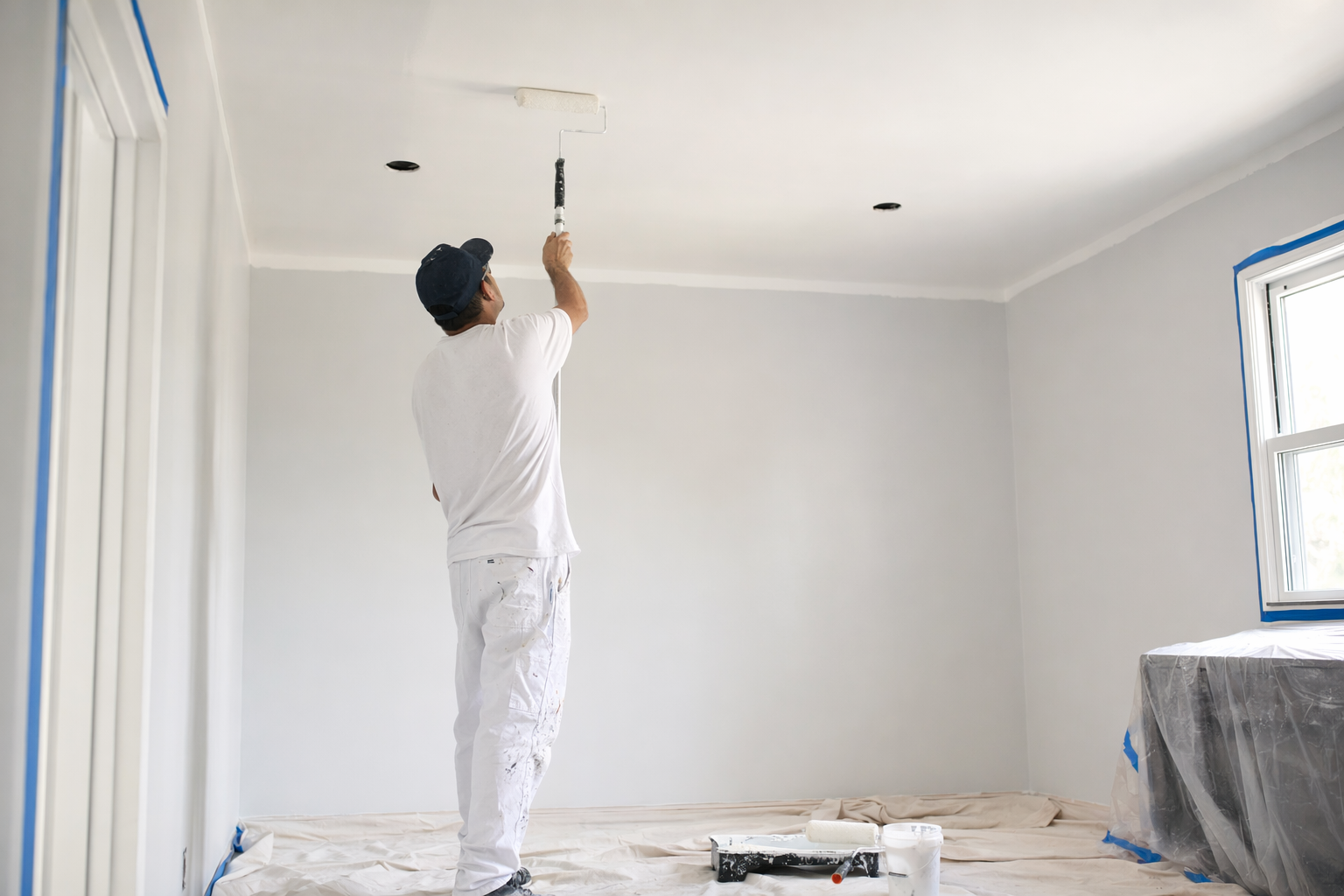
Why ceilings are harder than they look
Painting a ceiling is overhead work, and that makes everything slower. Drips fall, light shows roller lines, and small cracks or patches can stand out more than people expect. A ceiling can look "almost fine" from one angle and streaky from another.
Ceilings also have their own surface issues. Some are smooth drywall. Some have texture. Some older homes have popcorn ceilings. Kitchens and bathrooms may have grease, steam, or mildew stains that need extra prep before paint goes on.
If your home was built before 1978, old paint may contain lead. That does not mean you cannot repaint, but it is smart to ask how the painter follows lead-safe work practices if scraping, sanding, or repair is needed. HuePort gives general information only and is a free matching service, not a painting company or contractor.

Best ceiling color and finish for most homes
Most homeowners choose a true ceiling white or a soft white close to the wall color. White helps bounce light, makes the room feel clean, and hides small flaws better than darker colors. If your walls are bold, a white ceiling can keep the room from feeling heavy.
That said, ceilings do not always need to be bright white. In a bedroom, dining room, or older home with lower ceilings, a softer off-white can feel calmer. In some rooms, using the same color on the walls and ceiling can look modern and smooth. It works especially well when the room has simple trim and good natural light.
For finish, flat is usually the safest choice. Flat ceiling paint helps hide surface imperfections and reduces glare from lamps and windows. In bathrooms, laundry rooms, and some kitchens, painters may suggest a low-sheen product made for moisture-prone areas, but you still usually want a finish that does not reflect a lot of light.
If you are unsure, start with colors for ideas and ask the painter how the room's light, texture, and moisture level affect the final look.
What prep matters before ceiling paint
Good prep is a big part of a clean ceiling job. Pros usually move or cover furniture, protect floors, mask lights and fans, and look for stains, nail pops, cracks, peeling areas, and old repairs. On a ceiling, even a small patch can flash through the paint if it is not sealed and sanded well.
Stains from water, smoke, grease, or past leaks often need stain-blocking primer first. New drywall patches usually need primer too. In kitchens, a painter may need to clean off cooking residue. In bathrooms, the surface may need cleaning for mildew or moisture buildup before repainting.
Texture changes the process. Smooth ceilings often need more careful rolling to avoid lap marks. Popcorn and other textured ceilings can need more paint and a different roller cover or spray method. If a popcorn ceiling is damaged or you want it removed, that is a separate project, not a simple repaint. For older homes, especially pre-1978, ask about lead-safe work practices before any scraping or repair.
How many coats do ceilings need?
Many ceiling repaints take one to two coats, but the real answer depends on what is already there. A clean white ceiling being refreshed with a similar flat white may cover in one coat. Stains, repairs, color changes, smoke damage, or uneven old paint often need primer plus two finish coats.
Darker ceilings being painted lighter almost always need more work. Textured ceilings can also use more paint because the surface area is larger than it looks. If the ceiling has patchy spots or old touch-ups, painters may recommend painting the entire plane instead of spot-painting so the finish looks even.
Ask for the number of coats, the paint line, and whether primer is included in writing. That helps you compare quotes fairly and avoid vague pricing.
Honest ceiling painting cost ranges
Ceiling painting is often priced by square foot, by room, or as an add-on to a larger interior job. As a very general range in the US, adding ceiling painting to a larger interior project may cost about $1 to $3 per square foot for straightforward ceilings. A single average room ceiling might land around $150 to $500. Higher-end work, heavy prep, stain blocking, tall ceilings, texture, or difficult access can push the price well above that.
Popcorn or heavily textured ceilings usually cost more to repaint because they use more paint and take more care. Tall entry ceilings, stairwells, repairs, water stains, and detailed masking around fixtures also raise the price. If the painter needs to repair cracks, skim coat damage, or deal with peeling paint, expect a higher number.
These ranges are not quotes. Your real cost depends on the surface, the prep, the number of coats, the paint grade, access and height, and your area. If you want a broader sense of pricing, visit costs and compare a few written quotes before you choose.
How to hire a painter without getting overcharged
A good ceiling job is mostly about prep, technique, and clean protection of the room below. When you talk to painters, ask whether they are licensed and insured if your area requires it, and verify it. Ask what prep is included, what finish they recommend, whether primer is needed, and how many coats are included.
Watch for common red flags: vague pricing, big cash deposits up front, door-to-door "today only" deals, no license or insurance, or pressure to sign right away. Get the scope, paint, color, finish, and price in writing first. The homeowner stays in control: you confirm the color and price before work starts, choose who to hire, and make sure the work looks right before paying the final amount.
HuePort is free for homeowners. We do not do painting work, sell paint, or act as the contractor. We simply help you get matched with painters near you based on your contact and project details only: name, phone, optional email, project type, ZIP, preferred language, and optional notes. You can start here: get matched.
- Ask if ceilings are priced separately or included with wall painting
- Get primer, repairs, number of coats, and finish listed in writing
- Verify license and insurance where required in your area
- Compare a few quotes instead of choosing the fastest offer
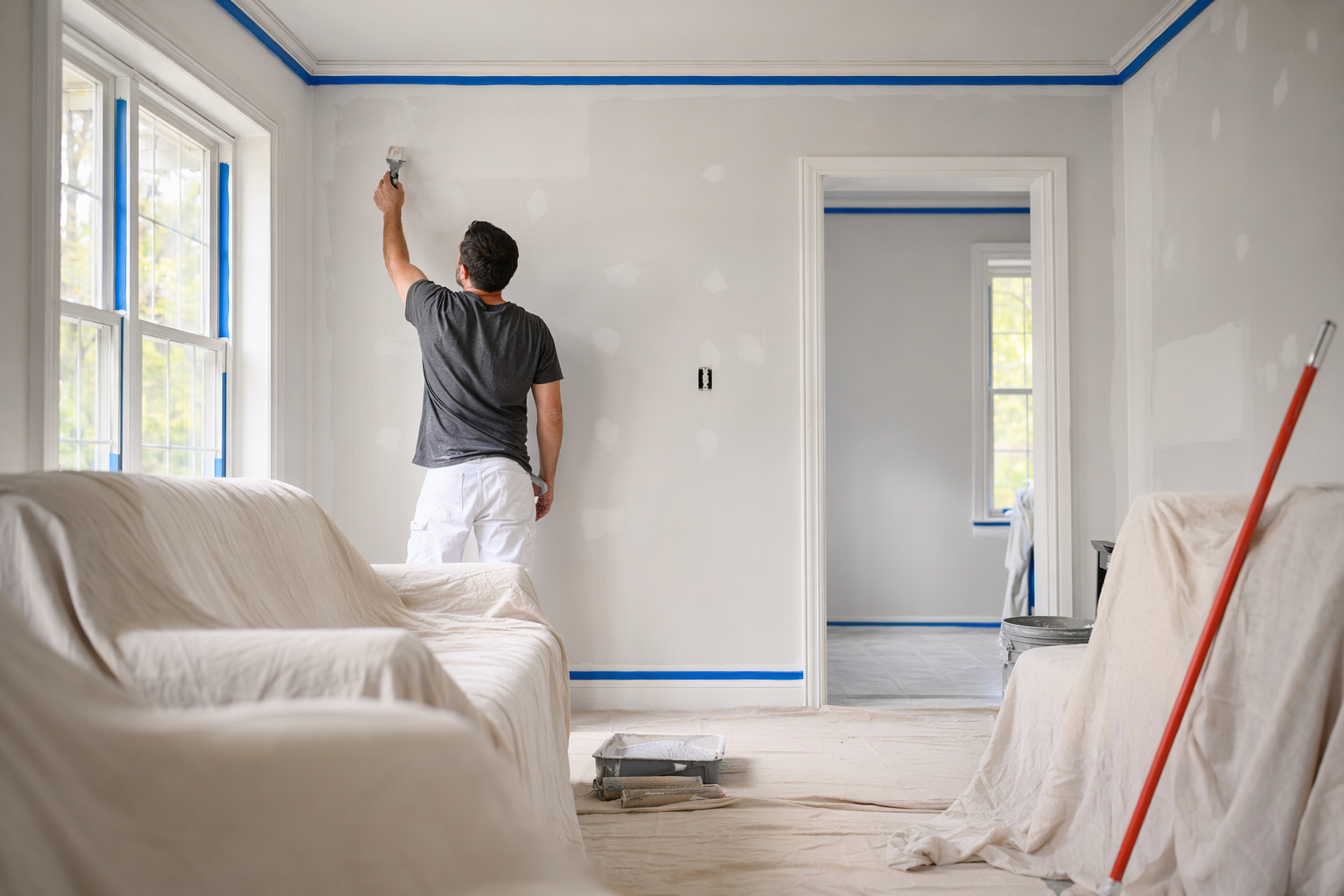
Ceilings need the right prep, a low-shine finish, and clear written pricing if you want them to look smooth and not cost more than expected.
Common questions
Should ceilings always be painted flat white?
Flat white is the most common choice because it hides flaws and reduces glare. But a soft off-white or even the same color as the walls can work well in some rooms, depending on light and style.
Can I paint over water stains on a ceiling?
Usually the stain needs more than regular paint. Many ceilings need the source of the leak fixed first, then stain-blocking primer before the finish paint so the mark does not bleed through.
Is painting a popcorn ceiling more expensive?
Often yes. Popcorn and other textured ceilings usually take more paint, more careful masking, and sometimes special tools or spray application, so the price can go up.
How long does ceiling paint take to dry?
Many products are dry to the touch in a few hours, but recoat and cure times vary by product, humidity, and airflow. Ask the painter which paint they are using and follow that product's timing.
How do I find a painter for ceilings near me?
HuePort is a free matching service for homeowners, not a painting company. Share your basic contact and project details, and we can help you connect with licensed, insured painters near you so you can compare written quotes.