Interior
Painting a kitchen
A kitchen is one of the hardest-working rooms in the house, so the paint needs to handle grease, steam, wiping, and everyday bumps. Here’s how to choose color and finish, understand prep and cost, and get matched with a licensed painter near you.
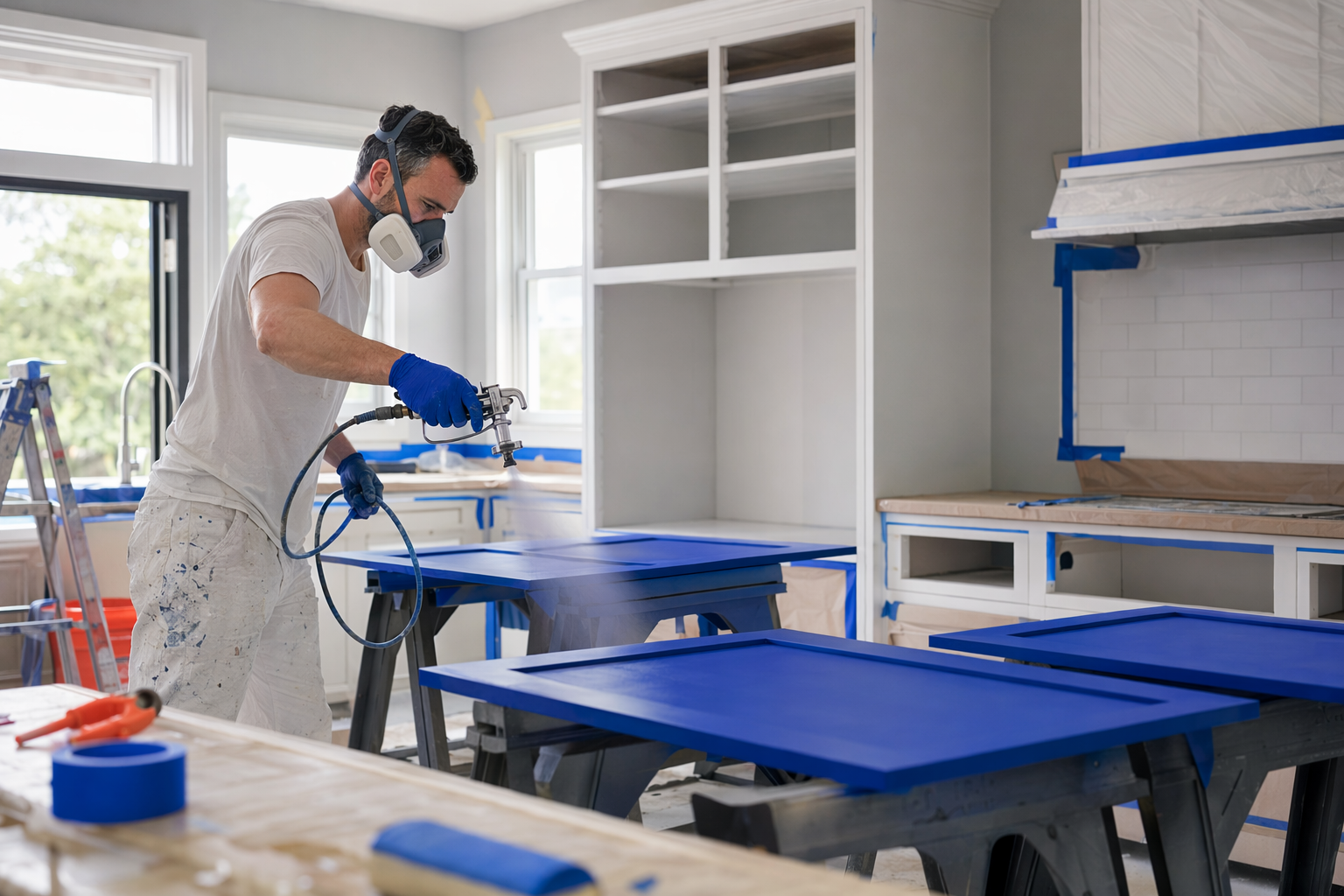
What makes a kitchen different to paint
Kitchens look simple, but they usually need more prep than a bedroom or hallway. Walls collect grease, moisture, food splatter, and hand marks, especially near the stove, sink, trash area, and light switches. If that buildup is not cleaned well first, paint may not stick the way you expect.
There are also more edges and obstacles to work around: cabinets, backsplashes, appliances, outlets, windows, trim, and sometimes open shelving. That means more cutting-in by hand and more time protecting nearby surfaces.
If your home was built before 1978, older paint may contain lead. That is a safety issue to ask about, not a small detail. Ask any painter you consider how they follow lead-safe work practices when disturbing old paint.

Best colors and finishes for kitchen walls and ceilings
Most people want a kitchen color that feels clean, bright, and easy to live with every day. Soft whites, warm off-whites, light greige, pale beige, muted green, and gentle blue-gray are common choices because they work well with cabinets, counters, and flooring. If your kitchen has little natural light, a lighter wall color can help the room feel more open.
If you already have busy countertops, patterned backsplash tile, or strong cabinet color, calmer wall paint usually looks better than trying to compete with those features. If your cabinets, counters, and flooring are simple, you may have more room to use color on the walls. You can explore ideas on our color guides if you want a starting point.
For finish, many homeowners choose eggshell or satin on kitchen walls because they are easier to wipe than flat paint. Satin is a little more washable and slightly shinier; eggshell is a bit softer-looking and can hide minor wall imperfections better. For ceilings, flat is still common because it helps reduce glare and hides uneven spots.
There is no single perfect finish for every kitchen. The right choice depends on how much cooking happens there, how often you need to wipe the walls, and how smooth or imperfect the surface already is.
Prep matters more than people expect
In a kitchen, prep is a big part of the job. Good prep often includes moving or covering furniture, protecting counters and floors, removing switch plates, cleaning away grease, filling small holes, caulking small gaps where appropriate, sanding rough areas, and spot-priming stains or repairs. If the old paint is peeling, bubbling, or stained, the painter may need more prep before new paint goes on.
Walls around cabinets and backsplashes can be slow because the painter has less room to roll and more edges to cut neatly. Around stoves and sinks, cleaning and stain-blocking primer may be especially important.
If you are painting only the walls and not the cabinets, make sure the scope is clear in writing. The line between wall, trim, cabinet edge, soffit, and ceiling should be spelled out before work starts. That helps prevent confusion later.
HuePort is a free matching service, not a painting company or contractor. We can help you get connected with licensed, insured painters to discuss the kitchen surfaces, prep needs, and scope for your home.
How many coats does a kitchen usually need?
A repaint of a kitchen often takes two coats for the most even color and durability, especially if the old color is dark, stained, or patchy. Some jobs may also need primer in specific spots, or a full prime coat if there are strong stains, major repairs, or a big color change.
One coat might be enough only in limited situations, such as a very similar color over a well-prepped surface with good paint coverage. But many homeowners are happier with the look of two coats, especially in a room where light hits the walls from multiple angles.
Coverage depends on the condition of the wall, the paint product, the color change, and how much cutting-in is needed around cabinets and trim. This is one reason quotes can vary a lot from one kitchen to another.
Honest kitchen painting cost ranges
For a typical kitchen where you are painting walls and possibly the ceiling, many homeowners may see rough price ranges around $350 to $1,200 for a smaller, simpler repaint, and around $1,200 to $2,500+ for a larger kitchen or a job with more prep, higher ceilings, difficult access, wall repairs, or premium paint. If you are also painting trim, doors, or cabinets, the total can rise well beyond that.
These are general US price ranges, not quotes. The real number depends on the size of the kitchen, the condition of the walls, grease and stain cleanup, number of coats, paint grade, ceiling height, how much cutting-in is required around cabinets and appliances, and your local labor rates. Costs also vary by area.
A very low price can be a warning sign if the scope is vague. Watch for vague pricing, large cash deposits up front, door-to-door “today only” deals, no license or insurance, or pressure to sign right away. Ask for the paint brand or grade, color, finish, prep, number of coats, and total scope in writing, then compare a few quotes. You can read more on our cost pages.
- Lower cost: same color, clean walls, standard ceiling height, minimal repairs
- Higher cost: grease cleanup, patching, stain-blocking primer, high ceilings, detailed cutting-in, premium paint
How to get matched with a painter through HuePort
If you want help finding a painter, HuePort can match you with licensed, insured painting contractors in your area. The service is free for homeowners. We do not do the painting work ourselves, and we do not sell paint.
To get started, you share basic project details only: your name, phone number, optional email, project type, whether it is interior or exterior, ZIP code, preferred language, and optional notes about the job. We do not ask for bank information, Social Security numbers, income details, or sensitive personal records.
Before you hire anyone, confirm that the painter is licensed and insured if required in your area, review the written scope, and make sure the color, finish, surfaces, prep, and price are clear. You stay in control: you choose who to hire, confirm the color and price before work starts, and confirm the work is done right before paying the final amount.
You can learn more about interior painting or get matched here.
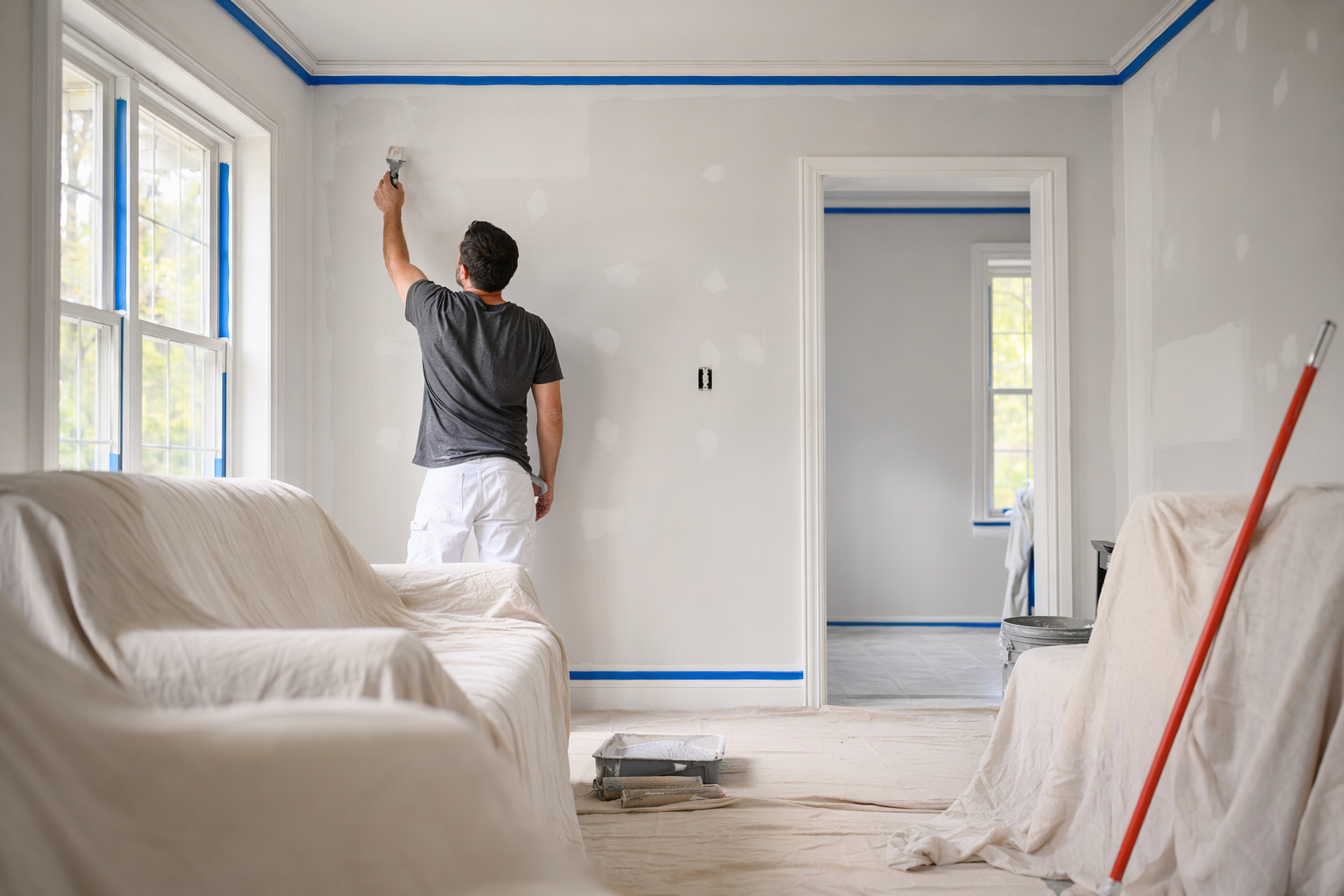
Kitchen paint lasts and looks better when the walls are cleaned well, the finish is washable, and the full scope and price are written down before the job starts.
Common questions
What paint finish is best for kitchen walls?
Eggshell and satin are the most common choices. Satin is usually easier to wipe clean, while eggshell has a softer look and can hide small wall flaws a little better.
Can a kitchen be painted in one day?
Some small, simple kitchens can be, but many cannot once cleaning, prep, drying time, and two coats are included. The schedule depends on the surface condition, scope, and how much detail work is needed around cabinets and appliances.
Do painters move appliances and furniture in the kitchen?
Sometimes yes, sometimes no. Ask what is included before work starts, especially for refrigerators, stoves, tables, and wall decor, and get that scope in writing.
Should I paint the kitchen ceiling too?
Often yes if it has stains, smoke, discoloration, or if the wall color is changing a lot. In many kitchens, a fresh flat ceiling paint helps the whole room look cleaner.
Is cabinet painting included in kitchen painting prices?
Usually not unless the quote says so clearly. Cabinet painting is often a separate project with different prep, products, labor, and cost.
How do I avoid getting overcharged for a kitchen paint job?
Compare a few quotes and make sure each one lists the surfaces, prep, paint, finish, number of coats, and total price. Be careful with vague pricing, big cash deposits up front, no proof of license or insurance, or pressure to sign immediately.