Interior
Painting your whole interior
Painting the whole inside of a home is a big project, but it gets easier when you break it into color, finish, prep, and timing. Here’s what usually happens, what it may cost, and how HuePort can help you get matched with licensed, insured painters near you.
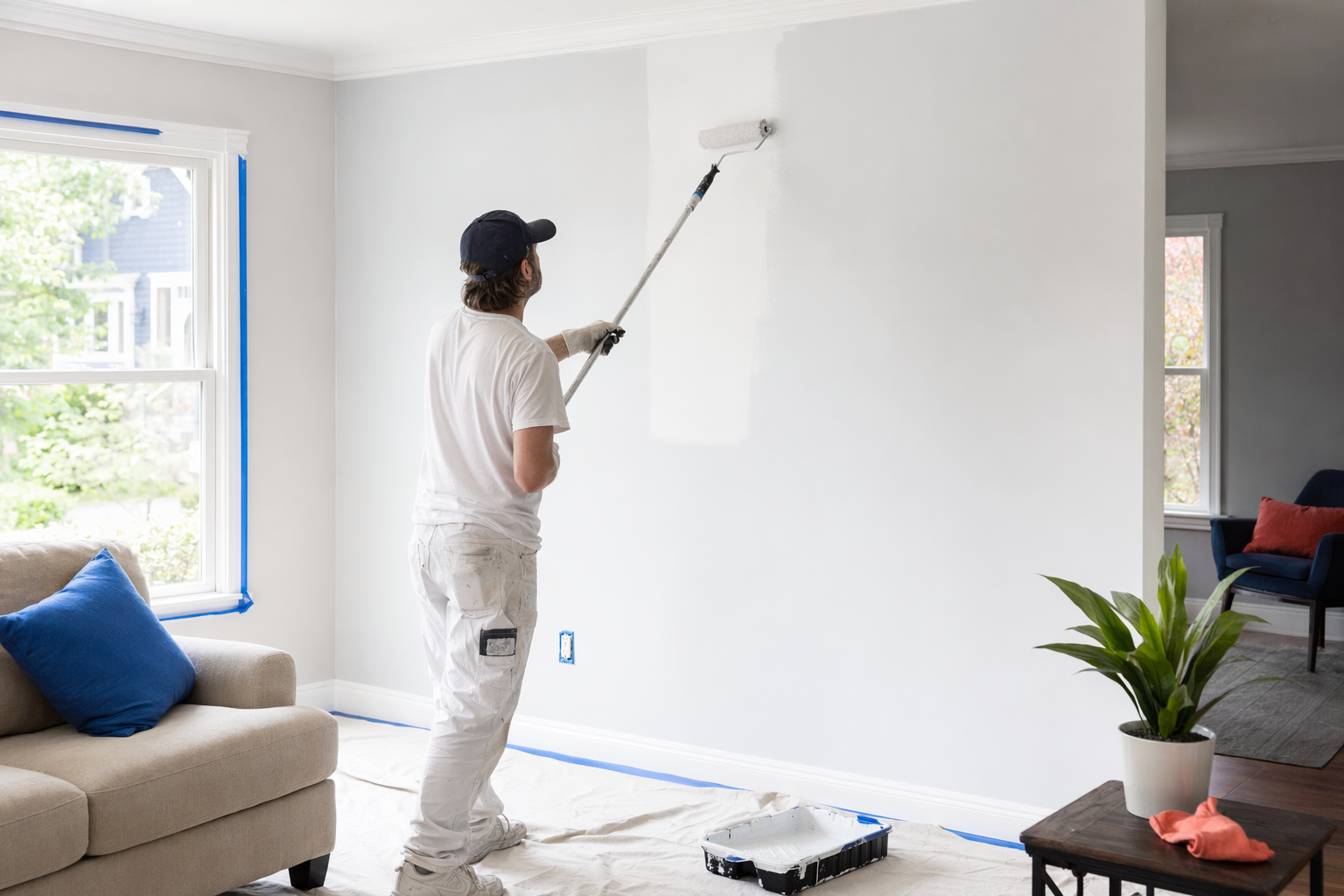
What “whole interior” painting usually includes
A whole-interior project can mean walls only, or it can include ceilings, trim, doors, closets, hallways, and sometimes cabinets. Before you compare prices, make sure you know exactly what is included. Two painters can both say “whole interior” and mean very different scopes.
Most professional crews paint in a sequence that helps the work move faster and stay cleaner: ceilings first, then walls, then trim and doors. They may work room by room, or finish all ceilings first and then move through the home. If you are living in the home during the project, ask how they plan to protect floors, furniture, and daily-use spaces.
The biggest cost drivers are the size of the home, wall condition, how much patching or sanding is needed, whether colors are changing a lot, the number of coats, and whether trim and ceilings are included. High walls, stairwells, and occupied homes usually add time and labor.
HuePort is a free matching service, not a painting company or licensed contractor. We do not do the painting work ourselves. We help homeowners connect with licensed, insured painters so they can compare options and choose who to hire.

How to keep colors consistent across the home
When you paint an entire interior, the goal is usually not to make every room the exact same color. The goal is to make the home feel connected. A simple way to do that is to choose one main wall color or color family for shared spaces, then use related colors in bedrooms, bathrooms, or accent areas.
Many homeowners do best with a small palette: one main neutral, one trim color, one ceiling color, and one or two supporting room colors. Warm whites, soft greiges, light taupes, muted greens, and gentle blue-grays are common whole-home choices because they flow well from room to room. If you want more personality, use it in smaller rooms, a dining area, a powder room, or a feature wall.
Light matters more than many people expect. North-facing rooms can feel cooler, south-facing rooms often look warmer, and hallways may need a color that stays pleasant in lower light. Test samples on more than one wall and look at them in the morning, afternoon, and evening before deciding. If you need help narrowing choices, our color guides can help you start.
A good painter can also point out practical issues, like when a very deep color may need extra coats or a stronger primer. That does not mean you should avoid bold color — just ask for the paint, scope, and price in writing before work starts.
Best interior finishes for a whole-home project
For most walls, many homeowners choose eggshell or satin. These finishes are popular because they are easier to wipe than flat paint, but they usually do not look too shiny. In busy spaces like hallways, entryways, kids’ rooms, kitchens, and bathrooms, a more washable finish can be worth it.
Ceilings are often painted flat because flat finishes help hide small surface imperfections and reduce glare. Trim, baseboards, doors, and window casings are commonly done in satin, semi-gloss, or another smoother finish that stands up better to touching and cleaning.
There is no one perfect finish for every house. A smoother, glossier finish can be easier to wash, but it may also show dents, patches, and roller marks more clearly. If your walls have a lot of texture or small flaws, a lower-sheen finish may look better.
If you are repainting after years of wear, ask what prep is needed to make a washable finish look right. Washing walls, patching nail holes, sanding rough spots, and spot-priming stains often matter just as much as the paint itself. For more general ideas by room, see our interior painting guides.
- Walls: eggshell or satin are common whole-home choices
- Ceilings: flat is common
- Trim and doors: satin or semi-gloss are common
- Higher sheen usually shows more surface flaws
Prep, repairs, and how many coats to expect
The part people often underestimate is prep. On a whole-interior job, prep can include moving and covering furniture, protecting floors, removing wall plates, caulking small gaps, filling holes, sanding patches, cleaning dirty areas, and priming stains or repaired spots. If this step is rushed, the final paint job usually looks rushed too.
For a straightforward repaint with a similar color, many projects need one to two finish coats, depending on coverage and the product used. If you are changing from dark to light, light to dark, or covering strong colors, extra coats are common. Fresh drywall, repairs, stains, smoke marks, and glossy old surfaces may also need primer.
If your home was built before 1978, old paint may contain lead. That is a safety issue to ask about, especially if sanding or scraping is part of the project. Ask how the painter follows lead-safe work practices. HuePort does not provide lead, structural, or legal advice — this is general information only.
Whole-home projects also take planning if people are living in the space. Ask how many rooms can stay usable each day, where furniture will go, whether strong odors are a concern, and how the crew handles cleanup at the end of each workday.
Honest whole-interior cost ranges
For a whole interior repaint in the United States, many homeowners see rough ranges like these:
- Small home or apartment: about $2,500 to $6,500
- Mid-size home: about $5,000 to $12,000
- Larger home or more detailed project: about $10,000 to $25,000+
These are general ranges, not quotes. The real number depends on square footage, ceiling height, wall condition, how much prep is needed, how many coats are required, whether ceilings and trim are included, the paint grade, access, how occupied the home is, and your local market. Stairwells, repairs, heavy color changes, and lots of doors and trim can push the price up.
If one price is much lower than the others, ask why. Sometimes the low number leaves out prep, ceilings, trim, better paint, or a second coat. Vague pricing, large cash deposits up front, door-to-door “today only” deals, no license or insurance, and pressure to sign on the spot are common warning signs. Get the scope, paint brand or grade, colors, number of coats, and total price in writing first. You can read more about budgeting on our cost guides.
How to get matched with a painter through HuePort
HuePort is free for homeowners. We are not a paint store or painting company, and we do not perform the work. We help you get connected with painters near you so you can compare a few quotes, ask questions, and stay in control of the decision.
When you use HuePort, we only collect basic contact and project-intent details: your name, phone number, optional email, project type, whether it is interior or exterior, ZIP code, preferred language, and optional notes. We do not ask for financial account numbers, Social Security numbers, income information, or sensitive personal records.
Before hiring anyone, verify that the painter is licensed and insured if required in your area, and ask what is included in the written estimate. Confirm the color, finish, prep, number of coats, and price before work starts. Compare a few quotes if you can. You choose who to hire, and you should confirm the work is done right before paying the final amount.
If you are ready to start, use Get matched to tell us a little about your project.
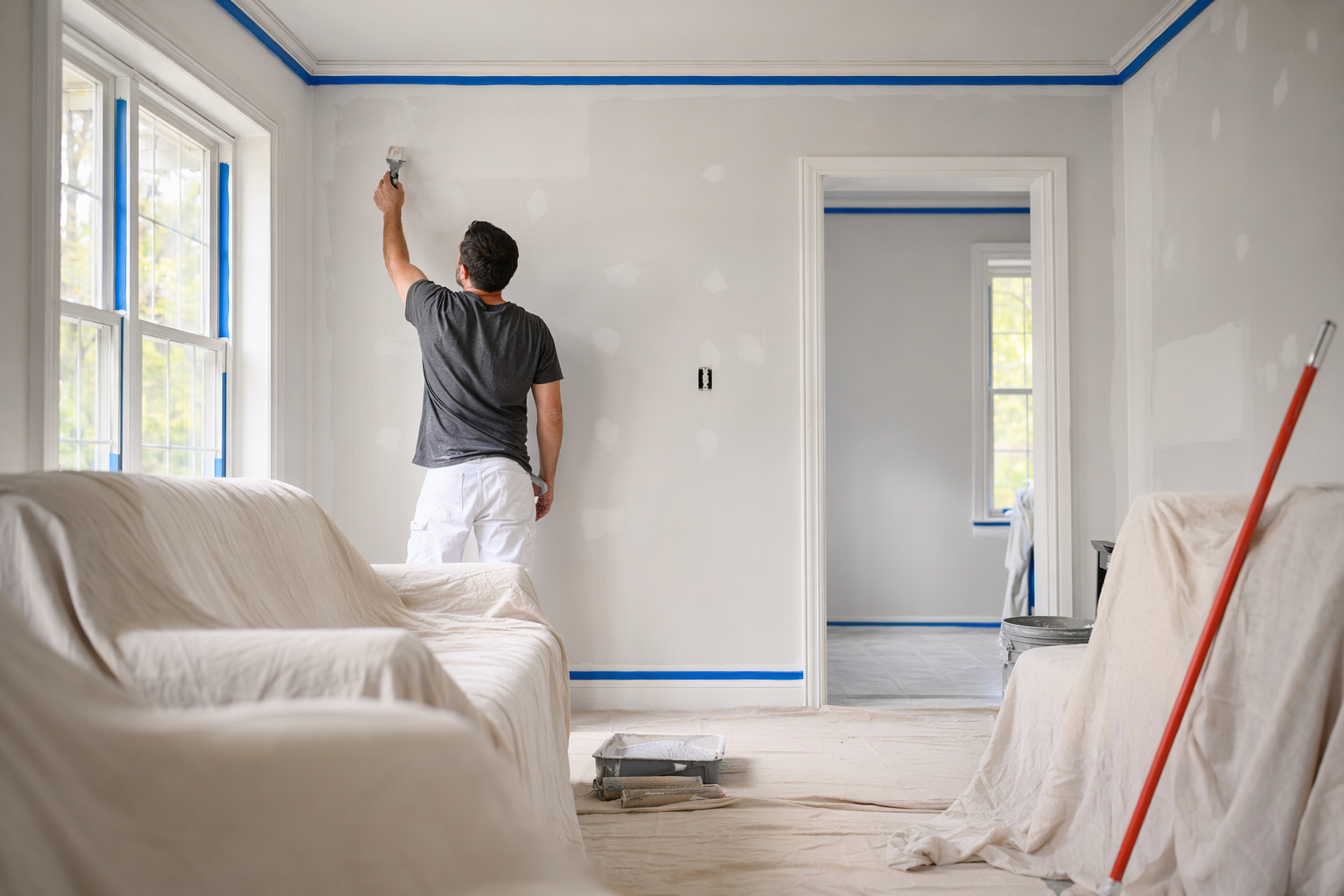
Painting your whole interior goes more smoothly when you choose a simple color plan, use the right finish for each surface, get the prep and coats in writing, and compare a few licensed, insured painters.
Common questions
How long does it take to paint the whole inside of a house?
It depends on the size of the home, how much prep is needed, how many people are on the crew, and whether you are living there during the work. A smaller, simple repaint may take a few days, while a larger or more detailed home can take one to two weeks or more.
Should I use the same color in every room?
Not necessarily. Many people get a better result with one main color for shared spaces and a few related colors for bedrooms or smaller rooms. The key is a palette that feels connected, not identical.
What is the most washable finish for interior walls?
Many homeowners choose satin for busy rooms because it is easier to wipe down than flatter finishes. But the best choice also depends on how smooth your walls are, because shinier paint can show more imperfections.
Is one coat enough for a whole-interior repaint?
Sometimes, but not always. Similar-color repaints may cover in one to two coats, while major color changes, stains, repairs, or lower-coverage products often need more. Ask the painter to state the expected number of coats in writing.
Do I need to move out during a whole-interior paint job?
Not always. Many people stay in the home while painters work in stages, but it can be disruptive. Ask how rooms will be sequenced, how furniture and floors will be protected, and how the crew will handle ventilation and daily cleanup.
How do I know if a quote is too high or too low?
Compare a few written quotes with the same scope. Make sure each one lists what is being painted, the prep, paint grade, number of coats, and whether ceilings, trim, and repairs are included. Very low quotes can leave out important work.