Projects
Trim, door & molding painting
Trim, doors, and molding can make a room look crisp fast — but only if the prep and paint are right. Here’s what the work involves, what it usually costs, and how to find a licensed, insured painter near you.
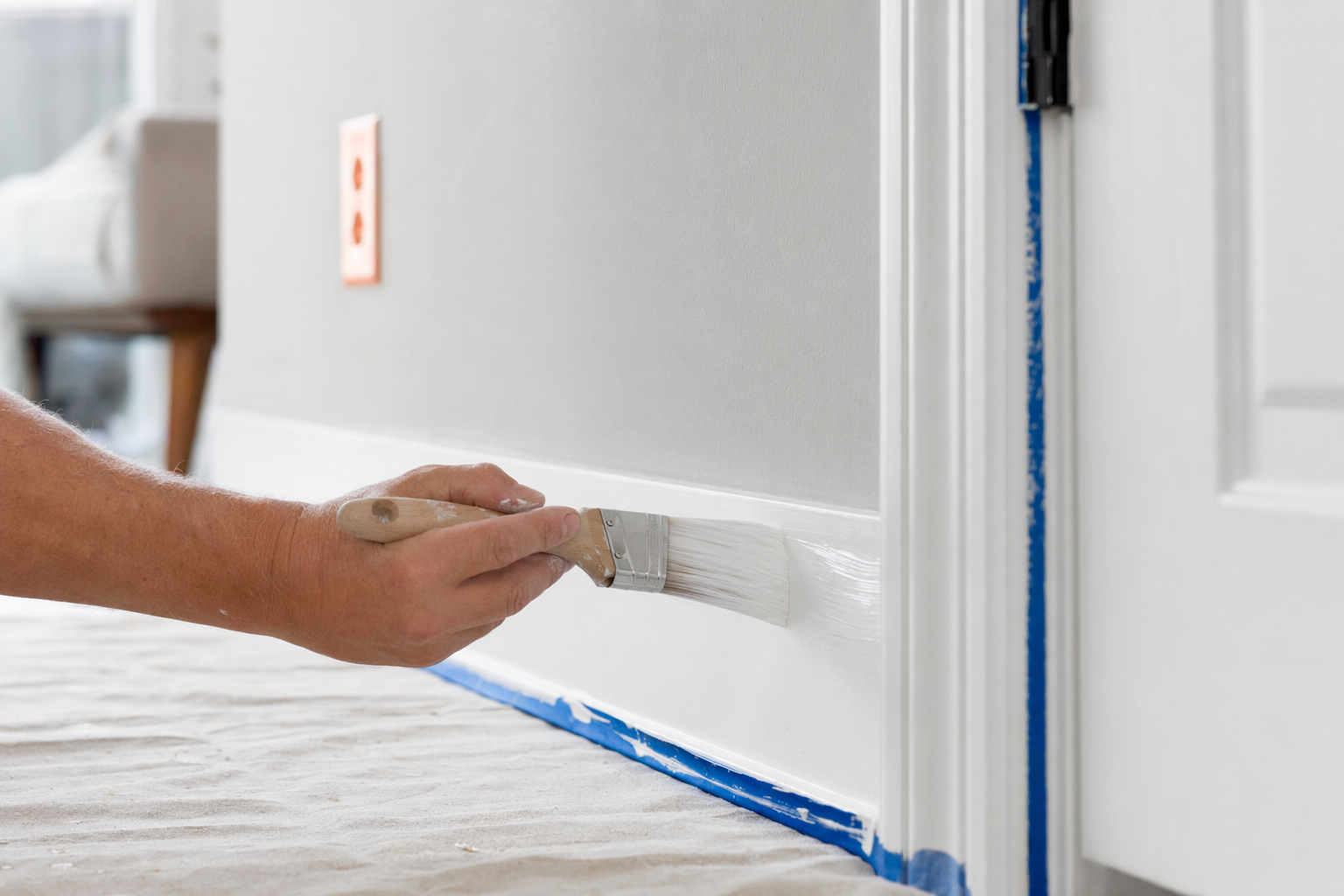
Why trim and door painting matters
Walls get most of the attention, but trim is what makes a room look finished. Baseboards, window trim, crown molding, casings, and doors catch light differently than walls, so brush marks, drips, chips, and uneven sheen show up quickly.
A good trim and door paint job is mostly about prep, patience, and using the right enamel. Pros usually aim for a smoother, harder finish than wall paint because these surfaces get touched, bumped, and cleaned more often.
This kind of project can be done by itself or together with a full interior painting project. It is also a good update when your wall color stays the same but the room still feels tired.

What work is usually included
Trim and molding painting can include baseboards, door casings, window trim, crown molding, chair rail, wainscoting, and built-ins. Door painting may include the door slab, edges, jamb, and sometimes the frame. The exact scope matters because small details add labor.
If the trim is stained wood and you want it painted white, that is usually more work than repainting trim that is already painted. Stain-blocking primer, sanding, caulking, and extra coats may be needed to stop tannin bleed, dark color show-through, or rough texture.
Pros may also handle minor surface prep such as filling nail holes, patching small dents, recaulking gaps, and removing hardware when needed. Larger carpentry repairs, rotted wood, water damage, or badly damaged doors may require repair or replacement before painting.
- Baseboards and shoe molding
- Interior doors and frames
- Window and door casings
- Crown molding and decorative trim
How a pro gets clean lines and a durable finish
The best-looking trim jobs do not start with paint — they start with cleaning and prep. Dirt, hand oils, wax, and old glossy paint can keep new paint from sticking well. A painter may clean, lightly sand, dust, fill, recaulk, spot-prime, and only then apply finish coats.
For trim and doors, many painters use a durable enamel or cabinet-and-trim style paint in satin, semi-gloss, or sometimes gloss. The right finish depends on the look you want, the surface condition, and how much wear the area gets. Higher sheen can look sharp, but it also shows flaws more clearly.
Clean lines usually come from steady cutting-in, careful masking where needed, and not overloading the brush or roller. On doors and fine trim, pros may use a sprayer in some cases, but that depends on the home, the setup, and how much masking is required. Two lighter, even coats often look better than one heavy coat.
If your home was built before 1978, older paint may contain lead. That is a safety issue to ask about before sanding or disturbing painted trim. Ask how the painter follows lead-safe work practices. HuePort gives general information only and does not provide lead-abatement advice.
Typical cost ranges and what changes the price
Trim and door painting prices vary a lot by scope, detail level, prep, and local labor rates. As a very general US range, painting baseboards and standard trim in one average room may run about $200 to $700. Painting an interior door and frame may run around $100 to $400 per side or $150 to $500+ for both sides and frame, depending on condition and detail.
For a larger whole-home trim repaint, costs may range from about $1,500 to $6,000+, and sometimes more in larger homes or higher-cost areas. If you are painting stained trim white, dealing with old oil-based coatings, repairing damage, or doing detailed crown and built-ins, the number can go up. These are not quotes.
What pushes cost up or down: the amount of trim, the number of doors, the surface condition, sanding and caulking needs, stain-blocking primer, number of coats, paint grade, whether hardware must be removed, and how occupied the home is during the work. Access, tight spaces, and protecting floors and furniture also add labor.
If you are comparing this project to replacing trim or doors, painting is often the lower-cost option when the material is still in decent shape. But if trim is badly swollen, split, rotted, or repeatedly peeling because of moisture problems, repair or replacement may make more sense first. You can read more general price guidance on painting costs.
Common problems, shortcuts, and scams to watch for
A rushed trim job can look fine on day one and disappointing soon after. Common problems include visible brush marks, paint on hinges or weatherstripping, peeling over glossy old paint, thick drips on panel doors, open caulk lines, and uneven sheen from poor prep or touch-ups.
Be careful with vague pricing like "we'll see as we go" if the scope is not clear first. Another red flag is a very low price that leaves out prep, primer, hardware removal, or a second coat. Trim work is detail work, so cheap bids may skip the steps that make the finish last.
Watch for pressure tactics too: large cash deposits up front, door-to-door 'today only' deals, no proof of license or insurance, or pressure to sign on the spot. Get the scope, surfaces, paint brand or grade, finish, color, number of coats, and price in writing. Compare a few quotes before you choose.
How to choose colors and the right sheen
White trim is still common, but it is not the only good choice. Warm whites can soften a room, bright whites feel crisp, and matching trim to wall color can make a space feel calmer and more modern. Doors can also be a place for a deeper accent color, especially on interior office or entry doors.
For sheen, many homeowners choose satin or semi-gloss because they are easier to wipe clean than flat wall paint. Semi-gloss is classic for trim, but satin can look a little softer and hide imperfections better. If the trim has many dents or old layers of paint, a very shiny finish may highlight that texture.
If you are still deciding, start with your floors, wall color, and the amount of natural light. HuePort can help you explore paint colors and get matched with local painters, but HuePort is a free matching service — not a painting company, contractor, or paint store.
How to find a licensed painter through HuePort
When you hire someone for trim, doors, and molding, ask if they regularly do fine-finish interior work. Detail work matters here. You can ask what prep they include, what enamel they recommend, whether they remove or protect hardware, how they handle sanding dust, and how they keep lines clean around walls and floors.
Always verify license and insurance where required in your area. Ask for the full scope in writing before work starts, including the surfaces to be painted, the prep, the paint and sheen, the number of coats, and the total price. You stay in control: you choose who to hire, confirm the color and price before work begins, and confirm the work is done right before paying the final amount.
HuePort is free for homeowners. We do not do the painting work ourselves. We simply help you get matched with licensed, insured painters near you based on basic project details like your name, phone, optional email, ZIP code, project type, preferred language, and notes.

Trim and door painting looks simple, but the clean result you want usually comes from careful prep, the right enamel, and a licensed, insured painter who puts the details in writing.
Common questions
Is trim paint different from wall paint?
Usually, yes. Trim and doors are often painted with a harder, more durable enamel than walls because they get more touching, cleaning, and wear.
Should trim be satin or semi-gloss?
Both are common. Semi-gloss is more classic and easier to wipe, while satin can look softer and may hide small surface flaws better.
Is it cheaper to paint trim and doors before or after walls?
It depends on the project, but many painters plan wall and trim work together for cleaner results and efficiency. If both need painting, bundling the work can sometimes reduce repeated prep.
Can stained wood trim be painted white?
Yes, but it usually takes more prep than repainting already-painted trim. Sanding, stain-blocking primer, and extra coats may be needed for good coverage and durability.
How long does trim and door paint take to dry?
Dry and cure are different. Many products feel dry within hours, but full hardness can take longer, so ask the painter when the surface can be touched, closed, cleaned, or used normally.
Do I need a licensed painter for trim and door painting?
Rules vary by state and city, but hiring a licensed, insured painter is the safer path where licensing applies. Always verify credentials and get the scope and price in writing.