Free downloads
Color & Finish Planner
Plan your paint project with a free, printable Color & Finish worksheet from HuePort. Choose colors room by room, match sheen to each surface, and get ready to talk with licensed, insured painters.
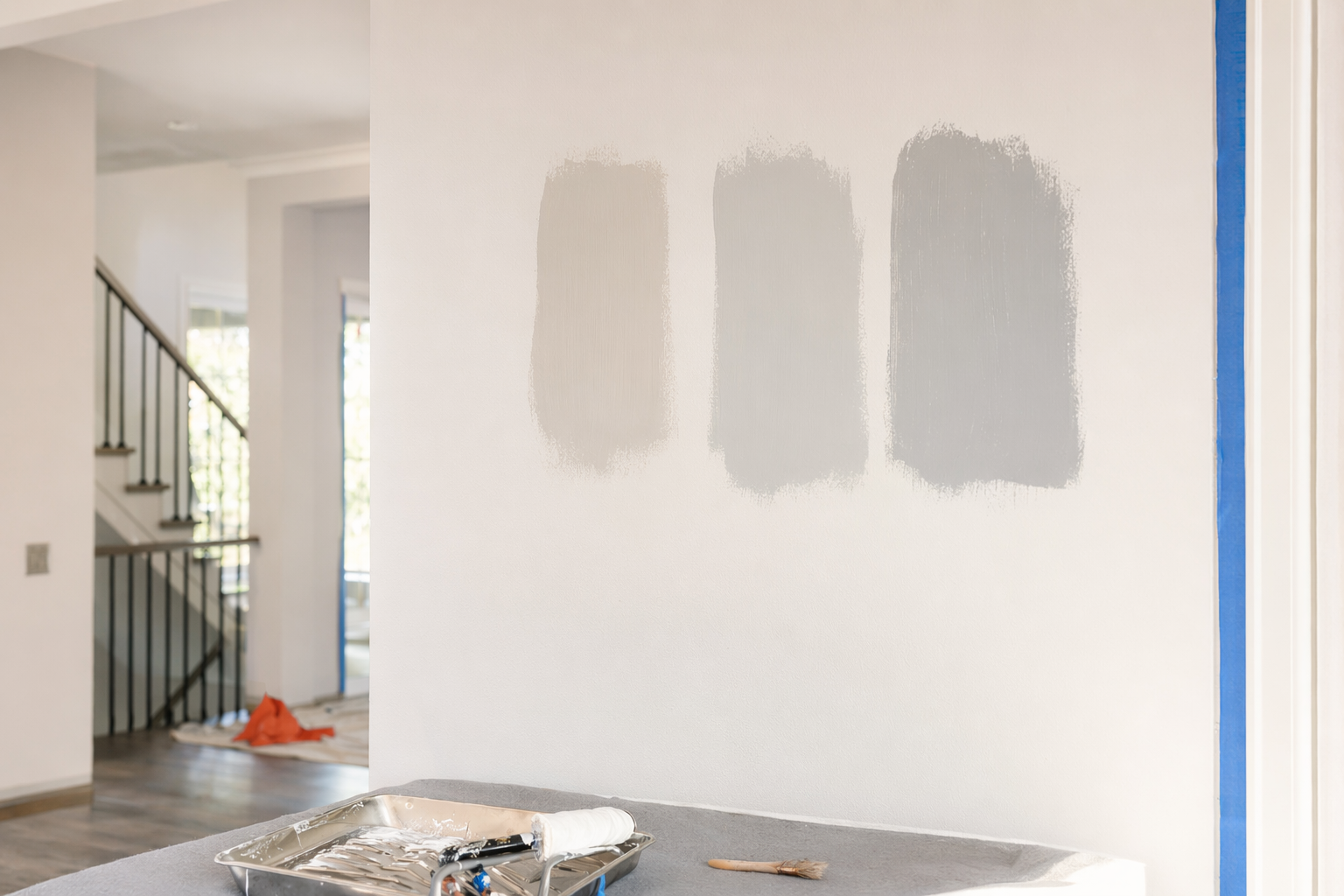
What the Color & Finish Planner includes
This free download helps you plan your interior color and finish choices in a simple, step-by-step way—so you’re not guessing when you speak to a painter.
The planner is built around the parts people usually forget: walls and “main color,” trim, ceiling, and accents (like an accent wall, built-ins, or a focal doorway). It also gives you a practical way to pick a sheen (how shiny or matte) for each surface.
You’ll also find spaces to note: the room name, the surface type, your finish preference, and any “must-haves” (like low shine in bedrooms, wipe-ability in kitchens, or a consistent look throughout the home).

Who this planner helps (and why it’s useful)
This is great if you’re painting for the first time, switching from old colors, or feeling overwhelmed by the paint aisle choices. The planner turns “I want it to look nice” into a clear list you can use.
It’s also helpful for new immigrants and non-native English speakers because it organizes the project details in plain sections you can point to. Instead of trying to remember everything, you can bring the worksheet to your conversation with a licensed, insured painter.
If you’re aiming to avoid overpaying, planning ahead matters. When you know what you want to paint (and where you want a specific sheen), you’re more able to compare bids fairly.
How to use it (quick, practical steps)
1. Start with your “big picture.” Pick the overall vibe you want (bright and clean, warm and cozy, modern and simple) and choose 1–2 main color directions.
2. Fill out one room at a time. For each room, write your wall color, then plan what will go on trim and the ceiling. If you have an accent area (like a built-in or accent wall), mark it separately.
3. Choose sheen based on the surface, not just the look. In general, flatter/matte finishes hide small wall imperfections, while higher-sheen finishes are often easier to wipe. Your painter can explain what sheens they recommend for your specific surfaces—use the planner to capture your preferences.
4. Add notes for reality. Examples: “lots of kids/traffic,” “sunny room,” “near a kitchen,” “we want it to be easy to clean,” or “we have scuffs now.” These notes help painters suggest appropriate prep and finish choices.
5. Bring the completed planner when you get matched with painters. HuePort is a FREE matching service—we connect you with licensed, insured painting contractors near you, but we don’t do the painting ourselves. Your planner helps you communicate your scope clearly: what rooms, what surfaces, and what sheen you want.
How it connects to getting matched with painters
After you download and fill out your planner, you’ll be ready to describe your project with confidence. That can make your conversations faster and help you avoid misunderstandings.
Use Color ideas + inspiration to help you confirm your direction, then get connected through HuePort matching. When you talk to painters, make sure they understand your room-by-room plan: walls, trim, ceilings, and any accents.
Remember: a checklist helps you compare apples to apples. Ask each painter to review the same scope and finish plan so you can compare proposals more fairly.
Prep, lead-safe work, and price: the honest bits
A beautiful finish depends on prep. The planner helps you choose color and sheen, but your final results also depend on surface condition, repairs, number of coats, and how thoroughly the painter preps. That’s why cost varies by home.
Typical interior painting cost ranges in the U.S. can vary widely based on area and complexity. As a broad guide, many homeowners see interior painting costs often discussed in ranges like roughly $2,000–$8,000+ for whole-interior jobs, with per-room projects frequently lower (but still dependent on prep and number of coats). Exterior projects are often higher. Your exact number depends on your surfaces, access/height, prep needs, paint grade, and your local market—so treat any range as guidance, not a quote.
If your home was built before 1978, paint may contain lead. This page isn’t lead-abatement advice, but it’s a safety point: ask how the painter follows lead-safe work practices and local requirements. For general guidance on choosing safely, review how to vet a painter.
Avoid common pitfalls (so you don’t overpay)
Use your planner to ask clearer questions and keep control. Before work starts, confirm the color(s), finish(s), what gets painted (and what doesn’t), prep details, the number of coats, and the price—in writing.
Be cautious with scams or unfair deals, like vague pricing, large cash deposits up front, door-to-door “today only” pressure, no proof of licensing/insurance, or pressure to sign immediately. Compare a few bids and make sure everyone is pricing the same scope you planned.
HuePort is free for homeowners. If participating painters have any fees, it’s handled separately and it’s never a fee you pay. You stay in charge: you confirm the plan and the final work details before paying.

Download the free Color & Finish Planner, fill it out room by room, and use it to communicate your colors and sheens clearly when you talk to licensed, insured painters.
Common questions
Is HuePort the company that will paint my home?
No. HuePort is a FREE matching service that helps you connect with licensed, insured painting contractors near you. We don’t perform painting work or sell paint.
Do I need to know paint sheens already?
Not necessarily. The planner helps you think through sheen by surface (walls, trim, ceilings, and accents), but your painter can explain what will work best for your room and wear-and-tear needs.
Will the planner give me an exact price?
No—this planner helps you define your scope and finish choices, but costs depend on surface condition, prep/repairs, number of coats, paint grade, access/height, and your local market. Ranges are helpful for planning, but they are not quotes.
My home is older. What about lead paint?
If your home was built before 1978, paint may contain lead. Ask your painter how they follow lead-safe work practices and local requirements. This is a safety question to bring up with the licensed contractor.
How do I use the planner when I get bids?
Bring your filled planner and ask each painter to confirm the same scope: which rooms and which surfaces, your chosen colors, and the sheens you want. Then compare proposals based on the same checklist.