Color & finish
Paint sheen & finish guide: flat to high-gloss
Paint color gets most of the attention, but sheen changes how a room looks, feels, and wears over time. Here’s a simple guide to flat, matte, eggshell, satin, semi-gloss, and high-gloss so you can choose with confidence.
Why sheen matters as much as color
Paint sheen is how shiny or light-reflective the paint looks after it dries. Lower-sheen paints like flat and matte absorb more light, so they look softer and hide wall flaws better. Higher-sheen paints like semi-gloss and high-gloss reflect more light, so they look brighter and are usually easier to wipe clean.
That sounds simple, but sheen also changes how your color reads. The same white can feel calm and velvety in matte, then crisp and bright in semi-gloss. A dark blue in flat can look rich and soft; in satin, it may look a little livelier because the light bounces more.
There is no one “best” finish for every home. The right choice depends on the surface, how much traffic the area gets, how often you need to clean it, how smooth the surface is, and the look you want. If you are still narrowing down color, our color guides can help you start from the mood you want first.
- Lower sheen = softer look, more forgiving of surface flaws
- Higher sheen = more light reflection, often easier to clean
- The same color can look different in different finishes

What each paint finish looks like
Flat has little to no shine. It gives walls and ceilings a soft, quiet look and does a good job hiding patches, dents, and uneven texture. Many people like flat on ceilings and low-traffic adult bedrooms. The tradeoff is that flat can mark up more easily and may not scrub as well as higher sheens.
Matte is close to flat, but usually a little more durable and a touch easier to clean. It still has a soft look, which is why many homeowners use it on living room walls, bedrooms, dining rooms, and other spaces where they want color to feel rich but not shiny. If you want a modern, low-glare look, matte is often a strong choice.
Eggshell has a very light, soft glow. It is one of the most common wall finishes because it balances looks and practicality. It usually hides imperfections better than satin, but cleans more easily than flat. For many homes, eggshell is the safe middle-ground finish for interior walls.
Satin has a more noticeable sheen than eggshell. It reflects light enough to look smoother and slightly brighter, and many people use it where they expect more wiping or wear, such as hallways, kids’ rooms, bathrooms, laundry rooms, trim, or some exterior siding. The caution is that satin can show roller marks, repairs, and uneven surfaces more than lower sheens.
Semi-gloss is shiny enough to stand out. It is commonly used for trim, doors, cabinets, and bathrooms because it usually holds up well to moisture and cleaning. It also highlights detail nicely on molding and millwork. The downside is that it shows flaws clearly, so prep matters a lot.
High-gloss is the shiniest standard finish. It creates a bold, polished look and can be beautiful on furniture, doors, or special trim details, but it is not forgiving. Every patch, sanding scratch, and dent can show. High-gloss usually works best when the surface is in very good shape and the painter is careful with prep and application.
Best sheen by surface: a simple rule of thumb
A simple way to choose is to match the finish to the job the surface has to do. Ceilings usually look best in flat because the low sheen reduces glare and helps hide small imperfections overhead. Most interior walls work well in matte or eggshell, depending on how much traffic and cleaning they will get.
For busier areas like kitchens, baths, hallways, mudrooms, and kids’ spaces, eggshell or satin is often a practical choice. For trim, baseboards, doors, cabinets, and window casings, satin or semi-gloss is common because these surfaces get touched more and benefit from a smoother, easier-to-wipe finish. Some people use high-gloss for a dramatic look, but it is less forgiving and usually not necessary.
Outside, many homeowners choose flat, low-lustre, satin, or soft-gloss depending on the product line and the surface. Exterior siding often looks good in a lower sheen, while doors and trim may benefit from a slightly higher sheen for durability and definition. Exterior conditions vary a lot by climate, sun, moisture, and surface condition, so it helps to compare products made for outdoor use on our exterior painting page and with licensed, insured local painters.
If you are repainting a room and do not know what finish to use, one of the safest combinations is flat ceiling, eggshell walls, and satin or semi-gloss trim. It is not the only answer, but it works well in many homes.
- Ceilings: usually flat
- Most walls: matte or eggshell
- Busy rooms: eggshell or satin
- Trim, doors, cabinets: satin or semi-gloss
- High-gloss: best for selective accent use on very smooth surfaces
Where sheen can go wrong
The most common mistake is choosing more shine than the surface can handle. If your walls have patch marks, old repairs, texture differences, or rough drywall, satin or semi-gloss can make those issues more visible. A lower sheen often looks better unless the wall is in very good shape.
Another mistake is using very flat paint in places that get splashes, fingerprints, or constant wiping. It may look beautiful at first, but if you are cleaning it often, you may wish you had chosen eggshell or satin. Kitchens, bathrooms, entryways, and family spaces usually need a little more durability.
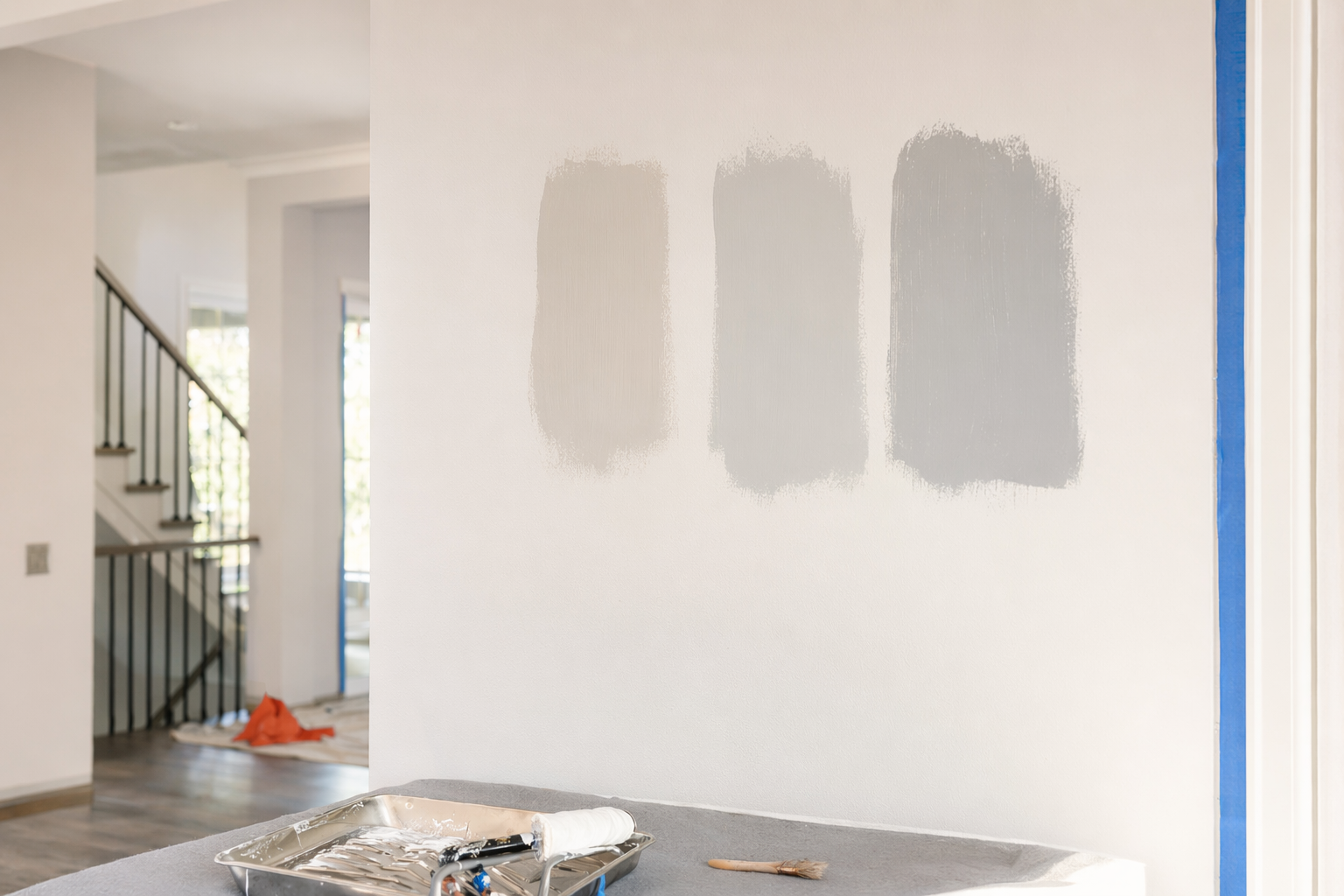
It is also easy to copy a finish from a photo online without thinking about your lighting. South-facing rooms, strong afternoon sun, or lots of recessed lights can make sheen look brighter than expected. If you are planning an interior painting project, test the same color in two finishes side by side before you commit.
- Higher sheen shows more flaws
- Lower sheen may be harder to keep clean in busy areas
- Strong light makes sheen more noticeable
How to test finish before you commit
Testing is the best way to avoid regret. Do not rely only on a tiny paint chip or what you saw in someone else’s house. Finish reacts to your light, your wall texture, and your color choice.
- Pick your color first, then test it in at least two sheens if you are unsure.
- Paint sample areas on more than one wall, especially walls that get different light during the day.
- Look at the samples in morning, afternoon, evening, and with lamps on.
- Stand close to check texture and flaws, then step back to see the overall look.
- Wipe the sample gently after it cures if cleanability matters in that room.
If you are hiring a painter, ask them to write the color name, product line, and sheen into the estimate before work starts. That helps prevent confusion later. HuePort is a free matching service, not a painting company, so we do not do the painting ourselves, but we can help you get matched with licensed, insured painters near you so you can compare a few written quotes.
Prep, price, and hiring help
Finish choice affects labor more than many homeowners expect. The glossier the finish, the more important the prep usually becomes. Patching, sanding, caulking, cleaning, and priming may matter even more for satin, semi-gloss, or high-gloss because shiny paint can highlight flaws instead of hiding them.
If you are paying for professional painting, sheen itself is usually not the main cost driver. The real price depends more on the surface condition, the amount of prep, the number of coats, the paint grade, the room size, trim or cabinet detail, access, height, and your area. As a broad US range, interior wall painting is often around $2 to $6 per square foot, and trim or doors may be priced separately. Cabinets and detailed trim can cost more because prep and finish quality matter so much. These are not quotes.
For older homes built before 1978, old paint may contain lead. If sanding or paint disturbance is part of the job, ask how the painter follows lead-safe work practices. That is a safety question for the contractor, not legal or abatement advice from HuePort.
Protect yourself from overcharging by watching for vague pricing, big cash deposits up front, door-to-door “today only” deals, no proof of license or insurance, or pressure to sign right away. Get the scope, surface prep, paint product, sheen, color, and total price in writing first. Compare a few quotes, choose who to hire, and confirm the work looks right before paying the final amount.
Choose lower sheen for a softer, more forgiving look, and higher sheen for surfaces that need more cleaning and durability.
Common questions
What is the best paint sheen for interior walls?
For many homes, matte or eggshell is the best starting point for interior walls. Matte gives a softer look and hides flaws better, while eggshell adds a little more washability for everyday use.
Is eggshell or satin better for a living room?
Eggshell is often the safer choice for a living room because it has a soft look without much shine. Satin can work too, but it shows wall imperfections more easily, especially in strong light.
Should ceilings be flat or eggshell?
Most ceilings look best in flat paint because it reduces glare and helps hide seams or uneven texture. Eggshell is less common overhead unless there is a specific reason to use a slightly more durable finish.
What sheen is best for bathrooms and kitchens?
Eggshell or satin is common for walls in bathrooms and kitchens because these rooms need more wipeability and moisture resistance than a bedroom or formal living room. Trim is often done in satin or semi-gloss.
Is semi-gloss too shiny for trim?
Not usually. Semi-gloss is a common trim choice because it stands up well to cleaning and helps molding and doors look crisp. If you want a softer look, satin trim can also work.
Does higher sheen paint cost more?
Sometimes the product price is a little different, but labor and prep usually matter more than the sheen alone. Your real cost depends on the surface, prep, number of coats, paint quality, access, and your area.
Can I use the same finish on walls, trim, and ceiling?
You can, but many homeowners prefer some contrast: flat on ceilings, matte or eggshell on walls, and satin or semi-gloss on trim. Using different sheens can make the room look more finished and practical.
How do I choose a painter without getting overcharged?
Ask for a written estimate that lists prep, paint brand or line, sheen, color, number of coats, and total price. Compare a few quotes, verify license and insurance, avoid pressure tactics, and remember HuePort is free for homeowners if you want help getting matched.