Projects
Drywall repair and painting
Drywall damage can make even a fresh paint color look messy. Here’s what drywall repair and painting usually involve, what it may cost, and how to compare painters without getting pressured.
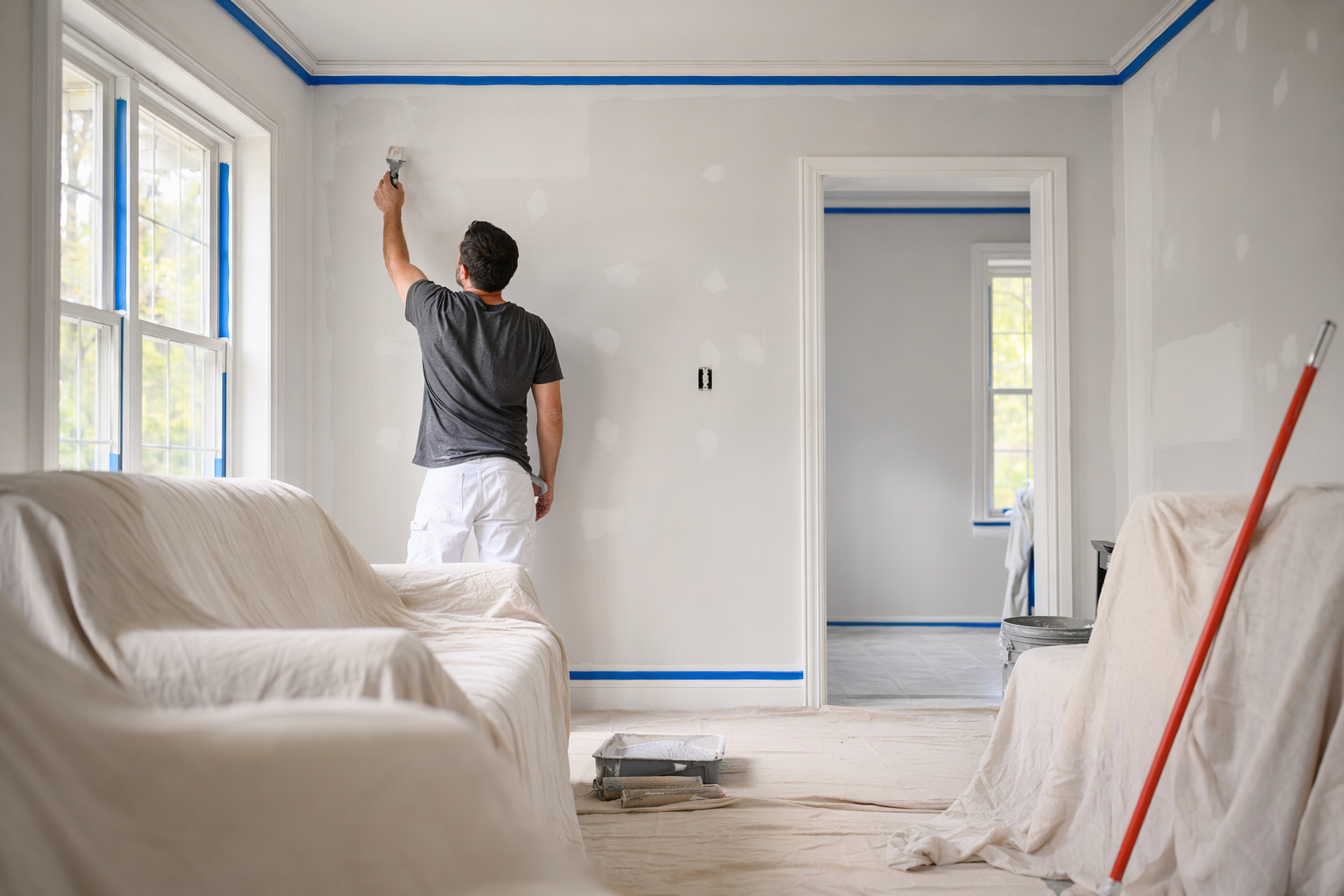
What drywall repair and painting usually includes
Drywall repair is the prep work that makes a wall or ceiling look smooth again before paint goes on. Common problems include nail pops, dents from furniture, small holes from picture hooks, larger holes from doorknobs, tape seams that show, corner-bead damage, and water stains on ceilings or walls.
A good painter does more than spread a little filler and paint over it. The work may include cutting out loose material, patching holes, retaping seams, applying joint compound in thin coats, sanding, skim coating rough areas, stain-blocking primer where needed, then priming and painting so the repaired spot blends in.
The goal is not just to cover damage, but to make the surface look even in normal daylight and at night with lamps on. That takes time, drying, sanding, and the right primer and paint. If you are still deciding between repair, full repainting, or another update, you can browse other painting projects.
- Small repairs are often fast, but drying time can stretch the job
- Ceilings and walls with strong light usually show bad patching more clearly
- Water stains need the cause addressed first, not just fresh paint

How a pro gets a seamless result
The best drywall repair work is usually boring to watch because it is careful. A licensed, insured painter or drywall pro will protect floors and furniture, check the damaged area closely, and figure out whether it is only cosmetic or a sign of a bigger problem like moisture, movement, or repeated impact. For anything structural or active leaks, you should ask the right licensed pro to address the cause first.
For small holes and dents, a pro may use patching compound or a mesh patch, then feather the repair wider than the damaged area so it does not leave a bump. For cracks or failed seams, they may remove loose tape, retape, and build up multiple thin coats of compound. For rough walls, they may skim coat a larger section or an entire wall to reduce texture differences.
Primer matters. A repaired area can "flash," meaning it shows a dull or shiny difference through the finish paint if it is not primed correctly. Pros often use a quality drywall or stain-blocking primer before paint. Then they match the existing texture as closely as possible and apply paint in a way that helps the patch disappear.
If your home was built before 1978 and old painted surfaces will be disturbed, ask how the painter follows lead-safe work practices. That is an important safety question for older homes in the US.
- Multiple thin coats usually look better than one thick patch
- Texture matching can be harder than filling the hole itself
- Prime repaired spots before finish paint for a more even sheen
Typical cost ranges and what changes the price
Drywall repair and paint costs can vary a lot by damage, room size, ceiling height, texture, and local labor rates. These are general US ranges, not quotes. The real number depends on the surface, the prep, the number of coats, the paint grade, access or height, and your area.
For minor patching and touch-up paint, you might see roughly $150 to $500 for a small service call. A few medium repairs in one room may land around $300 to $900. Larger holes, seam repair, ceiling damage, or skim coating can move the price into the $800 to $2,500+ range, especially when repainting whole walls or ceilings for a consistent look.
If water damage is involved, costs can climb because the damaged drywall may need to be cut out and replaced, dried fully, sealed with the right primer, and repainted more broadly so the finish matches. Textured ceilings and tall stairwells also tend to cost more because they are slower and harder to access.
Sometimes the cheapest-looking option is not the best value. Spot-painting one patch may cost less up front, but if the color, sheen, or texture does not match, homeowners often end up repainting the whole wall or ceiling anyway. You can compare general painting costs and then get local estimates before deciding.
- Small patch + touch-up: often about $150-$500
- Several repairs in one room: often about $300-$900
- Larger repair, skim coat, or ceiling work: often about $800-$2,500+
Repair and paint vs other options
If the damage is small and isolated, repair and paint is usually the practical choice. A good patch can save a wall or ceiling and avoid full replacement. This is common for dents, popped nails, small accidental holes, and normal wear from moving furniture or hanging art.
If the wall has many patches, heavy texture problems, repeated cracking, or old poor-quality repairs, skim coating and repainting a larger area may look better than patching one spot at a time. In some cases, replacing a drywall section is cleaner and faster than trying to save badly damaged material.
If your goal is a full refresh, not just a repair, color and sheen choices matter too. Flat paint can hide minor wall imperfections better than glossier finishes, while higher sheens are easier to wipe but may highlight patch areas. If you are planning a larger repaint, our color ideas hub can help you think through the final look.
- Repair small damage when the rest of the wall is in good shape
- Skim coat larger areas when patches and texture differences are everywhere
- Consider repainting the full wall for a more uniform finish
What to watch for when hiring a painter
Drywall repair is one of those jobs where bad work can look fine for a week, then show seams, ridges, flashing, or peeling later. Ask the painter to describe the repair steps: what gets removed, what gets patched, whether they will tape or skim coat, what primer they will use, and whether they recommend painting just the spot, the full wall, or the full ceiling.
Be careful with vague pricing and vague scope. "We’ll fix it and paint it" is not enough. Get the scope in writing first: which walls or ceilings, what level of repair, what primer, what paint, how many coats, and whether texture matching is included. Compare a few quotes, especially if one is much lower than the others.
Watch for common painting scams and overcharging: large cash deposits up front, door-to-door "today only" deals, no license or insurance, or pressure to sign right away. The homeowner stays in control. You confirm the color and price before work starts, choose who to hire, and confirm the work is done right before paying the final amount.
HuePort is a free matching service, not a painting company, licensed contractor, or paint store. We do not do the work ourselves. If you want help finding local pros, you can get matched for free and then verify that the painters you speak with are licensed and insured.
- Get the repair scope, paint scope, and price in writing
- Verify license and insurance yourself
- Compare more than one quote when possible

Good drywall repair makes paint look smooth, but the final cost and result depend on the damage, the prep, and hiring a careful licensed, insured painter.
Common questions
Can a painter repair drywall, or do I need a separate drywall contractor?
Many painters handle light to moderate drywall repair before painting. For major damage, repeated cracking, active moisture, or larger replacement work, you may need a drywall specialist or another licensed pro first.
Why does my patch show through after painting?
This can happen when the repair was not feathered smoothly, the texture did not match, or the area was not primed properly before paint. Sheen differences can also make patches stand out, especially on walls with strong light.
Is it better to touch up one spot or repaint the whole wall?
If the paint is old, faded, or hard to match, repainting the whole wall often looks better. A small touch-up may be fine for minor damage, but it can still show if the color or sheen is slightly off.
How long does drywall repair and painting take?
Small repairs may be done in part of a day, but drying, sanding, primer, and paint can add time. Larger repairs, ceilings, skim coating, and humidity can extend the schedule.
What information does HuePort need to match me?
Only basic contact and project details: your name, phone, optional email, project type, interior or exterior, ZIP code, preferred language, and optional notes. The service is free for homeowners.
What if the damage is from an older home built before 1978?
Ask the painter how they follow lead-safe work practices if older painted surfaces may be disturbed. That is an important safety question for pre-1978 homes.