Projects
Popcorn ceiling removal and repaint
Popcorn ceiling removal can make a room feel cleaner, brighter, and more current — but it is messy work, and older ceilings need extra safety questions. Here’s what the job usually involves, what it may cost, and what to ask before you hire.
What popcorn ceiling removal and repainting usually involves
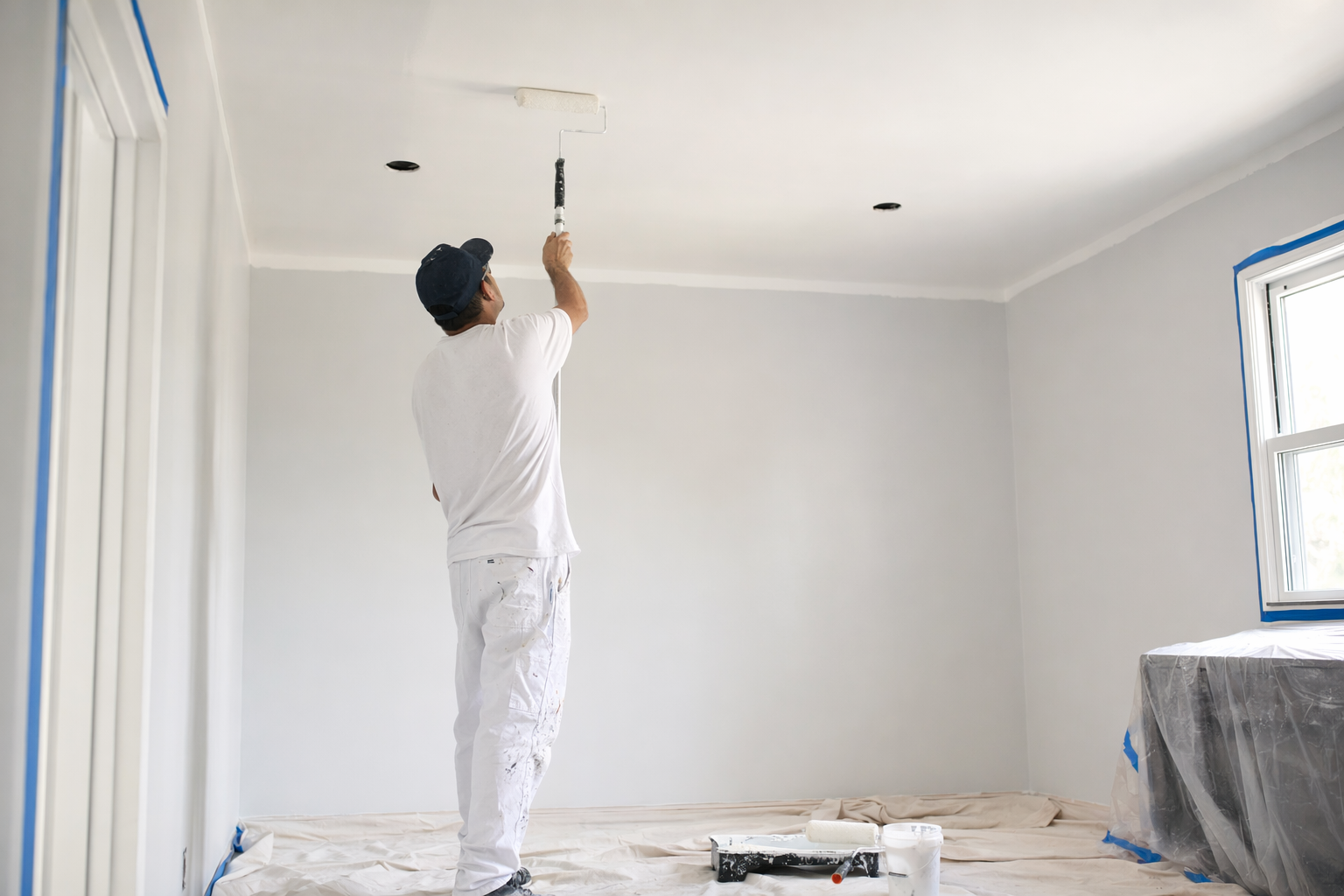
A popcorn ceiling removal project is more than just scraping off texture. In most homes, the work includes protecting floors and furniture, testing or checking for possible hazards in older materials, wetting and scraping the texture, repairing the drywall underneath, sanding, priming, and then painting the ceiling. If you want a smooth ceiling, the finish work matters a lot.
A good result depends on the surface under the popcorn. Some ceilings scrape fairly clean. Others have tape lines, patches, stains, cracks, or uneven drywall that only show up after the texture comes off. That is one reason quotes can vary so much from house to house.
If your home was built before 1978, ask the painter how they follow lead-safe work practices when painted surfaces may be disturbed. If the ceiling texture is older, ask about the asbestos question too. HuePort is a free matching service, not a painting company or licensed contractor, so we provide general information only — the contractor and local rules should guide the actual safety steps.

How a professional usually does the job well
The best painters treat this as a prep-heavy project, not a quick cosmetic fix. They start by walking the space with you, looking at ceiling condition, stains, cracks, lighting, ceiling height, and access. They should also talk clearly about what happens if hidden damage appears after the texture is removed.
A typical process looks like this:
1. Cover floors, walls, fixtures, vents, and furniture; isolate the work area for dust control.
2. Check the age and condition of the ceiling and discuss lead-safe practices for pre-1978 homes and the asbestos question for older texture.
3. Wet and carefully scrape the popcorn texture, if that method fits the ceiling.
4. Repair drywall damage, seams, nail pops, stains, or cracks that show after scraping.
5. Sand and smooth the surface, sometimes with skim coating if you want a flatter finish.
6. Apply primer, then paint with the agreed ceiling paint and number of coats.
7. Clean up and walk the job with you in good light before final payment.
A pro should also explain the finish level. “Smooth” can mean different things. Some homeowners are happy with a clean, flat painted ceiling that still has a little natural drywall variation. Others want a very refined smooth finish, which usually takes more patching, more sanding, and more cost.
Honest cost ranges and what changes the price
For many homes, popcorn ceiling removal and repainting may run roughly $1 to $3.50 per square foot for more straightforward jobs, and about $3.50 to $7+ per square foot when repairs, skim coating, higher ceilings, difficult access, or older-material precautions are involved. For a single average-size room, that might be a few hundred dollars on the low end or well over $1,500 for a more labor-heavy finish. Whole-home projects can range from a few thousand dollars to much more.
These are general ranges, not quotes. The real number depends on the condition of the ceiling, how much prep and repair is needed, whether the texture scrapes off easily, the number of coats, the paint grade, room size, furniture moving, access and height, and labor rates in your area. Stains, water damage, cracks, and a true smooth finish usually raise the price.
There are alternatives to full removal. Some homeowners choose to encapsulate and paint over the popcorn if the ceiling is sound and local conditions allow it. Others cover it with new drywall or planks. Those options can sometimes reduce mess, but they change ceiling height, details at lights and vents, and overall look. A licensed, insured painter or appropriate local pro can explain which option makes sense for your ceiling.
If you want to compare pricing for related work, start with our painting cost guides. Then use HuePort’s free matching service to connect with licensed, insured painters near you. It is always free for the homeowner.
Questions to ask before you hire a painter
Because this project can uncover hidden problems, clear written scope matters. Ask the painter to explain exactly what is included, what is not included, and how repair work is priced if the ceiling underneath is in poor shape.
Use a simple checklist when you compare a few quotes:
- Are you licensed and insured for this type of work in my area?
- What prep and dust containment do you include?
- For pre-1978 homes, how do you follow lead-safe work practices if painted surfaces are disturbed?
- How do you handle the asbestos question for older popcorn texture?
- Does the price include drywall repair, skim coating, primer, paint, and cleanup?
- How many coats are included?
- What ceiling finish should I realistically expect?
- What happens if you find stains, cracks, or damaged drywall after scraping starts?
- What brand or grade of primer and paint are you planning to use?
- Can you put the scope, materials, color, finish, and price in writing?
You stay in control of the project. Confirm the color, paint, scope, and price before work starts, choose who to hire, and check the work in good light before paying the final amount.
Red flags and common ways people get overcharged
This kind of job is easy to underbid at first and then expand later. Be careful with vague pricing like “ceiling refresh” or “removal as needed” without a written explanation of prep, repairs, primer, paint, and cleanup. A low starting number can become much more expensive once the popcorn is gone and the ceiling needs extra work.
Watch for pressure tactics too: big cash deposits up front, door-to-door offers, “today only” deals, no proof of license or insurance, or pressure to sign before you compare other bids. Those are common painting scam signs. It is smarter to get a few quotes and make sure each one lists the same basic scope so you can compare them fairly.
Also ask who is responsible for moving furniture, protecting walls, and cleaning up dust. If that is not written down, it can turn into an argument later. If a painter promises a perfect smooth ceiling at a bargain price without even looking closely at the existing surface, be cautious.
Choosing paint and finding the right pro
Most ceilings are painted in a flat finish because it helps hide small imperfections and reduces glare from lights and windows. Bright white is common, but a softer white can feel warmer and work better with your wall color. If you are repainting the room too, it helps to choose the ceiling and wall colors together so the space feels balanced. Our color guides can help if you are deciding between whites.
When you are ready to talk to contractors, you can start with our project guides and then request matches through HuePort. We are a free matching service for homeowners across the United States. We do not perform painting work, and we do not ask for financial account numbers, Social Security numbers, income, or sensitive personal records — just contact and project details like your name, phone, optional email, ZIP, project type, preferred language, and notes.
Once you receive matches, verify the painter’s license and insurance, review the written scope carefully, and compare a few bids. The right contractor should explain the process clearly, answer safety questions directly, and give you a realistic price range instead of a rushed promise.

Popcorn ceiling removal can look great, but it is messy, prep-heavy work, so ask safety questions, get the scope in writing, and compare a few licensed, insured painters before you hire.
Common questions
Can I just paint over a popcorn ceiling instead of removing it?
Sometimes, yes, if the ceiling is sound and local conditions allow it. But painting over popcorn will not give you a smooth look, and damaged or loose texture may still need repair first.
Is popcorn ceiling removal dangerous?
It can involve important safety concerns in older homes or older ceiling textures, which is why it is smart to ask direct questions before work starts. For homes built before 1978, ask how the painter follows lead-safe work practices if painted surfaces may be disturbed, and ask about the asbestos question for older texture.
How long does popcorn ceiling removal and repainting take?
A small room may take a day or two, while larger or repair-heavy projects can take longer. The timeline depends on prep, drying time, repairs, number of coats, ceiling condition, and the size of the job.
Why do quotes vary so much for the same ceiling size?
The square footage is only one part of the price. Condition of the drywall, ceiling height, furniture moving, repair level, desired smoothness, paint quality, and local labor rates can change the cost a lot.
Do I need a licensed painter for this project?
Requirements vary by area, but hiring a licensed, insured painter is the safer path when possible. Always verify license and insurance yourself and get the scope, materials, and price in writing.